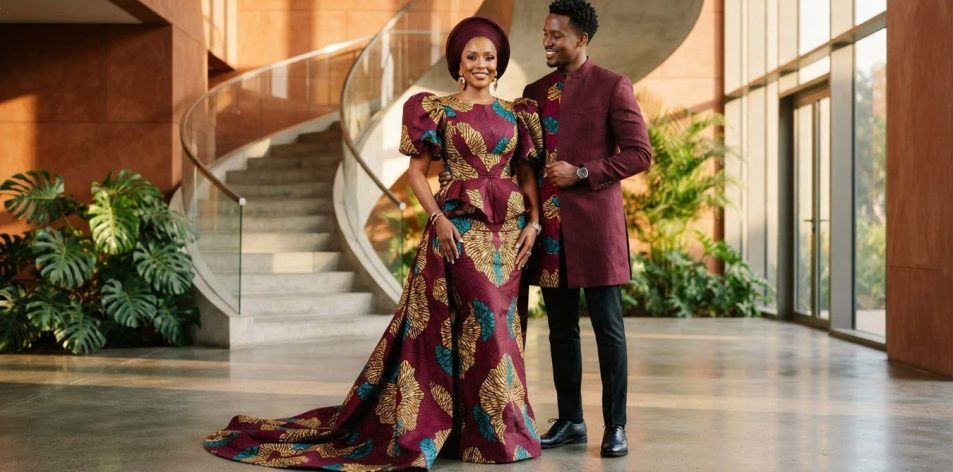
From Swahili Coast Weddings to Nairobi Dinners, the Best-Dressed Couples This Season Are Sharing a Palette, Not a Pattern
There was a time when a couple arriving in identical kitenge was the height of festive coordination. It was cheerful, it photographed well, and everybody knew at once that the two of you had come together. It also tended to make two quite different people look like a matching pair of cushions.
The couples setting the tone across Kenya and East Africa this season are taking a more considered approach. Their outfits clearly belong together, yet each partner looks like themselves. A shared colour story, fabrics that work in December heat and one or two quiet nods to heritage do the work that a repeated print once did. The result is coordinated couple outfits that feel polished in photographs and comfortable over a long day of weddings, family lunches and evenings out.
Here is how to get it right, whichever corner of the festive calendar you find yourselves in.
Why Matching Has Given Way to Coordinating
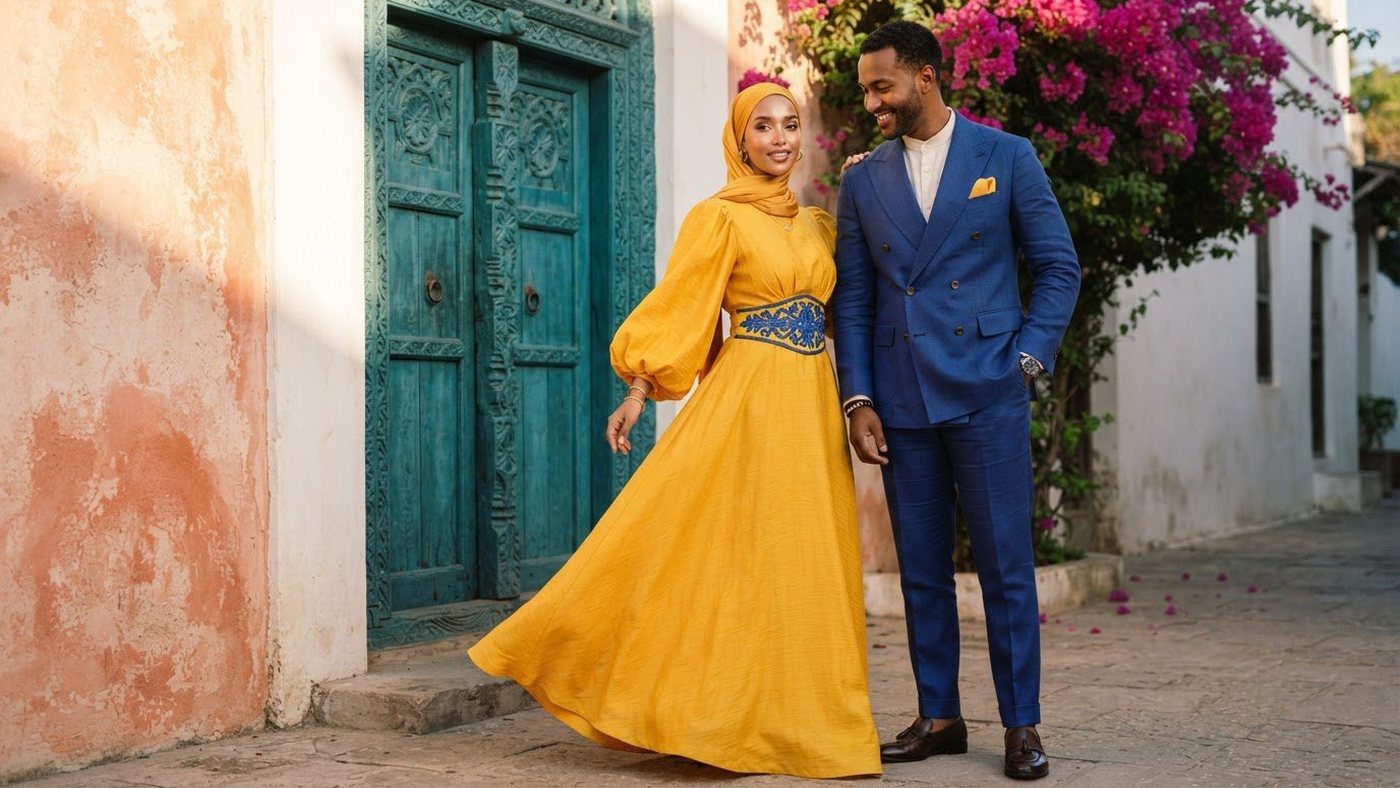
Matching asks both partners to wear the same thing. Coordinating asks them to wear things that relate to each other. The difference sounds small, but it changes everything about how an outfit sits on two different bodies, personalities and wardrobes.
A print that flatters one partner may overwhelm the other. A shade that suits deep skin tones may wash out a lighter complexion. Coordination lets each person choose the cut, colour weight and fabric that works for them, while a common thread ties the pair together.
It is also simply more practical. Rather than commissioning a new matching set for every occasion, couples can build two wardrobes that speak the same visual language and mix them across the season.
Coordinated Couple Outfits Start With a Shared Colour Palette
The easiest way to look coordinated is to agree on a palette before you agree on anything else. Choose three colours: one main shade, one supporting shade and one accent. Each partner then uses them in different proportions.
If she wears a dress in the main colour, he might wear it only as a pocket square or a cap, with his suit or shirt in the supporting shade. The eye reads the connection immediately without either outfit copying the other.
A few palettes that suit the East African festive season particularly well:
- Coastal neutrals: ivory, sand and a deep ocean blue. Ideal for daytime events at the coast and relaxed family gatherings.
- Savannah earth: terracotta, olive and warm cream. It flatters a wide range of skin tones and works beautifully in natural fabrics.
- Evening jewel tones: emerald, sapphire or burgundy, grounded with charcoal or navy. Well suited to dinners and evening receptions.
- Soft heritage: indigo, rust and off-white, drawing on the colours of kanga, kikoi and hand-dyed cloth.
For a deeper look at how colour works in menswear specifically, our guide to the rules of colour in men’s fashion is a useful companion.
Fabrics That Work in East Africa’s Festive Heat
The festive season falls in one of the warmest periods of the year along the Kenyan coast, and even in Nairobi, Kampala and Kigali the days are usually warm. Fabric choice matters as much as colour.
For Him: Linen, Cotton and Lightweight Wool Blends
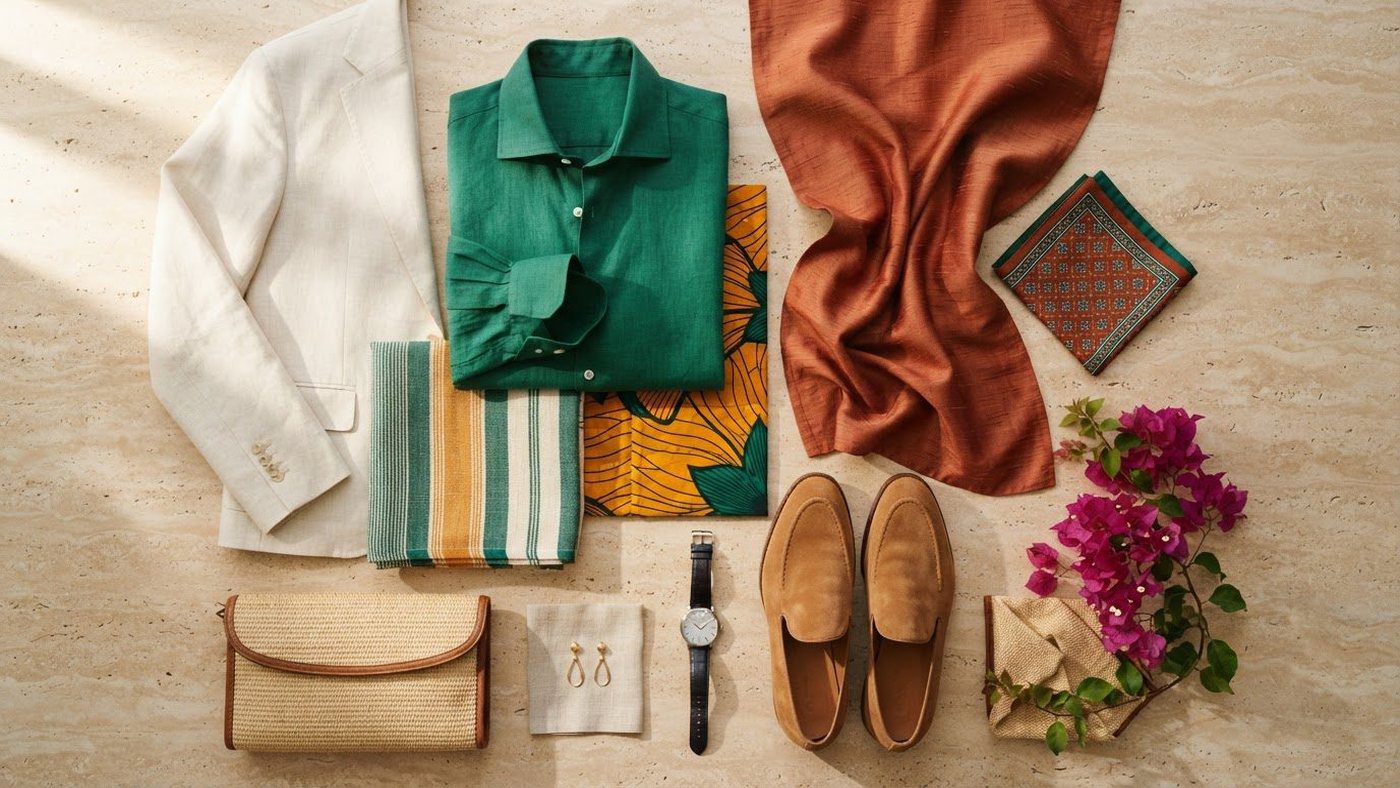
Linen is the natural first choice for men. It breathes, it handles humidity well and its relaxed texture suits daytime events. A linen or linen-cotton blend shirt, kanzu or unstructured jacket will keep its wearer far more comfortable than polyester or heavy suiting.
Crisp cotton, including cotton poplin, oxford cloth and seersucker, offers a smarter finish for church services, formal lunches and office year-end functions. For evening events in Nairobi, where temperatures drop after dark, a lightweight tropical wool or wool-linen blend gives structure without trapping heat.
Silk is best left out of a man’s festive wardrobe altogether. In Islamic tradition, men are prohibited from wearing silk and gold, while both are permitted for women, as reflected in the hadith recorded by at-Tirmidhi. This is easy to overlook in the details, since many ties and pocket squares are made of silk. Cotton, linen and wool versions are widely available, and their matte texture often looks more refined in daylight anyway. The same thinking applies to accessories: a good watch or silver cufflinks rather than gold.
For Her: Textured Silk, Crepe, Linen and Cotton Voile
Women have the wider choice of fabrics. Textured silks such as raw silk, dupioni and shantung hold their shape, catch the light gently and have enough body to look elegant without clinging. They are particularly good for weddings and evening events.
For daytime and coastal occasions, linen, cotton voile and lightweight crepe offer comfort and movement. Modest silhouettes, including flowing maxi dresses, wide-leg trousers with longline tunics and abayas with considered detailing, work well in all of these fabrics. Our feature on East African modest fashion explores how coastal heritage is shaping this look.
Making the Fabrics Talk to Each Other
Coordination is not only about colour. Texture creates a connection too. Pair his slubbed linen with her raw silk, or his crisp cotton with her structured crepe, and the outfits feel related even in different shades. Avoid pairing a very formal fabric with a very casual one, such as a sharp satin evening gown next to a creased linen shirt, unless the contrast is deliberate.
Weddings: Polished, Respectful and Never Upstaging the Couple
Weddings are the backbone of the festive calendar, and they vary enormously across the region. A Swahili wedding in Mombasa or Lamu, a church ceremony in Nairobi, a South Asian celebration in Westlands and a traditional ceremony upcountry each carry their own expectations.
Start by reading the invitation carefully and, if in doubt, asking the hosts. Some families set a colour theme for guests. Others reserve particular shades or fabrics for the bridal party and close relatives. Respect both.
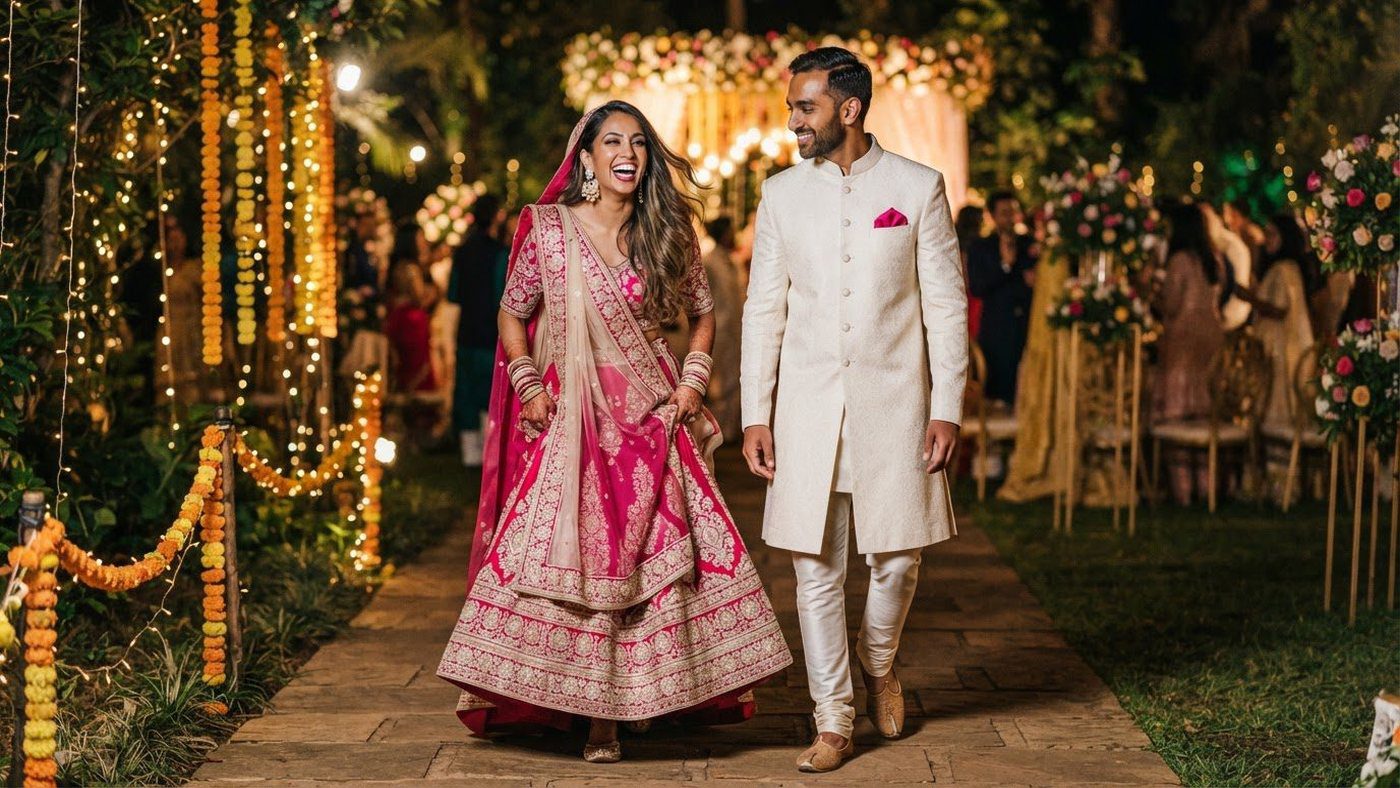
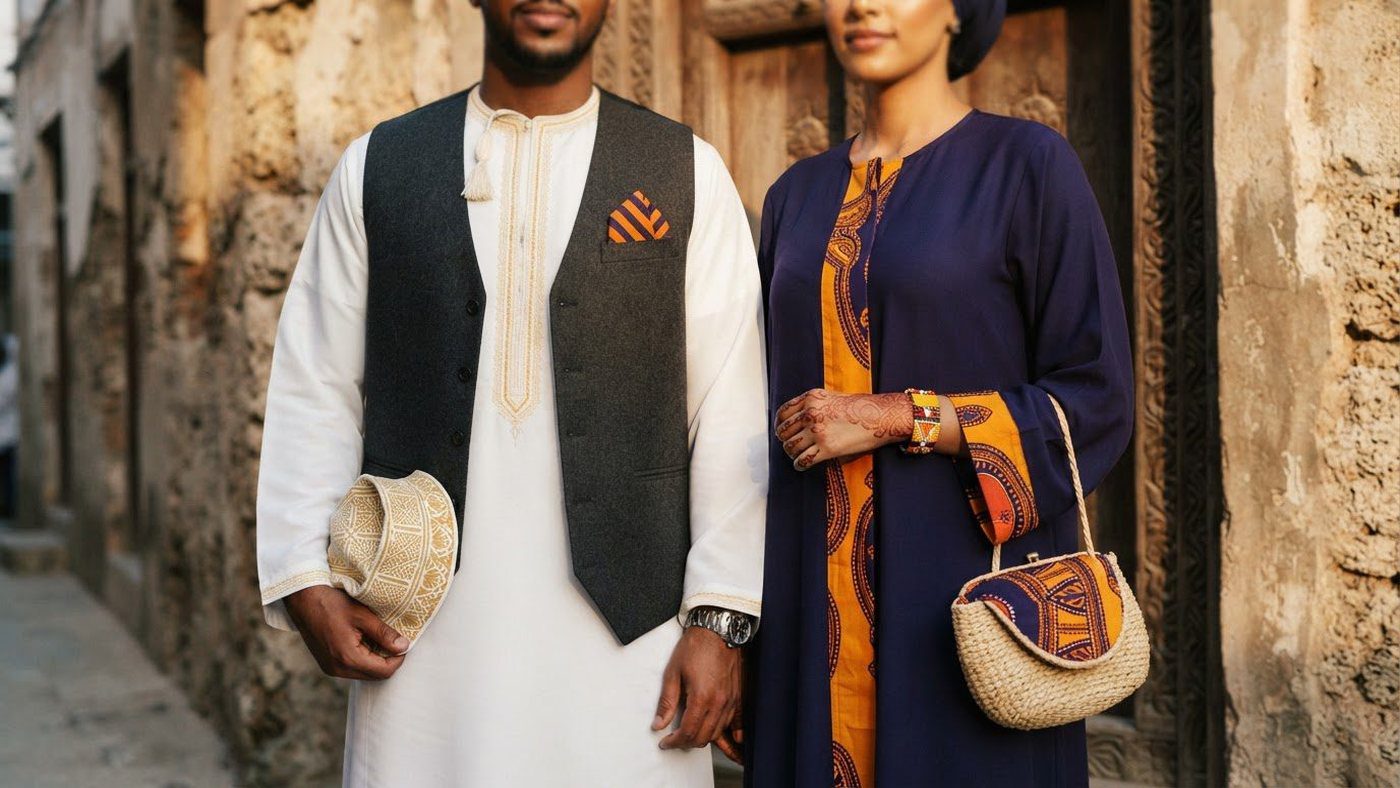
For Swahili and Muslim weddings, a well-cut kanzu with an embroidered kofia is a dignified choice for men, while women might choose a flowing dress or abaya picking up the colour of the kofia’s embroidery. For church weddings, a lightweight suit in navy, stone or a soft grey works well, with his tie or pocket square in the same tone as her dress. At South Asian weddings, a cotton or linen-blend kurta or sherwani for him can sit alongside her richer fabric, with both outfits sharing an accent colour.
The aim is to look as though you have made a genuine effort for someone else’s day, not to compete with it.
Family Lunches: Relaxed but Considered
The long family lunch, often at a relative’s home and frequently running into the evening, is where coordination can relax a little. Comfort matters, as you may be sitting, serving, playing with children or greeting elders for hours.
A simple formula works well here. One partner wears a print and the other wears a plain piece in one of the print’s colours. A kitenge shirt with chinos for him, for example, alongside a plain linen dress in the shirt’s strongest shade for her. Or reverse it, with her in a kanga-inspired print and him in a plain cotton shirt that echoes it.
Modesty is worth considering, particularly when visiting older relatives. Longer hemlines, covered shoulders and loose fits are rarely out of place and spare anyone an awkward moment.
Coastal Getaways: Diani, Watamu, Lamu and Zanzibar
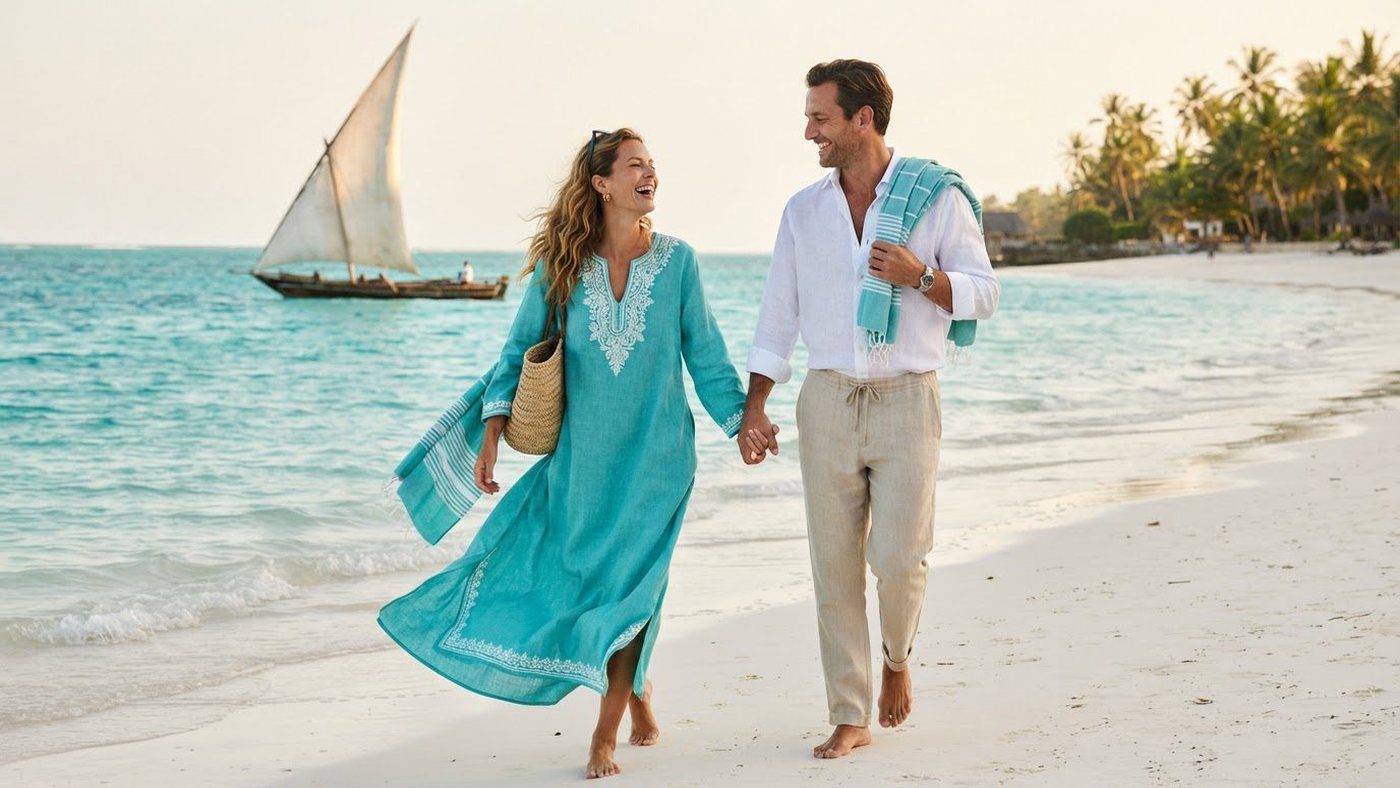
Many couples head to the coast for part of the festive break, and the dress code shifts accordingly. Heat and humidity rule out heavy fabrics, but beach towns still have their own sense of style.
Linen is essential here for both partners. Think loose linen shirts and drawstring trousers for him, and linen or cotton maxi dresses, kaftans and modest coordinated sets for her. A kikoi, worn as a wrap, a scarf or simply carried as a light layer, is a natural shared detail that ties the two looks to the coast.
Places such as Diani are relaxed and resort-focused, but towns with deep Swahili and Islamic heritage call for more care. Lamu Old Town, a UNESCO World Heritage Site and one of the best-preserved Swahili settlements in East Africa, is a place where covered shoulders and knees for both partners are a sign of respect. The same applies in Stone Town and the older parts of Mombasa.
If you are planning the full journey, our guide to the Nairobi to coast road trip for the halal-conscious family covers the practical side.
City Dinners in Nairobi, Mombasa and Kampala
Evening dinners are the moment to turn the polish up. Restaurants in Nairobi’s Westlands, Karen and Gigiri, Mombasa’s Nyali or Kampala’s Kololo tend to reward a smarter look, and cooler highland evenings make layering possible.
Darker palettes come into their own after dark. For him, a tailored jacket in tropical wool or a wool-linen blend over an open-collared cotton shirt, with well-fitted trousers and leather loafers or brogues. For her, a textured silk or crepe dress, or elegant wide-leg trousers with a structured top, in a jewel tone that his jacket, shirt or pocket square picks up.
Fit makes more difference than price at this level. A well-tailored jacket will outshine an expensive one that does not fit. Our guide to moving from off-the-shelf to bespoke tailoring explains what to look for.
Subtle Heritage Details That Speak Without Shouting
The most stylish couples rarely wear heritage from head to toe. Instead, they let one or two details carry the story. A few ideas from across the region:
- Kofia: the embroidered Swahili cap adds instant occasion to a plain kanzu or linen shirt, and its embroidery colour can guide a partner’s outfit.
- Kikoi: as a pocket square, scarf, wrap or the lining of a jacket, it brings a coastal note to a neutral look.
- Kanga and kitenge: used as a panel, a trim or a single statement piece, rather than a full matching set.
- Beadwork: a Maasai-inspired beaded bracelet, belt or clutch, ideally bought directly from artisans.
- Ethiopian tibeb: the woven border found on the habesha kemis works beautifully on a scarf or as trim on a modern dress.
- Kitenge or kikoi lining: a tailored jacket with a heritage-print lining is a quiet detail only revealed when the jacket opens.
Choosing one shared detail, for example both partners carrying something in the same kikoi stripe, is often all it takes. For more on bringing local textiles into a refined wardrobe, see our feature on Kenyan artisanal textiles.
Common Mistakes to Avoid
- Identical prints from head to toe. One shared print, worn differently, is almost always more flattering.
- Mismatched levels of formality. If one partner is in a three-piece suit and the other is in a sundress, the coordination falls apart, however well the colours match.
- Ignoring the venue. A rooftop dinner, a garden wedding and a beach lunch each need different fabrics and footwear.
- Forgetting the details. Silk ties, silk pocket squares and gold accessories slip easily into a man’s outfit, so check labels if they matter to you.
- Fit last, not first. Even the best palette cannot rescue clothes that are too tight, too long or creased.
The best festive dressing for couples is not about proving you arrived together. It is about two people who have clearly thought about each other, each looking entirely like themselves, with a colour, a texture or a small piece of heritage quietly linking them across the room.