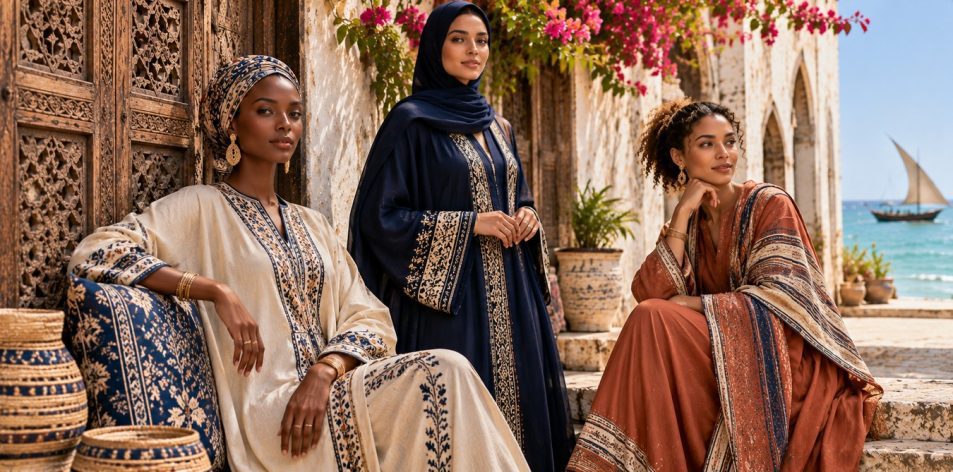
How The Indian Ocean’s Historic Trading Routes Are Inspiring A Modern Expression Of Elegance
Long before international fashion weeks, luxury boutiques and global designer labels, the East African coast was already part of a remarkable world of trade, craftsmanship and cultural exchange. Ships travelled across the Indian Ocean carrying textiles, beads, ceramics and other goods, connecting coastal settlements with Arabia, Persia, India and distant trading centres. Along with these goods came ideas, techniques and influences that helped shape the region’s architecture, culture and distinctive approach to dress.
Today, that shared history is finding a fresh expression in East African modest fashion. Designers in Kenya, Tanzania, Zanzibar and the wider region are looking again at the colours, fabrics, silhouettes and craftsmanship associated with the Swahili coast, interpreting them for a generation that appreciates clothing with a story behind it.
East African modest fashion offers an exciting direction for women who value elegant coverage, quality materials and thoughtful design. Flowing abayas, contemporary kaftans, longline jackets, coordinated sets, beautiful embroidery and carefully selected fabrics can create a wardrobe that feels sophisticated without compromising modesty.
The appeal extends well beyond the region. It reaches Muslim women across the world, the East African diaspora, international travellers and fashion-conscious consumers who appreciate distinctive design and authentic craftsmanship.
Often compared with the Silk Road, the historic Indian Ocean trading network helped make the Swahili coast a meeting point of cultures and commerce. Its legacy offers contemporary designers something that cannot simply be manufactured: a genuine connection to place, history and living traditions.
The Swahili Coast: A Heritage Of Trade, Style And Creativity
The Swahili coast stretches along the eastern African shoreline, with historic settlements and trading ports extending from present-day Somalia through Kenya and Tanzania towards Mozambique. Places such as Lamu, Mombasa, Zanzibar and Kilwa became important centres within the wider Indian Ocean trading world.
For centuries, seasonal monsoon winds made maritime travel possible between East Africa, the Arabian Peninsula, the Indian subcontinent and other parts of Asia. Merchants carried textiles, beads, ceramics, perfumes and other goods, while East African ports exported products valued in overseas markets.
These were not simply routes through which foreign influences arrived. East African communities were active traders, makers and participants in the exchange. Swahili culture developed from local African foundations and generations of interaction with people arriving from different parts of the Indian Ocean.
Clothing was part of this exchange. Imported fabrics became desirable, local tastes influenced demand, and textiles were adapted into forms of dress that reflected coastal life. The result was never one uniform style. Dress varied between communities, social settings, generations and occasions.
The comparison with the Silk Road is useful as an image of long-distance exchange, but the Swahili coast was part of the Indian Ocean maritime trading world, not a literal extension of the traditional overland Silk Road. Its history is remarkable in its own right: a story of enterprise, cultural interaction and creativity in which East Africans helped shape the connections that influenced their own society.
The Library of Congress research guide to Africa in the Indian Ocean World provides useful historical context, including the importance of East African agency in the development of Swahili society.
Traditional Textiles With A Contemporary Appeal
For designers looking to develop a recognisable East African identity, textiles offer an excellent starting point. Their patterns, textures and methods of use carry stories that can be translated into contemporary collections without simply reproducing historical clothing.
The Kanga: A Cloth That Communicates
Few fabrics are as recognisable across the Swahili-speaking world as the kanga, also known as leso in parts of East Africa. It is usually a rectangular printed cotton cloth with a central design, a decorative border and, traditionally, a Swahili saying or message.
A kanga can be practical, expressive and deeply personal. Its message might offer advice, convey affection, make a pointed observation or communicate something that the wearer would rather not say directly. Colour and pattern contribute to its appeal, making it much more than a simple piece of fabric.
The modern kanga emerged through a complex history of international textile trade and local demand, particularly during the nineteenth century. Its development drew on printed cloth traditions, changing manufacturing techniques and East African preferences for bold designs arranged within a distinctive border.
That combination of international influence and local creativity makes the kanga particularly interesting to contemporary fashion. Designers can use its visual language in considered ways:
- As a statement panel on a flowing dress or tunic.
- As a coordinated scarf or head covering.
- Through border-inspired detailing on cuffs, hems and collars.
- In contemporary kaftans and modest resortwear.
- As inspiration for new prints that retain the spirit of the original while developing a fresh design identity.
The Swahili words printed on kangas are also an important part of their character. Designers who reinterpret these messages should understand their meaning and context, and work with fluent Kiswahili speakers when developing new text.
The National Museums of Kenya’s cultural material and the Library of Congress research on the emergence of kanga textiles offer useful starting points for understanding the cloth’s history.
The Kikoi: Relaxed Coastal Sophistication
The kikoi is another familiar textile associated with the East African coast. Traditionally worn as a wrap, it is recognised for its woven texture and often striped appearance. It has long been valued for its practicality, particularly in warm coastal conditions.
Its appeal to contemporary designers is easy to understand. The texture and simplicity of the fabric can work beautifully in relaxed clothing, from longline outer layers and loose trousers to lightweight jackets and coordinated sets.
For modest resortwear, a well-made kikoi-inspired piece can offer an alternative to conventional beach clothing. It can be styled over a full-length dress, paired with a loose tunic or used as a versatile travel layer.
The important consideration is the quality of the fabric and construction. A luxury garment needs thoughtful finishing, suitable weight, good drape and a fit that works for the person wearing it.
Embroidery, Weaving And The Value Of Handwork
Textile heritage is not only about prints. Embroidery, weaving, decorative stitching and other forms of handwork can give a garment its character.
The embroidered kofia, traditionally associated with Swahili coastal dress, is one example of the region’s detailed craft traditions. Its patterns demonstrate how relatively small decorative elements can carry a strong visual identity.
Contemporary designers can draw inspiration from geometric motifs, delicate borders and carefully placed embroidery to create garments that feel distinctive without being overly ornate.
A long jacket with hand-finished cuffs, a modest evening dress with subtle embroidery or a kaftan featuring a carefully woven panel can all make a statement through craftsmanship rather than excessive embellishment.
These techniques also create opportunities for collaboration with skilled artisans. When traditional handwork becomes part of a luxury collection, the people who produce it should be recognised, properly credited where appropriate and fairly compensated.
Why Coastal Heritage Works So Well With Modest Fashion
Modest fashion is not one fixed style. It includes a wide range of clothing choices shaped by personal preference, faith, culture and lifestyle. For many Muslim women, it means choosing garments that provide appropriate coverage while allowing room for elegance, comfort and individual expression.
The East African coast offers a natural design vocabulary for this approach. Flowing silhouettes, loose-fitting garments, layered fabrics, long outerwear and breathable materials can all be adapted into contemporary modest wardrobes.
There is also a particular appeal in clothing that feels connected to the region without looking like a reproduction of traditional dress. A modern abaya with subtle kanga-inspired detailing, a longline jacket in a coastal colour palette or a beautifully cut kaftan can acknowledge heritage while remaining entirely contemporary.
For designers, the opportunity lies in finding the right balance. A garment should be recognisably influenced by its inspiration, but it must also be comfortable, well constructed and practical to wear.
Designing Luxury Without Compromising Halal Values
Luxury and modesty can sit comfortably together. A garment does not need to be revealing, excessively embellished or impractical to feel special. Thoughtful tailoring, beautiful fabric, careful finishing and a well-considered silhouette can create an elegant result while respecting Islamic principles of dress.
For Muslim women, modest clothing commonly prioritises coverage, opacity and a fit that is not unnecessarily tight or transparent. Individual interpretations and preferences vary, but designers who wish to serve this market should understand that modesty is more than adding sleeves or length to an otherwise conventional outfit.
There are also material choices worth considering. Cotton, linen, wool and other suitable fabrics can be used to create refined garments for different climates and occasions. Natural silk is permissible for women, while Muslim men are generally prohibited from wearing pure natural silk as clothing, subject to recognised scholarly allowances and exceptions. Designers creating collections for both men and women should therefore pay attention to fabric composition and clearly describe their materials.
For a women’s modest-fashion collection, natural silk may be considered for appropriate occasionwear, but it is not necessary to achieve a luxurious finish. High-quality cotton, linen, viscose and carefully selected blends can offer beautiful drape, texture and comfort.
Luxury should also be approached with balance. Islam encourages cleanliness, beauty and good presentation, while discouraging waste, extravagance and arrogance. A carefully made garment that lasts, serves its purpose and is purchased within one’s means can be a more considered choice than frequently buying disposable trend pieces.
Designers Bringing East African Craft And Identity To The Fore
Several designers and labels demonstrate how East African heritage, materials and craftsmanship can inform contemporary fashion. Their work does not all fall within the modest-fashion category, but it offers valuable inspiration for designers exploring luxury, cultural identity and more considered ways of dressing.
Doreen Mashika: Zanzibar’s Distinctive Design Language
Tanzanian designer Doreen Mashika has built a distinctive fashion identity in Zanzibar, drawing on the island’s cultural heritage and cosmopolitan character.
Her work is particularly associated with kanga prints, handcrafted details and contemporary feminine silhouettes. Rather than treating the fabric as a simple decorative element, her designs explore its patterns, colours and messages in modern ways.
Her approach demonstrates how a textile that is familiar within East African life can be presented to an international fashion audience without losing its connection to the coast.
For modest-fashion designers, the lesson is not to copy a particular collection. It is to understand how a strong regional reference can become part of a recognisable design identity, while adapting the cut, coverage and styling to the intended customer.
Hamaji Studio: Natural Materials And Artisanal Design
Founded in Kenya in 2017 by designer Louise Sommerlatte, Hamaji Studio draws on East African heritage, natural fibres and traditional craftsmanship.
The brand’s philosophy includes botanical dyes, handwork, embroidery and upcycled vintage textiles. Its collections are known for relaxed silhouettes and an understated aesthetic.
Hamaji’s connection to the Kenyan coast and its work with small-scale artisans offer an interesting example of how a contemporary label can build its identity around craft and conscious production.
Its approach also reflects a growing interest among international consumers in garments that have a clear material story and are made with care. The label is not exclusively a modest-fashion brand, but its use of flowing shapes and artisanal details offers inspiration for designers working in that space.
KikoRomeo: Kenyan Craft In Contemporary Clothing
Founded in Nairobi in 1996 by Ann McCreath, KikoRomeo has a long-standing connection with Kenyan design and craftsmanship. The brand has worked with local artisans and explored natural fibres, hand-finished textiles and distinctive contemporary silhouettes.
Its story demonstrates that contemporary fashion can draw on local materials and techniques without being confined to one traditional aesthetic.
For the wider East African fashion industry, this is an important point. Heritage does not have to be expressed through obvious motifs or prints. It can also be found in the choice of materials, the way a garment is made and the people involved in its production.
When Muslim consumers consider any garment, they should look at the actual fabric and design rather than assuming that a brand’s general identity guarantees that every item meets their personal modesty requirements.
Katush: A Modern Interpretation Of African Identity
Kenyan designer Katungulu Mwendwa founded Katush in 2014. The label is known for contemporary separates, an interest in texture and a willingness to experiment with fabrics and construction.
Mwendwa’s work draws on Kenyan heritage, experiences across East Africa and collaborations with local craftspeople. Her design approach is a reminder that African identity in fashion does not have to follow a predictable visual formula.
Some collections may be colourful and expressive; others may be understated, minimal or architectural. Both can be rooted in the region.
From Regional Runways To International Fashion Conversations
For East African designers to reach wider audiences, creative talent needs platforms where collections can be presented, discussed and discovered by buyers, media and the fashion industry.
Swahili Fashion Week, founded in 2008 by Tanzanian designer Mustafa Hassanali, provides a platform for fashion and accessory designers from Swahili-speaking countries and beyond. It helps designers showcase their work, build networks and connect with the wider fashion business.
Its importance extends beyond the runway. It promotes fashion as a creative industry and a source of enterprise, while helping bring regional design to the attention of international audiences.
There are also initiatives that support designers through business development, production and access to wider markets. The Ethical Fashion Initiative, for example, has worked with African designers and creative businesses to strengthen their commercial opportunities.
These initiatives matter because international recognition requires more than a beautiful collection. Designers need dependable production, pricing strategies, distribution, marketing, business planning and the ability to meet the expectations of customers beyond their home markets.
The Opportunity Beyond East Africa
There are several audiences for contemporary fashion inspired by the Swahili coast, and each brings a different perspective.
For the East African diaspora, clothing can offer a meaningful connection to family, memory and cultural identity. A contemporary interpretation of a familiar textile may feel particularly special to someone living in London, Toronto, Dubai, Sydney or elsewhere, especially when the garment is made by a designer with a genuine connection to the region.
For international travellers, locally designed clothing and accessories can become part of the experience of visiting East Africa. A beautifully made scarf, kaftan or handcrafted accessory can be a more meaningful purchase than a generic souvenir, particularly when its materials and production are clearly explained.
For global modest-fashion consumers, the appeal may be the combination of generous silhouettes, thoughtful layering, distinctive textiles and a design identity that is not simply following trends from larger fashion capitals.
International buyers interested in craftsmanship and responsible production may also be drawn to collections that can demonstrate fair artisan partnerships, careful sourcing and transparent manufacturing.
These audiences should not be treated as one market. Designers need to understand differences in sizing, climate, price expectations, cultural preferences, shipping and retail access before developing a collection for international customers.
What Makes A Heritage-Inspired Collection Feel Truly Luxurious?
Using a traditional print or adding embroidery does not automatically make a collection luxurious. The quality of the final garment depends on the entire design and production process.
Fabric selection is a good place to start. Cotton and linen are particularly suitable for warm climates, while wool and other suitable fibres can be used for cooler conditions and structured garments. For women’s occasionwear, natural silk is another option, provided the garment is designed and worn in accordance with the wearer’s modesty preferences.
Construction matters just as much. Seams, lining, finishing, buttons, fastenings and the way a garment hangs all influence how it feels and performs.
For modest fashion, fit and coverage deserve particular attention. A flowing design should not become impractical, overly transparent or difficult to move in. A beautiful outer layer should work with the clothing underneath it rather than simply look impressive on a hanger.
Luxury can also be found in thoughtful restraint. A single hand-finished detail, a beautiful fabric or an excellent cut can have more impact than a garment covered in decoration.
Keeping Cultural Heritage And Artisans At The Heart Of Design
As heritage-inspired fashion gains commercial attention, designers have a responsibility to approach cultural references with care.
Traditional textiles, motifs and techniques are connected to real communities and histories. They should not be used as interchangeable decorations simply because they look attractive in a campaign.
Designers can begin by researching the origins and meanings of the materials they use. Where a technique belongs to a particular artisan community, collaboration and fair compensation are important. Where a kanga inscription is being adapted, its language and meaning should be checked. Where a design draws on religious or ceremonial references, the context deserves particular respect.
There is also a difference between inspiration and imitation. A designer can develop a new collection influenced by coastal architecture, textile patterns or traditional silhouettes without copying another maker’s work or claiming a community’s craftsmanship as their own invention.
Ethical production should extend to the people making the garments. Fair payment, safe working conditions, honest marketing and transparency about materials are all part of building a responsible fashion business. These values are consistent with the Islamic emphasis on fairness and fulfilling one’s obligations.
Authenticity is not a marketing slogan. It comes from understanding the source of an idea and treating it with respect.
Building A Modern Modest Wardrobe With Swahili Coastal Influences
For women interested in bringing this aesthetic into their wardrobes, it does not require a complete change of style. A few carefully selected pieces can introduce coastal character while remaining versatile and modest.
- A contemporary abaya: Choose a flowing cut in an opaque, breathable fabric, with subtle embroidery or carefully placed textile detailing.
- A longline jacket: Wear a relaxed outer layer with understated coastal-inspired details over a simple dress or coordinated set.
- A kanga-inspired scarf: A distinctive print can add colour and heritage to an otherwise neutral outfit.
- A modest two-piece set: A loose tunic and wide-leg trousers can work for travel, everyday wear and relaxed occasions.
- A lightweight resort dress: A full-length design with suitable coverage and a breathable fabric is practical for warm-weather destinations.
- A handcrafted accessory: A woven bag or carefully finished accessory can introduce regional craftsmanship without overwhelming the look.
When shopping, look beyond the label. Ask about fabric composition, where the garment was made, how it should be cared for and whether the artisan details are genuinely handmade. Check that the garment provides the coverage and fit you are comfortable with.
These questions help you understand what you are buying and support designers who are transparent about their work.
A New Chapter For East African Modest Fashion
The historic coastal trading routes were built on movement and exchange. They connected people, materials and ideas, creating a cultural environment in which local creativity developed through contact with the wider world.
Contemporary East African designers are working with that legacy in their own ways. Some are reinterpreting kanga prints, others are exploring natural fibres, hand embroidery, relaxed silhouettes or collaborations with local artisans. Their work is not a single movement with one look; it is a collection of different creative voices drawing from a richly connected region.
For modest fashion, this offers a distinctive direction. It allows designers to create clothing that is elegant, practical and culturally grounded, while speaking to customers in East Africa and around the world.
For Muslim consumers, the opportunity is to enjoy the beauty of regional craftsmanship while making thoughtful choices about coverage, materials, purchasing and the people behind each garment.
The most compelling fashion stories do more than revisit the past. They give heritage room to evolve. As East African designers bring the spirit of the Swahili coast into contemporary modest collections, they are showing that craftsmanship, cultural identity and elegant coverage can sit comfortably together – and that a story born beside the Indian Ocean can find an audience far beyond its shores.