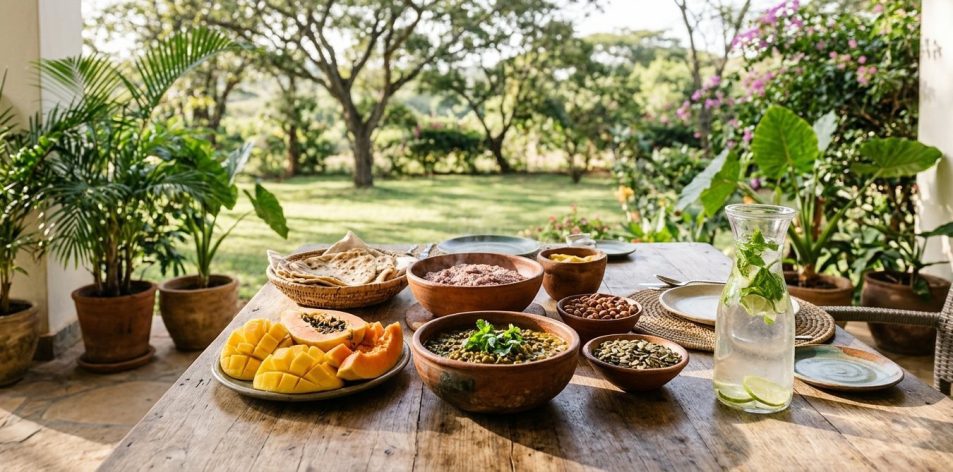
From finger millet and green grams to ripe mango, groundnuts and a jug of mint-lime water, everyday East African foods give you everything you need for steady energy, faster workout recovery and wholesome family meals, without expensive supplements or complicated meal plans.
Whether you start your morning with a brisk walk or run in Nairobi or Kigali, squeeze in a strength session after work in Kampala or Dar es Salaam, or simply keep pace with active children at the weekend, what you eat shapes how you feel and perform. Modern sports nutrition increasingly favours whole, minimally processed foods that replenish energy, support muscle repair and keep you hydrated without leaving you heavy or sluggish.
The good news is that East African foods already make up a remarkable pantry for active living. Traditional whole grains, legumes, tropical fruit, nuts, seeds and simple natural drinks are affordable, sold in every local market and supermarket, and sit comfortably with halal-conscious, family-friendly cooking. Here is how to put them to work.
Why East African Foods Are Made for Active Living
The World Health Organization’s healthy diet guidance recommends plenty of whole grains, legumes, fruit, vegetables and nuts, with less sugar, salt and processed fat. Read that list again and it looks a lot like a traditional plate in Kenya, Uganda, Tanzania or Rwanda.
- Slow-release carbohydrates: millet, sorghum, brown rice and whole maize fuel long sessions without a sugar crash.
- Plant protein and iron: green grams (ndengu), beans, cowpeas and pigeon peas help repair muscle and carry oxygen to working limbs.
- Natural electrolytes: bananas, sweet potatoes, leafy greens and coconut water restore the potassium you lose in sweat.
- Healthy fats and minerals: groundnuts, sesame, sunflower and pumpkin seeds add calories, magnesium and zinc for harder training weeks.
Better still, these foods are cheap, filling and easy to batch-cook, which makes them ideal for busy households that want to eat well without spending hours in the kitchen.
Whole Grains and Legumes: East African Foods for Everyday Energy
Steady physical output depends on a reliable supply of carbohydrate rather than quick sugar spikes that fade mid-session. Whole grains such as finger millet, sorghum, brown rice and minimally refined maize keep their bran and fibre, so they release energy gradually and keep you fuller for longer than refined flour and white bread.
Pairing those grains with legumes adds plant protein, iron, folate and fibre. A plate of ugali made from whole maize or millet with a ladle of green gram stew is not just comfort food; it is a well-balanced training meal. For active readers, combining grains and legumes across the day creates a budget-friendly foundation for both daytime focus and training stamina.
- Pre-training boost (60 to 90 minutes before exercise): a modest bowl of millet or sorghum porridge with sliced banana gives you easily digested carbohydrate without feeling heavy.
- Midday work and training fuel: brown rice or sorghum with seasoned green grams or bean stew and leafy greens such as sukuma wiki or managu keeps you satisfied all afternoon.
- Batch-cooking shortcut: cook a large pot of beans or green grams on Sunday, then portion it for quick wraps, grain bowls and stir-fries during the week.
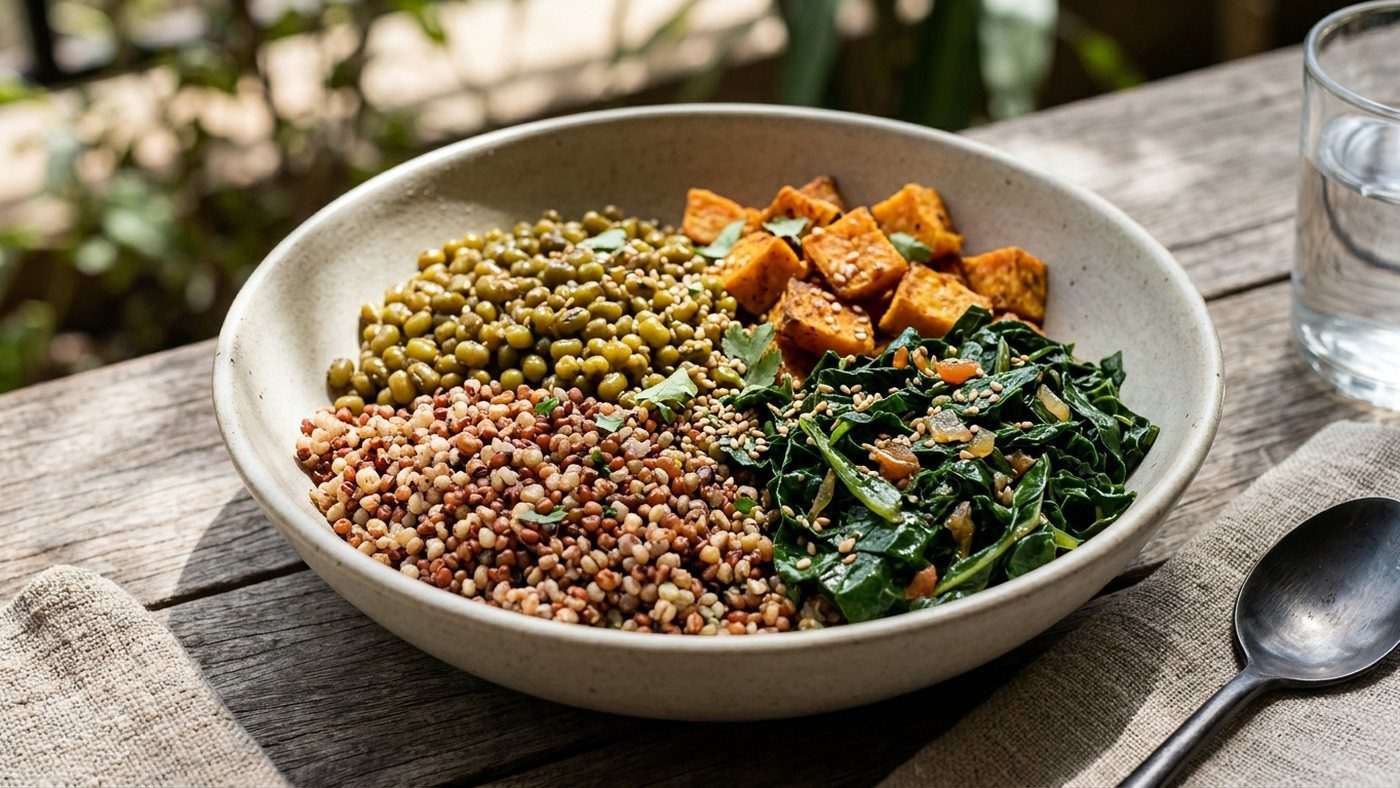
Simple rule of thumb: half your plate vegetables, a quarter whole grains and a quarter legumes, eggs, fish or lean meat. It works for a marathon runner and a busy parent alike.
Post-Workout Recovery with East African Foods
After exercise, your body has three straightforward recovery priorities: replace lost fluids, top up carbohydrate stores and supply protein to repair working muscles. You do not need specialist powders to meet those needs. The US National Institutes of Health notes that a well-planned diet of whole foods meets the needs of most active people, and that supplements rarely add much on top.
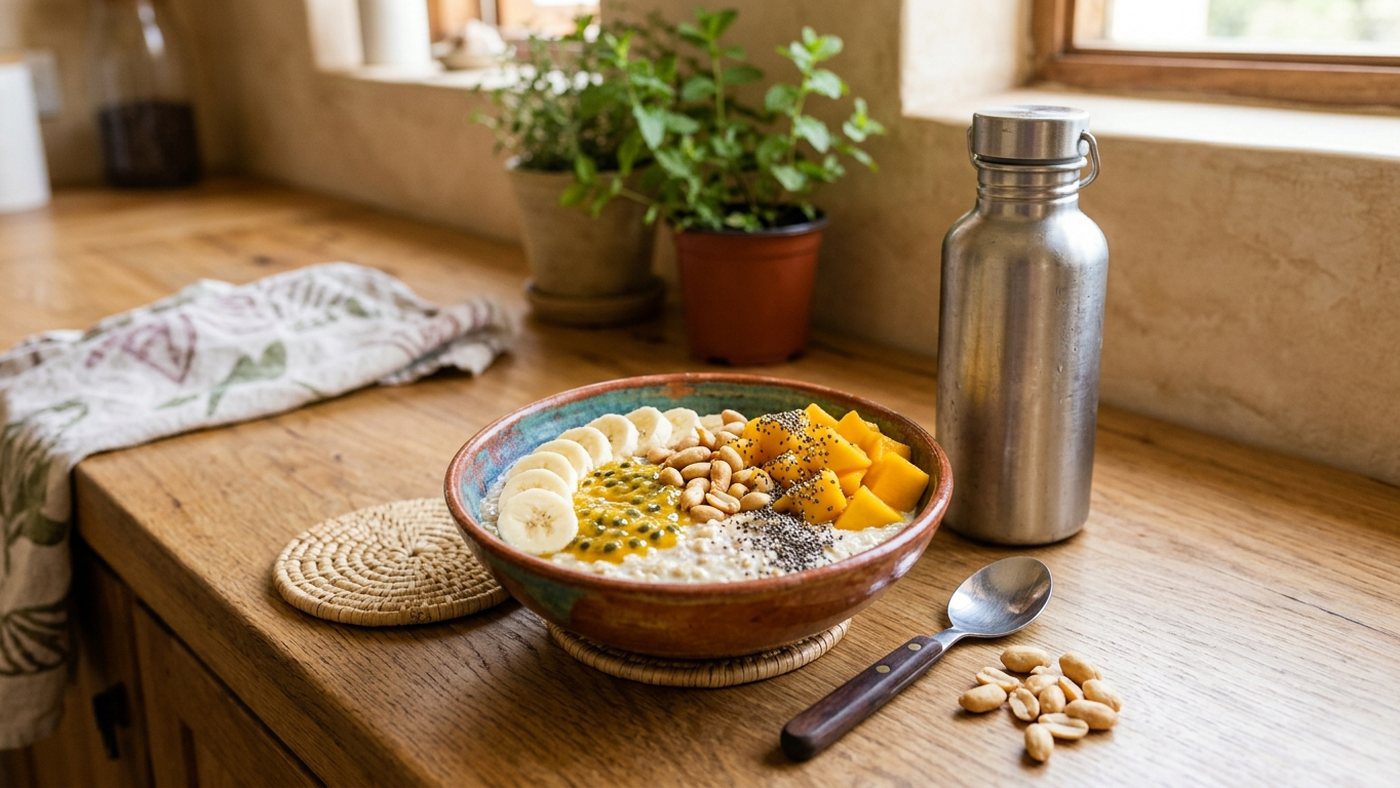
Fresh East African fruit, including bananas, mangoes, pawpaw, pineapple and passion fruit, pairs naturally with protein-rich staples such as plain milk, yoghurt, eggs or cooked legumes. A spoonful of roasted groundnuts, sesame, sunflower or chia seeds brings healthy fats and extra energy for anyone training hard several times a week.
| Goal and timing | Simple East African combination | Why it works |
|---|---|---|
| Quick post-workout snack (within 1 to 2 hours) |
Sliced ripe banana with unsweetened yoghurt or milk and a handful of roasted groundnuts | Fast carbohydrate to refill energy, plus protein and healthy fats for muscle repair. |
| Hearty recovery meal (main meal after training) |
Boiled or roasted sweet potatoes or whole grains with spiced beans or grilled chicken or fish and a fresh salad | Restores energy stores while delivering protein, potassium and micronutrients. |
| On-the-go option (commute or school run) |
Boiled eggs with whole-grain bread or groundnuts and a piece of mango or pawpaw | Portable, affordable and easy to pack for work, school or post-gym errands. |
If you are new to exercise, our guide to starting a weekly exercise routine after 40 pairs well with these recovery ideas, and runners will find plenty to enjoy in the benefits of a morning and evening jog.
Family-Friendly Meals and Natural Hydration
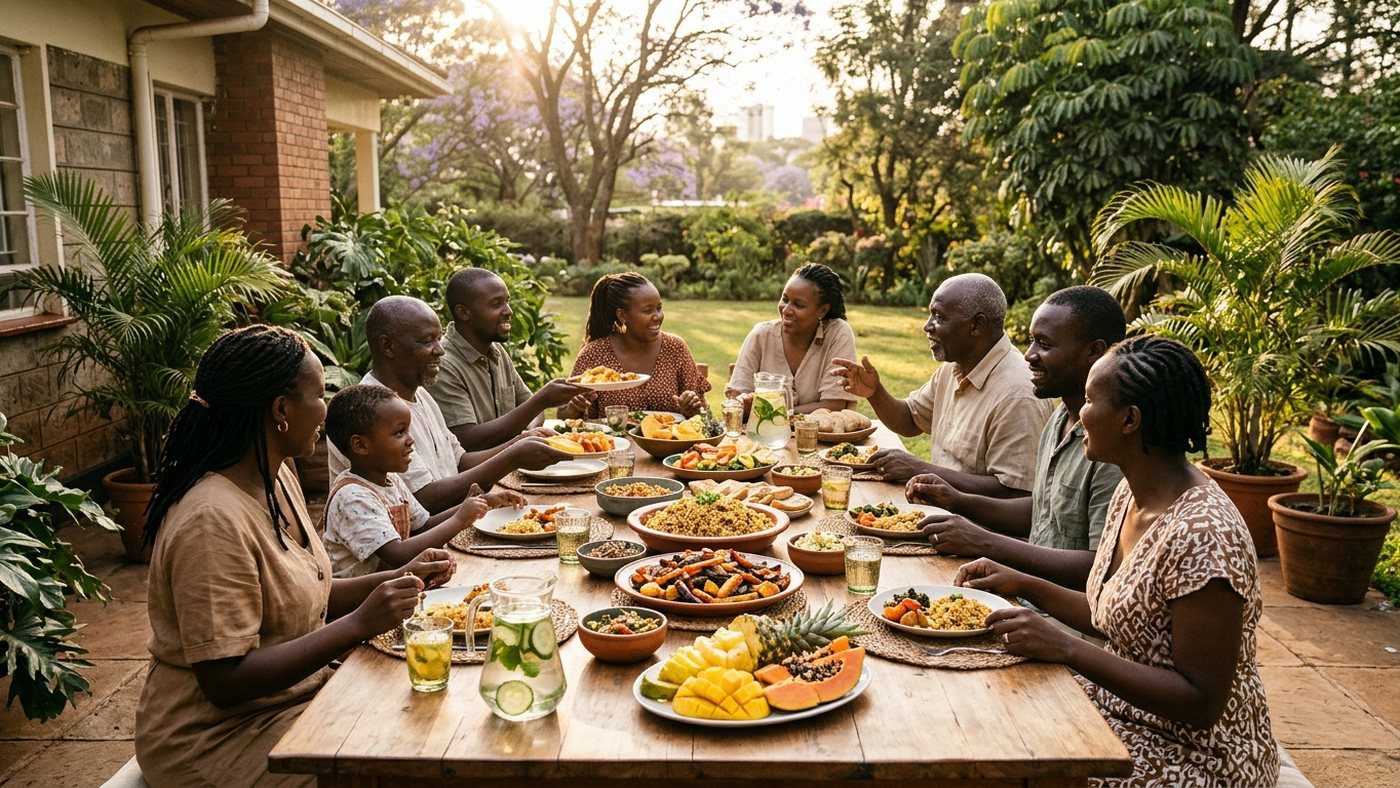
The easiest nutrition habits to keep are the ones the whole household enjoys. Rather than cooking separate meals for active adults and children, build a shared base of East African foods such as steamed rice, whole-grain chapatis or roasted vegetables, then adjust portions and toppings at the table.
Children and older relatives often prefer familiar textures and mild flavours, so swap heavy, oily sauces for gentle simmering, serve chopped tropical fruit on the side and keep roasted nuts or seeds handy for lunchboxes (take care with whole nuts for young children). Getting everyone moving together helps too; try our ideas for group sports that keep the whole squad active.
Hydration deserves as much attention as food, particularly in hot weather, at high-altitude training spots or on humid coastal afternoons. Plain water remains the cornerstone, while coconut water, diluted fresh juice and water infused with cucumber, lemon, lime or fresh mint make drinking more appealing throughout the day.
- Start early: keep a refillable bottle on your desk or kitchen counter so sipping becomes automatic rather than something you catch up on late at night.
- Match intake to sweat loss: longer, hotter or harder sessions call for extra fluids alongside meals that naturally contain sodium and potassium.
- Keep drinks clean and halal-friendly: skip sugary sodas and heavily caffeinated mixers in favour of water, herbal teas, milk or coconut water.
Stocking an Active Pantry on a Budget
You do not need a specialist health shop to eat like an athlete. A weekly trip to your nearest market or duka covers almost everything. Keep these East African foods in rotation and a nourishing meal is never more than 20 minutes away:
- Dry store: finger millet and sorghum flour, brown rice, green grams, dried beans, lentils and rolled oats.
- Fresh produce: bananas, mangoes, pawpaw, passion fruit, sweet potatoes, tomatoes, onions and a bunch of greens every few days.
- Protein and dairy: eggs, plain yoghurt, mala or fresh milk, and fish such as omena or tilapia.
- Snacks and toppings: roasted groundnuts, sesame, pumpkin and sunflower seeds, and unsweetened peanut butter.
Buying grains and legumes in bulk keeps costs low, and seasonal fruit is always the freshest and cheapest choice. Planned this way, healthy East African foods often cost less than processed snacks and takeaways.
A Sample Active Day of East African Foods
Not sure how to put it all together? Here is a simple day of eating for someone who trains in the early evening. Adjust portions to your appetite, age and activity level.
- Breakfast: finger millet porridge with milk, sliced banana and a sprinkle of sesame seeds, plus a glass of water.
- Mid-morning: a slice of pawpaw or a handful of roasted groundnuts.
- Lunch: brown rice with green gram stew, sukuma wiki and kachumbari.
- Pre-workout (an hour before): a banana or a small roasted sweet potato.
- Post-workout: yoghurt with mango, passion fruit and chia seeds, and coconut water or plain water.
- Dinner: grilled fish or chicken, or bean stew, with whole-grain chapati and a fresh salad shared with the family.
For heart-friendly training to match this menu, read exercises that strengthen your heart muscle.
Frequently Asked Questions About East African Foods and Fitness
What are the best East African foods to eat before a workout?
Choose easily digested carbohydrates 60 to 90 minutes before training: millet or sorghum porridge, a ripe banana, a small sweet potato or a slice of whole-grain bread with a little honey.
Can I build muscle without protein powder?
Yes. Eggs, milk, yoghurt, fish, chicken, beans, green grams and groundnuts provide plenty of protein when spread across the day. Most active adults meet their needs from food alone.
Is coconut water good for hydration after exercise?
Coconut water is a pleasant natural source of potassium and fluid. Plain water is enough for most sessions under an hour; coconut water is a good extra after long, hot or very sweaty workouts.
Are traditional East African foods suitable for children who play sport?
Absolutely. Whole grains, legumes, fruit and milk give growing bodies steady energy and the protein, calcium and iron they need. Serve them in familiar family meals and keep water close by at every match and practice.
Start with one or two familiar ingredients already in your kitchen this week, perhaps a pot of green grams, fresh fruit for recovery or a chilled jug of citrus-mint water, and build an active routine around East African foods that feels effortless for you and your family.