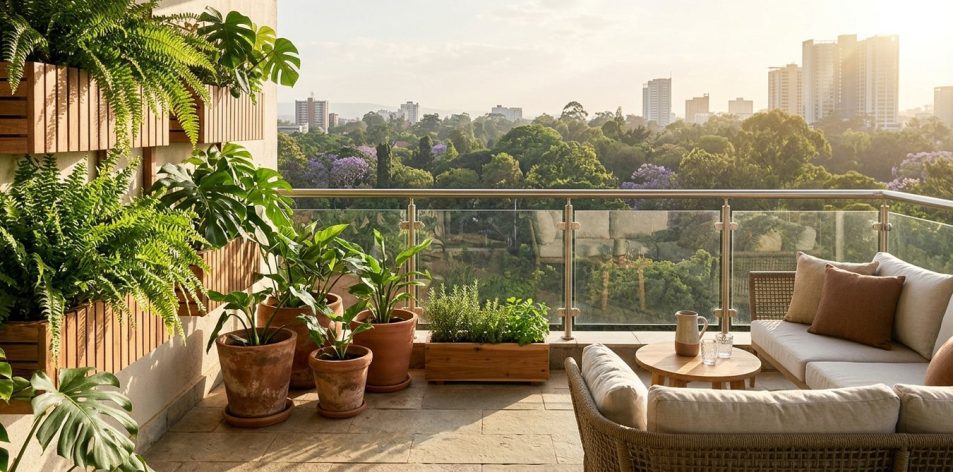
As vertical living reshapes the skylines of Nairobi, Kigali, Kampala and Dar es Salaam, apartment owners are turning compact balconies and rooftop terraces into calm, low-maintenance gardens that bring a little of East Africa’s greenery back to the doorstep
Across East Africa’s fastest-growing cities, home increasingly means height. From contemporary apartments in Nairobi’s Kilimani and Westlands to hillside residences in Kigali’s Nyarutarama, lakeside developments in Kampala and coastal towers on Dar es Salaam’s Msasani Peninsula, more families are trading the suburban lawn for an elevated view.
The wish for private green space has not gone anywhere. A well-planned apartment balcony garden softens hard architectural lines, shades sun-warmed concrete and creates an outdoor room for morning tea, quiet reading or relaxed family evenings. Even a modest two-metre balcony can become a thriving retreat without demanding hours of weekly upkeep, provided the planning comes before the shopping.
Read Your Balcony Before You Buy a Single Pot
East Africa’s major cities sit at very different altitudes, so a planting scheme that flourishes in Nairobi’s cool highland air may struggle in the humid heat of the coast. Spend a weekend watching your space before spending any money.
- Sun and wind: Count the hours of direct sun. West-facing balconies in Nairobi and Kampala take fierce afternoon glare, while upper-floor terraces in Dar es Salaam and Mombasa face steady sea breezes and salt spray. The higher the floor, the stronger the wind, so tall plants may need securing.
- Weight and drainage: Wet soil, ceramic pots and stone furniture add up quickly. Ask your building management about balcony load limits before installing anything heavy, place the weightiest containers against the main wall rather than the outer edge, and favour lightweight fibreglass, resin or timber planters. Saucers and clear drainage outlets stop water dripping onto the neighbours below.
- Rain: Most of the region has two rainy seasons, the long rains from around March to May and the short rains from around October to December. These are the best times to plant, but driving rain on an exposed terrace can waterlog pots that lack drainage holes.
- Zones: Keep sun lovers along the outer balustrade and shade-tolerant foliage close to the sliding doors, where the slab above gives natural shelter.
The Royal Horticultural Society’s guide to roof gardens and balconies is a useful companion here, particularly on weight and wind.
Grow Upwards and Keep the Floor Clear
The secret to a balcony that feels generous is a clear floor. Rather than lining the edges with dozens of small pots, draw the eye upwards with structured vertical greenery.
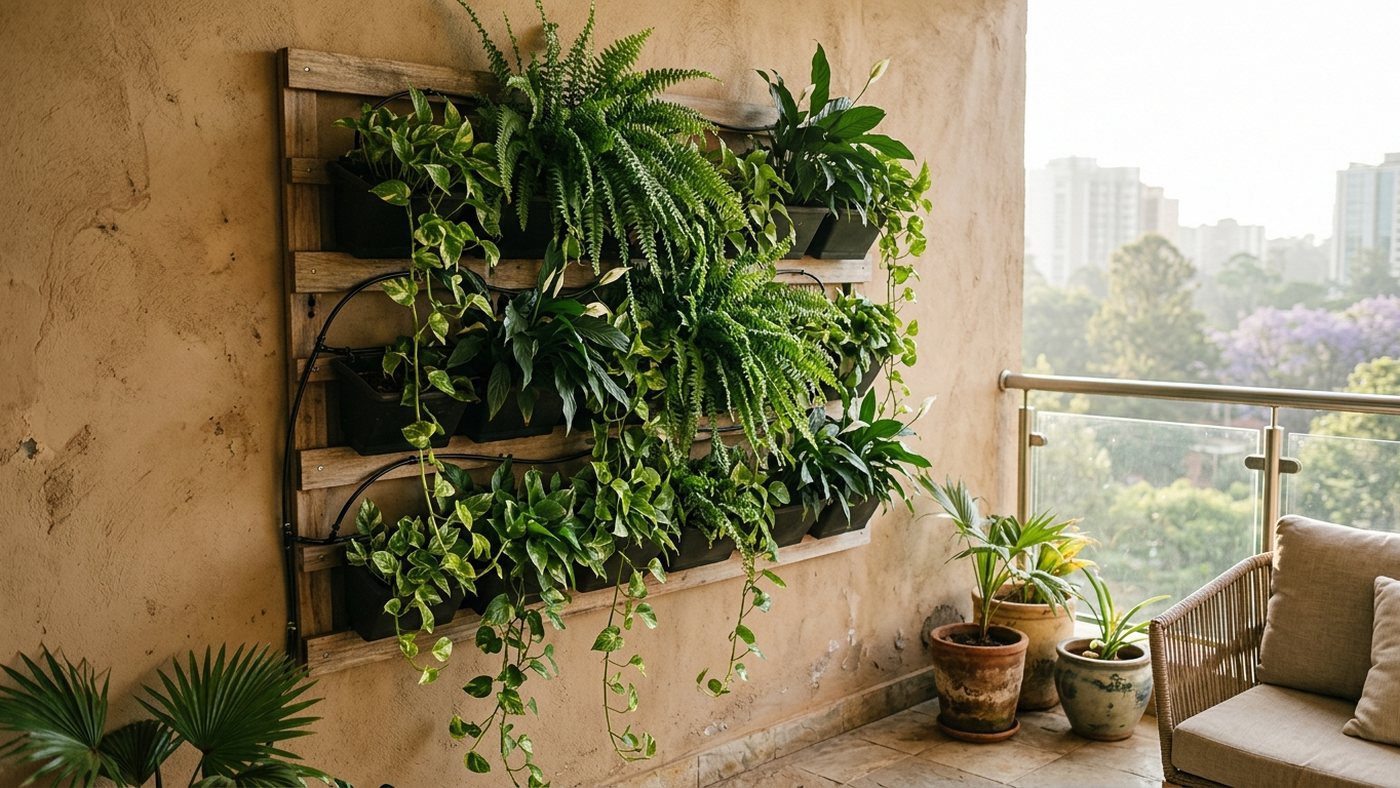
Modular wall-mounted pocket planters, tiered timber trellises and powder-coated steel grids turn a blank plaster wall into a living tapestry. If you rent, or would rather not drill into an exterior wall, freestanding ladder planters and tension-pole plant stands give the same height without permanent fixings.
Self-watering vertical modules with built-in reservoirs keep maintenance light, and a battery-operated drip timer connected to a balcony tap keeps everything hydrated while you travel. For more on stretching every litre, see our guide to creating a low-water balcony garden in Nairobi’s high-rise apartments.
Choose Foliage That Suits Your City
Regionally suited plants spare you constant pruning, replanting and pest battles. Year-round warmth and generous daylight mean an extraordinary range of tropical and subtropical species do well in containers, as long as you match them to your climate.
| Climate | Cities | Reliable low-maintenance plants | Care notes |
|---|---|---|---|
| Cool highland | Nairobi, Kigali, Arusha | Monstera, Boston fern, peace lily, jade plant, dwarf bamboo | Keep ferns, monstera and peace lilies under the overhang in bright, indirect light; water moderately in the dry months. |
| Warm equatorial | Kampala, Entebbe | Areca palm, bird of paradise, philodendron, dracaena, bougainvillea | Enjoys steady warmth and humidity; prune lightly to keep its shape. |
| Humid coastal | Dar es Salaam, Mombasa | Frangipani, pandanus, aloe vera, desert rose, sansevieria | Copes with salt air, strong sun and sea breezes on little water. |
Layer heights and leaf textures for instant depth. Anchor one corner with a tall specimen such as an Areca palm or bird of paradise, fill the middle with broad monstera or philodendron leaves, and let trailing pothos spill over the planter edges.
Plant a Herb Box Within Reach of the Kitchen
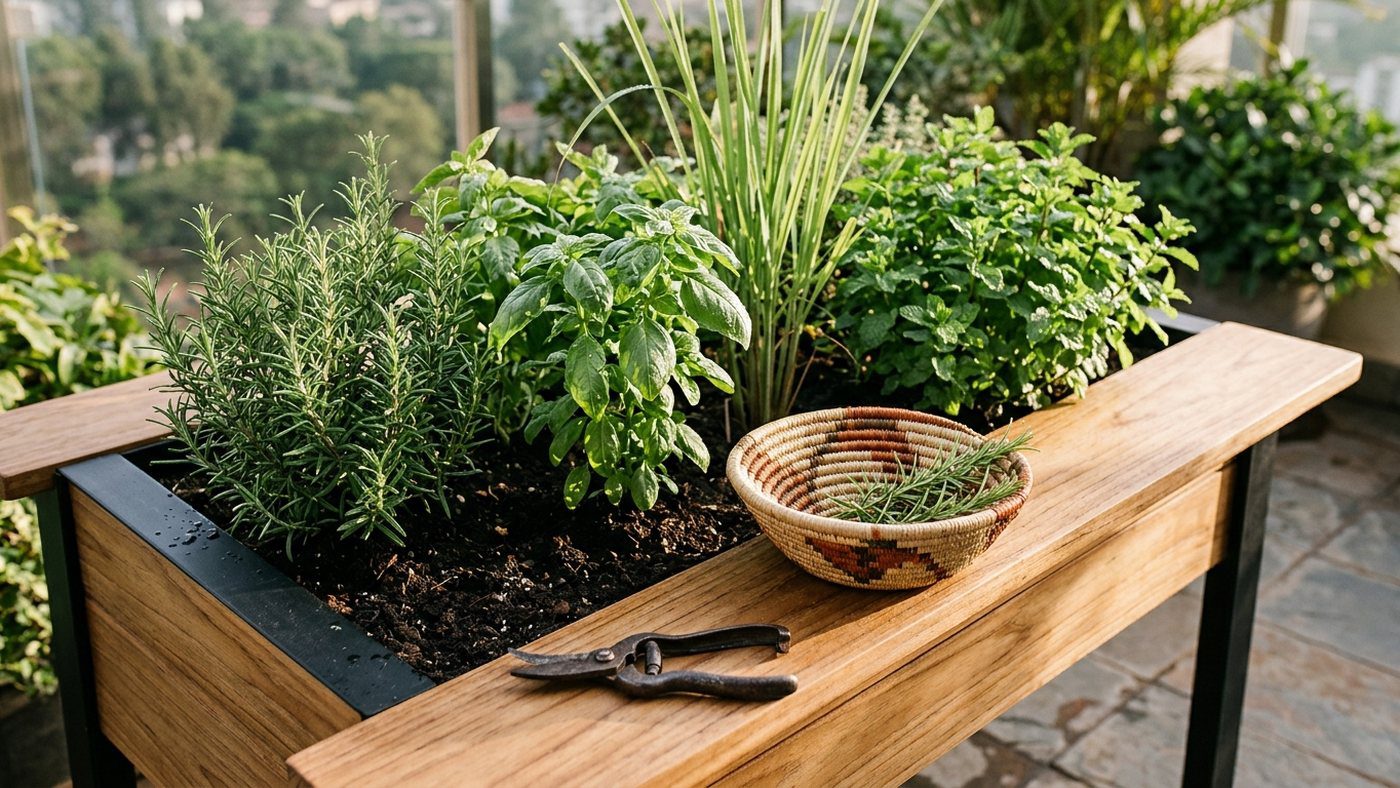
A garden that engages taste and scent as well as sight is far more rewarding. A raised herb box puts fresh flavour within arm’s reach of the kitchen and releases its fragrance whenever a breeze passes through.
Choose a trough standing roughly 75 to 85 centimetres high. Waist height keeps herbs away from pets and toddlers, improves airflow and makes picking effortless. Fill it with a free-draining potting mix of coco coir and mature compost rather than garden soil, which compacts in containers.
- Rosemary and thyme: Hardy, woody herbs that love sun and need little water, in the highlands and at the coast alike.
- Lemongrass and mint: Ideal for fresh herbal infusions, chai and coastal fish dishes. Give mint its own pot or a divided corner, as its roots will otherwise take over.
- Basil and coriander (dhania): Kitchen staples across the region. Basil loves warmth; coriander prefers cooler conditions and gentle morning sun, so sow a little every few weeks for a steady supply.
Furnish It Like an Outdoor Room
Once the greenery is established, furniture turns the balcony into a place to linger. East African craftsmanship offers pieces that bridge contemporary comfort and regional heritage.
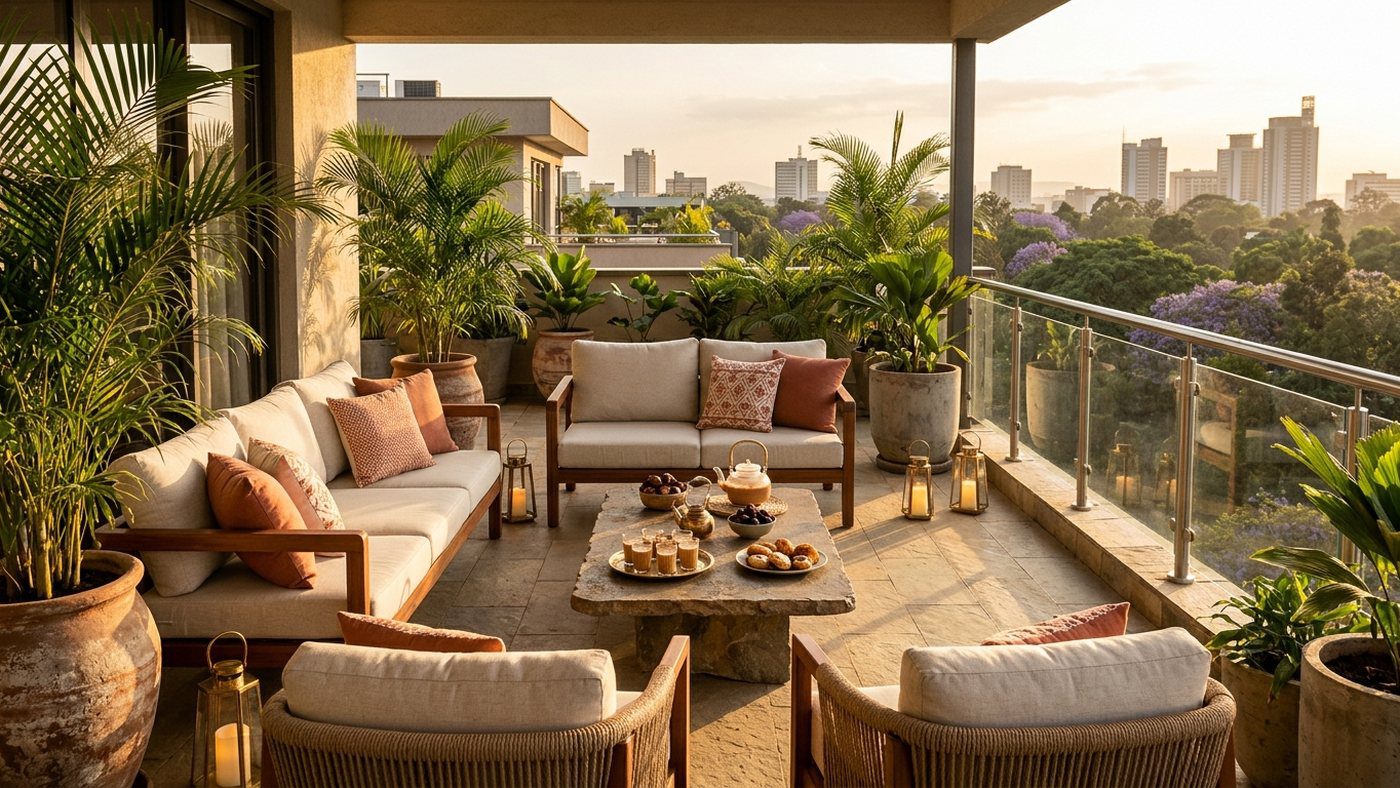
Look for low seating in weather-resistant hardwood such as teak, from suppliers who can show the timber is legally and sustainably sourced, paired with handwoven synthetic rattan or marine-grade rope that stands up to equatorial sun and sudden downpours. Choose cushions in solution-dyed outdoor fabric in sand, terracotta, olive or cream, which resists fading and dries quickly after rain.
For families with young children, favour rounded edges, storage benches that swallow throws and toys, and slip-resistant outdoor rugs in treated sisal or recycled fibres. Finish with soft, glare-free light: solar woven lanterns, warm-white LED strips tucked beneath the benches and glass lanterns turn the balcony into an evening retreat for spiced tea, fresh fruit and unhurried conversation.
If the balcony inspires you to grow more of your own food, our guide to a low-maintenance vegetable garden on a Kenyan homestead scales the same ideas up, and the RHS’s advice on growing plants in containers covers the basics of potting and feeding.
Climate-smart planting, tactile local materials and a little spatial discipline are all it takes. Done well, the balcony stops being an afterthought on the floor plan and becomes the most restorative room in the home.