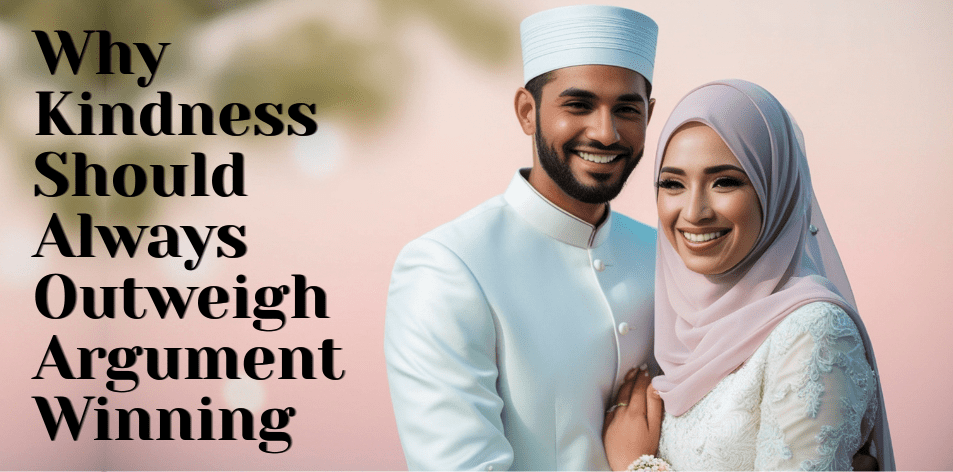
Prioritising Compassion Over Ego In Marital Disagreements
Disagreements are a natural part of married life. Two individuals with different perspectives, habits, and emotional responses will inevitably see things differently. However, the real test of a strong marriage is not whether conflict exists, but how it is handled.
When the focus shifts to “winning” an argument, something deeper is often lost—peace, understanding, and emotional closeness. But when kindness is prioritised, even disagreements become a pathway to greater unity.
The Cost of Needing to Be Right
Choosing to “win” at all costs may feel satisfying in the moment, but it often leaves behind emotional damage.
Over time, it can lead to:
• Defensive communication – every discussion becomes a battle
In a healthy marriage, the goal is not to defeat each other, but to protect the bond.
Kindness as a Strength, Not a Weakness
Kindness during disagreement is not about avoiding issues or staying silent. It is about addressing concerns with dignity, patience, and self-control.
It includes:
• Remembering the value and rights of one’s spouse even in conflict
True strength is shown when a person can hold their tongue at the height of emotion and still choose respect.
Practising Gentle Disagreement
Healthy conflict is possible when both partners commit to respectful communication.
Key practices include:
• Delay reaction if needed – sometimes silence is wiser than immediate response
These habits transform arguments into meaningful conversations.
Shifting From Opposition to Partnership
A marriage is not a competition where one must lose for the other to win. It is a shared journey where both individuals are on the same side, even in disagreement.
To build solutions together:
• Prioritise long-term harmony over short-term satisfaction
When both partners feel heard, solutions become easier and more lasting.
The Role of Emotional Maturity in Marriage
Emotional maturity is often what separates destructive conflict from constructive growth.
It is reflected in:
• Recognising that love is more important than being right
These qualities strengthen trust and deepen emotional intimacy over time.
Kindness is not the opposite of strength—it is its highest expression. In marriage, the need to win often creates distance, while the choice to be kind builds closeness.
When couples prioritise compassion over ego, disagreements become moments of growth rather than division. In the end, a peaceful heart within the home is worth far more than any argument won.