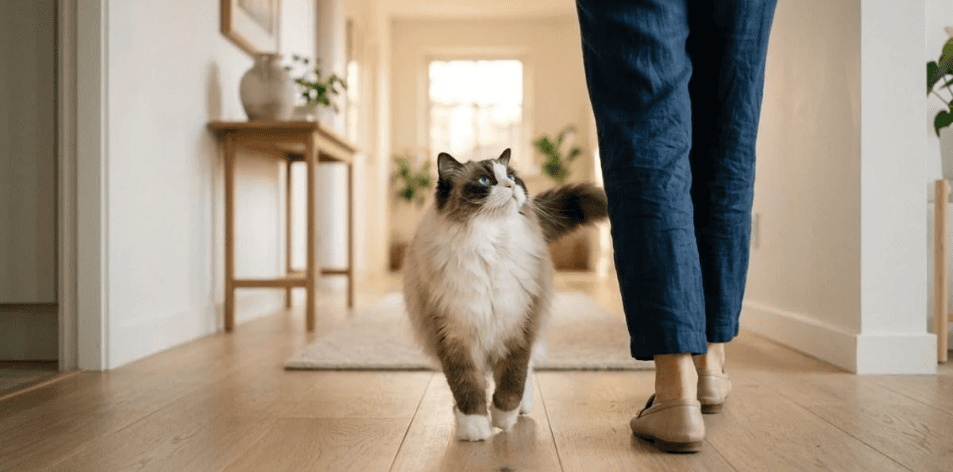
Discover What Your Cat’s Clingy Behaviour Really Means!
Does your cat follow you from room to room, wait outside the bathroom door or appear beside you the moment you sit down? While it might seem like your feline friend simply wants attention, this curious behaviour could reveal far more about your cat’s personality, instincts and bond with you than you realise.
Cats are often described as independent, mysterious and perfectly happy doing their own thing. Yet many cat owners discover that their supposedly independent companions seem determined to supervise almost every activity, from preparing breakfast to settling down for the night.
So, what is really going on in your cat’s mind? Here are seven surprising reasons your feline companion might insist on being wherever you are.
1. They Love You More Than You Think
Cats may show affection differently from dogs, but they can form strong emotional bonds with their human companions.
Following you around can be a sign of attachment, trust and a desire to spend time together. Your cat may enjoy your presence even when you are not actively playing with or stroking them.
Look for other signs of affection, such as slow blinking, rubbing their head against you, resting nearby or greeting you when you return home.
The surprising truth: Your cat does not always need to sit on your lap to show that you matter. Sometimes, simply choosing to be near you is enough.
2. They Want Your Attention
Have you ever noticed your cat following you more closely when you are busy or ignoring them?
Your feline friend may have learnt that staying nearby is an effective way to get your attention. Perhaps you respond by speaking to them, offering a cuddle, picking up a toy or giving them a little scratch behind the ears.
Even a brief interaction can encourage this behaviour to continue.
Some cats are naturally more sociable than others and enjoy being involved in their owners’ daily routines. Others may follow you because they want something specific, such as playtime or companionship.
If your cat seems particularly persistent, try setting aside time each day for interactive play and positive attention.
3. They Are Naturally Curious About Everything You Do
Cats are observant animals, and their curiosity can make ordinary household activities surprisingly interesting.
When you move from one room to another, your cat may wonder what has caught your attention. Opening a cupboard, carrying a shopping bag or preparing something in the kitchen can provide a whole new set of sights, sounds and smells to investigate.
Your cat may also enjoy monitoring changes in its familiar surroundings. Following you allows it to explore different parts of the home while keeping track of what is happening.
This is particularly noticeable when you bring something new into the house or start doing something outside your usual routine.
To your cat, you are not just the person who provides food and shelter. You are also a moving source of interesting discoveries.
4. They Think You Might Have Food
If your cat suddenly appears whenever you enter the kitchen, there may be a very practical explanation.
Cats can quickly learn household routines. They may recognise the sounds of food packaging, associate certain times of day with meals or remember that following you sometimes leads to a tasty reward.
Even if you are only making yourself a cup of tea or preparing lunch, your cat might decide it is worth investigating.
Some cats also follow their owners towards the kitchen because they associate that area with treats, feeding bowls or previous rewarding experiences.
Keep your cat’s feeding routine consistent and provide an appropriate, balanced diet. Avoid giving in to every demand for food, as excessive treats can contribute to unhealthy weight gain.
Remember that some human foods are unsuitable or dangerous for cats, so stick to food specifically appropriate for felines.
5. You Make Them Feel Safe
Despite their confident appearance, cats can be sensitive to changes in their environment.
Your presence may provide reassurance, particularly if your cat is naturally cautious, has recently moved home or is adjusting to unfamiliar people, sounds or animals.
Following you from room to room may help your cat feel more secure while exploring its surroundings. Some cats are also more inclined to stay close to familiar people when there are visitors, loud noises or other disruptions.
You can support your cat by providing quiet resting places, hiding spots, elevated perches and predictable daily routines.
However, there is an important distinction between a cat that enjoys your company and one that appears frightened whenever you leave.
If your cat becomes distressed every time you disappear from view, it may be worth discussing the behaviour with a veterinarian.
6. They Are Looking for a Comfortable Place to Settle
Cats are experts at finding comfortable places to sleep, relax and observe the world.
Your favourite chair, warm bed or freshly vacated spot on the sofa may be particularly appealing. Following you can give your cat an opportunity to claim a cosy resting place or settle near someone it trusts.
Your body warmth, familiar scent and the softness of your surroundings may all make these locations attractive.
Some cats will even follow their owners into a room, watch them settle down and then curl up nearby.
If your cat regularly chooses to rest beside you, it may simply be combining comfort with companionship.
Consider providing a comfortable cat bed near your usual sitting area. Your feline companion may appreciate having its own inviting space while still being close to you.
7. They May Be Responding to Changes in Your Behaviour
Cats are attentive observers. Over time, they can become familiar with your routines, movements and everyday habits.
If you are feeling unwell, spending more time at home or behaving differently from usual, your cat may notice the change and respond by staying close.
However, it is important not to assume that following you means your cat understands exactly how you feel. A change in your routine, body language or activity level may simply make you more interesting or alter the way your cat interacts with you.
Likewise, if your cat suddenly becomes unusually clingy, the change could reflect stress, discomfort or an underlying health issue rather than affection alone.
Pay attention to other signs, including changes in appetite, energy levels, litter tray habits and vocalisation.
If the behaviour is sudden, persistent or accompanied by other unusual symptoms, seek advice from your veterinarian.
When Should You Be Concerned About Your Cat Following You?
In most cases, a cat following its owner is perfectly normal. It may reflect affection, curiosity, learned routines or a desire for companionship.
Nevertheless, a sudden change in behaviour deserves attention, especially if your cat previously preferred spending time alone.
Look out for:
– Unusually frequent or distressed meowing.
– Excessive clinginess accompanied by lethargy or other signs of illness.
These signs do not necessarily mean something serious is wrong, but they can indicate that your cat needs help. Contact a veterinarian if you notice a significant change, and seek prompt advice if your cat appears unwell.
Can You Encourage Your Cat to Be More Independent?
If your feline companion follows you everywhere, there is generally no need to discourage the behaviour unless it becomes disruptive or appears linked to distress.
Instead, make your home more engaging and comfortable.
– Offer affection on your terms, too: Regular positive interaction helps maintain a healthy bond.
Every cat has a different personality. Some are naturally sociable, while others prefer occasional companionship and plenty of solitude.
The goal is not to make your cat less affectionate, but to ensure it feels comfortable and confident whether you are beside it or in another room.
The Bottom Line: You Might Be Your Cat’s Favourite Person
If your cat follows you from room to room, you may have a little companion who enjoys being involved in your daily life.
The behaviour could mean your cat loves your company, wants attention, expects food, feels reassured by your presence or is simply curious about what you are doing.
The key is to understand your individual cat. Notice its usual habits, learn what makes it feel comfortable and pay attention to any sudden changes in behaviour.
And the next time your cat follows you into the bathroom or supervises you while making dinner, remember that there may be more than one reason for its dedication.
You might just be the most interesting thing in your cat’s world!