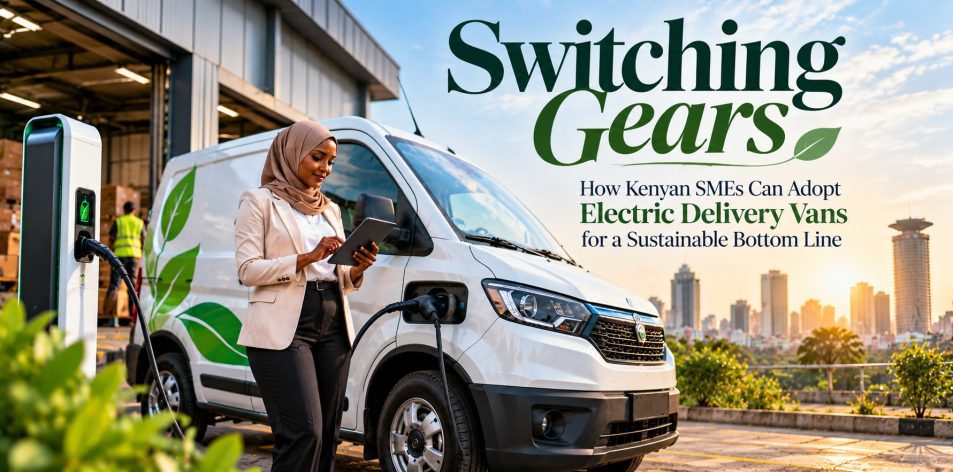
Why Electric Vans Matter for Small and Medium Enterprises
Kenyan businesses that rely on road transport are feeling the pressure of rising fuel costs, tighter emissions regulations and growing customer expectations around sustainability. An electric delivery van offers a clear answer: lower operating expenses, quieter streets and a brand image that resonates with environmentally‑conscious consumers. For a typical SME, the shift is less about a radical overhaul and more about a series of practical decisions that add up to a healthier balance sheet.
The Financial Picture: From Purchase Price to Total Cost of Ownership
The upfront price of an electric van remains higher than that of a diesel counterpart, mainly because of the battery pack. However, the total cost of ownership (TCO) tells a different story. Electricity is considerably cheaper per kilometre than diesel, and electric drivetrains have fewer moving parts, which translates into reduced maintenance outlays. Over a five‑year horizon, many operators find the savings on fuel and servicing offset the initial premium.
A useful exercise for any SME is to map out its annual mileage, average load factor and current fuel spend. By applying the prevailing electricity tariff to the van’s kWh consumption, the operator can estimate a realistic fuel‑cost reduction. Adding the expected drop in service visits – brakes, oil changes and engine overhauls disappear – gives a clearer view of cash flow benefits.
Halal‑Compliant Financing Options
For businesses that observe Islamic finance principles, conventional interest‑based loans are off the table. Fortunately, several structures align with Shariah law while still delivering the capital needed for an electric fleet.
Murabaha Purchase
A bank purchases the van and resells it to the SME at a pre‑agreed markup, payable in instalments. The price is fixed at the outset, eliminating any hidden interest.
Ijara Lease
Under an operating lease, the financier retains ownership of the vehicle and the SME pays a rental that covers use and maintenance. At the end of the term, the business may opt to purchase the van at a nominal residual value.
Musharakah Partnership
Both the bank and the SME contribute capital to acquire the van, sharing profits and losses in proportion to their equity. The SME can gradually buy out the bank’s share as cash flow permits.
Many Kenyan Islamic banks have begun tailoring these products for green assets, recognising the dual benefit of economic viability and environmental stewardship.
Government Incentives That Lighten the Load
Kenya’s policy framework is gradually shifting to support low‑emission transport. While the exact details evolve, the following measures are currently on the table for qualifying businesses:
- Reduced import duty on fully electric commercial vehicles.
- Accelerated depreciation allowances for assets that meet emissions criteria.
- Tax credits linked to the amount of CO₂ saved per kilometre.
- Access to grant programmes that subsidise the installation of private charging points.
SMEs should engage with the Kenya Revenue Authority and the Ministry of Transport to confirm eligibility and to obtain the necessary documentation. Early adopters often benefit from streamlined processing, as the agencies aim to showcase successful case studies.
Charging Infrastructure: From Public Hubs to On‑Site Solutions
A common concern is where the vans will recharge during a busy delivery day. The Kenyan charging landscape is expanding, driven by both private operators and public utilities.
In Nairobi, several fast‑charging stations now sit along major logistics corridors, offering a 30‑minute top‑up that can add 150‑200 km of range. Outside the capital, regional hubs are emerging in Mombasa, Kisumu and Nakuru, often co‑located with shopping centres or fuel stations that have retrofitted electric bays.
For businesses with a fixed depot, installing a dedicated Level 2 charger can be cost‑effective. The initial outlay is offset by lower electricity tariffs for commercial customers and, in some cases, by the same government grant that supports public charging points. Where space is limited, a shared charging locker – a compact unit that houses multiple connectors – can serve a small fleet without requiring a full‑scale depot.
A Practical Roadmap for the Transition
Moving from diesel to electric does not happen overnight, but a phased approach reduces risk and spreads cost.
1. Audit the current fleet. Identify which routes are short‑haul and have predictable daily distances – these are the best candidates for an electric replacement.
2. Run a TCO model. Use realistic electricity rates and maintenance forecasts to compare against existing diesel expenses.
3. Engage a halal‑compliant financier. Discuss Murabaha, Ijara or Musharakah options and request a proposal that aligns with cash‑flow cycles.
4. Check incentive eligibility. Submit the required paperwork to the relevant ministries and tax authorities early, as processing times can vary.
5. Plan charging logistics. Decide between public fast chargers, a depot‑based charger or a hybrid approach. Factor in the time needed for installation and any grid upgrades.
6. Pilot the first van. Deploy it on a controlled route, monitor energy consumption, and gather driver feedback. Use the data to refine the rollout plan.
7. Scale up. Once the pilot proves cost‑effective, expand the electric fleet gradually, prioritising routes that deliver the highest savings.
Looking Ahead: A Sustainable Edge for Kenyan SMEs
The shift to electric delivery vans is more than a compliance tick; it is a strategic move that can sharpen an SME’s competitive edge. Lower operating costs improve margins, while a greener image attracts customers who value responsible business practices. With halal‑compliant financing, supportive government policies and a nascent but growing charging network, the barriers that once seemed insurmountable are now manageable.
For Kenyan entrepreneurs, the message is clear: the electric future is arriving at the depot door. By taking measured steps today, an SME can position itself at the forefront of a market that rewards efficiency, sustainability and financial prudence.