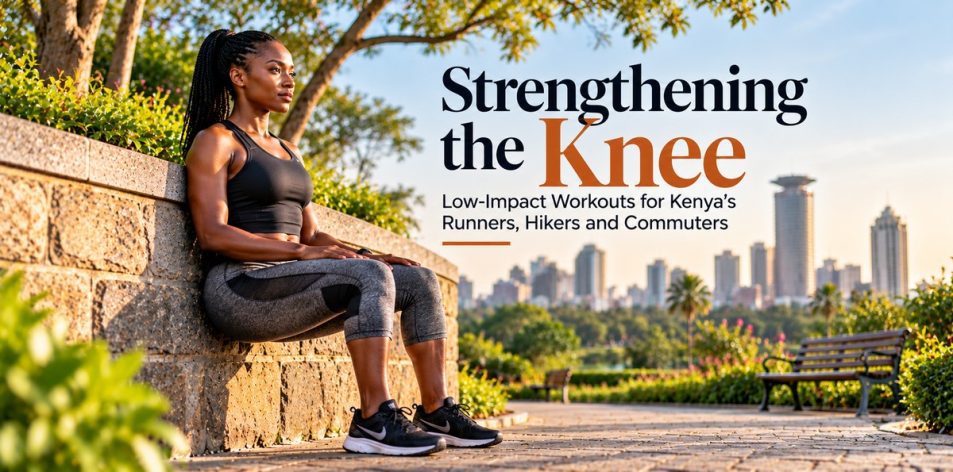
Why Knee Health Is A Priority For Active Kenyans
Whether you clock kilometres on the Nairobi‑Mombasa highway, scramble up the Aberdare slopes, or simply navigate the daily rush on matatu seats, the knee bears a constant load. A strong, stable joint reduces the risk of over‑use injuries, improves efficiency and keeps you moving comfortably throughout the year. The good news is that a focused, low‑impact routine can be woven into even the busiest schedule, using the spaces you already frequent.
Fundamentals of Safe Knee Training
Before diving into specific movements, a few principles help protect the joint:
- Control the range of motion. Move deliberately; avoid sudden, jerky actions that stress ligaments.
- Maintain alignment. Keep the knee tracking over the middle toe, especially during single‑leg work.
- Prioritise quality over quantity. A few well‑executed reps are more beneficial than many sloppy ones.
- Warm‑up briefly. Five minutes of easy walking or gentle cycling raises blood flow and prepares the muscles.
Low‑Impact Exercises You Can Do Anywhere
The following routine targets the quadriceps, hamstrings, glutes and calf muscles – the primary support system for the knee. Perform the circuit two to three times a week, allowing at least a day of rest between sessions.
1. Wall Sit (Isometric Quad Builder)
Stand with your back against a wall, feet shoulder‑width apart. Slide down until thighs are parallel to the floor, knees directly above ankles. Hold for 20‑30 seconds, breathing steadily. To progress, extend the hold by five seconds each week.
2. Step‑Downs (Controlled Eccentric Load)
Find a low, sturdy step – a park bench, a gym platform, or a sturdy household stair. Place one foot firmly on the step, then slowly lower the opposite heel toward the ground, keeping the supporting knee aligned. Touch the floor lightly, then push back up. Aim for 10‑12 reps per leg.
3. Single‑Leg Bridge (Glute‑Hamstring Synergy)
Lie on your back with knees bent, feet flat on the floor. Lift one foot, extending the leg straight, then push through the heel of the grounded foot to raise hips until the body forms a straight line from shoulders to the lifted knee. Hold for two seconds, lower, and repeat 10‑15 times before switching legs.
4. Lateral Band Walks (Hip Stabiliser)
Loop a light resistance band around both ankles. With knees slightly bent, step sideways, keeping tension on the band. Take ten steps in one direction, then return. This exercise strengthens the abductors that keep the knee from collapsing inward.
5. Calf Raises (Ankle‑Knee Chain)
Stand on a flat surface or the edge of a step. Rise onto the balls of your feet, pause, then lower slowly. Perform three sets of 15‑20 reps. Strong calves help absorb impact during downhill runs and steep hikes.
Fitting the Routine Into a Busy Day
The key to consistency is flexibility. Here are three practical ways to slot the exercises into everyday life:
- Morning micro‑session. While waiting for the kettle to boil, do a wall sit and a set of calf raises in the kitchen.
- Commute boost. If you take a matatu or bus, stand at the next stop and perform a few step‑downs on the curb.
- Park pause. During a lunch break in a city park, spread a small mat and complete the full circuit in ten minutes.
Using Kenya’s Climate and Terrain to Your Advantage
Kenya’s varied climate offers natural cues for training. Early mornings are cooler in Nairobi and the highlands, making them ideal for strength work before a run or hike. In hotter coastal towns, schedule sessions for late afternoon when the sun eases. When training outdoors, choose flat, well‑maintained paths for the first few weeks; as strength builds, incorporate gentle undulations to mimic the terrain you’ll encounter on longer treks.
Community Gyms, Parks and Home Spaces – Making the Most of What’s Near You
A community gym can provide resistance bands, mats and sturdy steps without a hefty membership fee. If you prefer open air, most urban parks have low benches, railings or even low walls that serve as perfect step‑down platforms. At home, a simple yoga mat and a sturdy coffee table can replace specialised equipment. The goal is to keep the environment as convenient as possible, removing excuses and encouraging regular practice.
Staying Safe and Listening to Your Body
Knee strengthening is a gradual process. If you feel sharp pain – not the normal muscle fatigue – stop the exercise and reassess your form. Swelling, persistent discomfort or a feeling of instability warrants a brief pause and, if needed, professional advice. Hydration is especially important in Kenya’s warm climate; drink water before, during and after each session to support muscle recovery.
Building a Sustainable Knee‑Strong Routine
A resilient knee is the result of consistent, mindful work rather than occasional heroics. By integrating short, low‑impact exercises into the rhythms of running, hiking or commuting, you protect the joint while enhancing overall performance. Use the parks, community gyms or a corner of your living room – whichever fits your day – and let the climate guide the timing. Over weeks, you’ll notice smoother strides, steadier climbs and fewer aches, keeping you on the move wherever Kenya’s roads and trails lead.