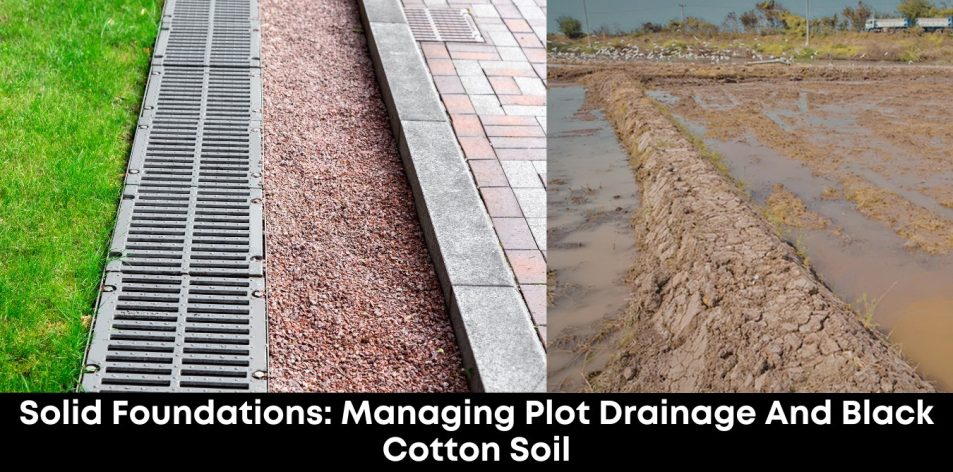
Protecting Your Property Investment from Flooding and Seasonal Ground Movement
In the cycle of seasons, rain is a profound blessing (Barakah) from the Almighty, providing life to the earth. However, for a property owner, unmanaged water can quickly become a challenge, especially on plots with “Black Cotton” soil—the expansive clay common in many parts of Kenya like Kitengela, Syokimau, and Ruai. This soil is a trust (Amanah) that requires specific knowledge to manage; it swells and becomes “mushy” when wet, then shrinks and cracks deeply when dry. Without proper drainage, this movement can damage foundations and lead to persistent flooding. By taking proactive steps to direct water away from your structures, you act as a wise steward of your land. This guide explores the essential techniques to improve drainage and keep your home safe and dry, regardless of the soil type.
1. Understanding the Nature of Black Cotton Soil
Black cotton soil is notoriously difficult because of its “expansive” nature. Understanding how it reacts to water is the first step toward effective management.
- High Water Retention: Unlike red soil or sandy loam, black cotton soil holds onto water for long periods, leading to surface ponding and a “mushy” consistency that can swallow vehicle tyres or make walking impossible.
- Pressure on Foundations: When this soil absorbs water, it expands with enough force to lift concrete slabs or crack walls. Managing drainage is not just about avoiding puddles; it is about protecting the structural integrity of your home.
- Seasonal Cracking: During the dry season, the soil loses moisture and shrinks, creating deep fissures. These cracks become direct channels for water to reach your foundation during the first heavy rains, causing rapid and dangerous soil movement.
2. Surface Drainage: The First Line of Defence
The goal of surface drainage is to move water off your plot as quickly as possible before it has a chance to soak deep into the clay.
- Grading and Sloping: Ensure the ground around your house is graded to slope away from the foundation. A minimum “fall” of 5 per cent (about 6 inches of drop over 10 feet) is recommended to ensure gravity pulls water toward the plot boundaries.
- Concrete Aprons: Install a wide concrete “apron” or walkway around the perimeter of your house. This acts as a waterproof shield, ensuring that roof runoff doesn’t pool directly against your foundation walls.
- Open Drainage Channels: Construct lined V-shaped or U-shaped concrete drains along your plot boundaries to channel storm water toward the estate’s main drainage system or a safe discharge point.
3. Subsurface Solutions: French Drains and Soak Pits
When surface water is under control, you may still need to manage the “hidden” water that saturates the ground.
- French Drains: A French drain is a gravel-filled trench containing a perforated pipe. It is buried at the lowest points of your plot to collect groundwater and redirect it away. For black cotton soil, always wrap the pipe in a geotextile fabric to prevent fine clay particles from clogging the system.
- Soak Pits (Soakaways): A soak pit is a deep, stone-filled hole designed to let water seep slowly into the ground. However, in heavy black cotton soil, standard soak pits can fail because the clay does not absorb water quickly enough. In these cases, your soak pit should be deeper, reaching the more permeable layers beneath the clay.
- The “Evaporation Tank” Alternative: In areas where the soil is completely impermeable, consider a shallow, lined “evaporation pond” or a rain garden planted with water-hungry vegetation to naturally “pump” the water out of the soil.
4. Landscaping for Water Management
Nature provides its own drainage tools if we use them with wisdom and moderation.
- Permeable Paving: Instead of solid concrete driveways, use interlocking “cabro” pavers with gravel gaps. This allows some water to soak into the ground evenly rather than creating a massive “river” of runoff that overwhelms your drains.
- Strategic Planting: Plant trees and shrubs that thrive in wet conditions at the lowest points of your plot. However, avoid planting large trees very close to the house, as their roots can exacerbate the seasonal movement of black cotton soil.
- Soil Amendments: For garden areas that get too mushy, mixing in organic compost, sand, or gypsum can help break up the heavy clay structure over time, allowing for better air and water movement.
5. Maintenance as a Habit of Excellence (Ihsan)
A drainage system is only as good as its maintenance. Neglecting your drains can lead to sudden flooding when you least expect it.
- Clear Gutters and Downpipes: Before every rainy season, ensure your roof gutters are free of leaves and debris. Ensure downpipes discharge into a drain or a rainwater harvesting tank, never directly onto the ground near the house.
- Desilting Drains: Regularly remove silt and mud from your open concrete drains. In Kenya, heavy rains often wash loose soil into the drains, which can lead to blockages and overflow.
- Rainwater Harvesting: As a responsible steward, consider harvesting your roof water into large tanks. This not only provides a backup water supply for your garden but also reduces the total volume of water your drainage system has to handle.
By investing in proper drainage, you are ensuring that your home remains a place of Sakinah and safety for your family. Managing a plot on black cotton soil requires patience and a commitment to quality engineering, but the result is a stable, valuable, and flood-free property. May your home be protected from the elements and remain a source of peace for many generations to come.