Navigating EPRA Tariffs, Running Cost Savings, and Sustainable Mobility in East Africa
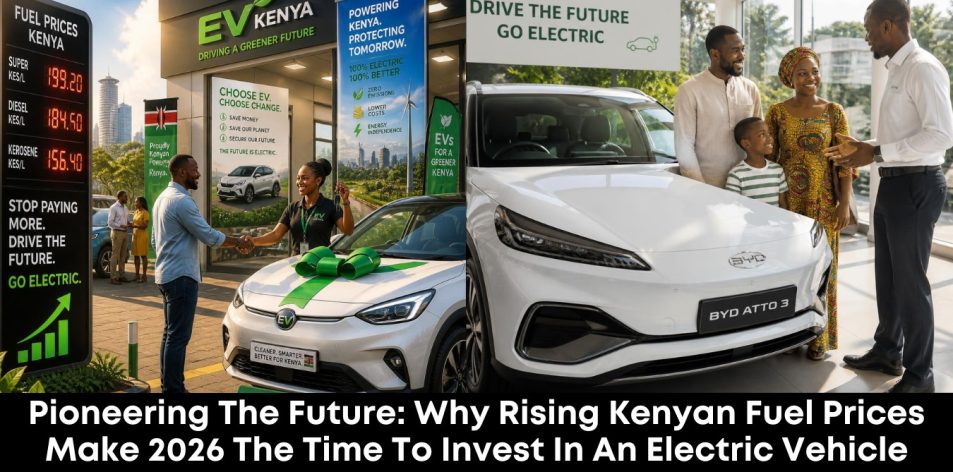
In modern household and corporate management across East Africa in 2026, balancing daily transportation budgets against fluctuating economic conditions requires strategic foresight and adaptability. With petrol and diesel pump prices continuing to experience upward pressure under Energy and Petroleum Regulatory Authority (EPRA) monthly reviews, routine vehicle fueling has become one of the most significant recurring expenses for Kenyan drivers. In our tradition, managing financial wealth, protecting family resources, and caring for the natural environment are viewed as a sacred trust (Amanah) from the Creator. We are encouraged to practice moderation, avoid financial waste (Israf), and demonstrate personal excellence (Ihsan) by making forward-thinking, responsible investments. As charging infrastructure expands across major highways, shopping hubs, and residential compounds in cities like Nairobi, transitioning from a traditional internal combustion engine (ICE) to an Electric Vehicle (EV) is shifting from a futuristic novelty to a practical, highly economical financial strategy. This guide explores the economic, environmental, and operational reasons why investing in an electric vehicle today offers long-term financial freedom and peace of mind (Sakinah).
I. The Economic Reality: Comparing EPRA Fuel Costs Against Electricity Rates
The primary driver behind the rapid adoption of electric mobility in Kenya is the undeniable operational cost disparity between petrol and grid power.
- The High Burden of Traditional Fuel: Operating a standard petrol or diesel vehicle in urban traffic consumes substantial fuel during idling, resulting in high running costs per kilometer. Fluctuations in international crude oil prices and local import levies mean monthly fueling budgets remain unpredictable.
- Calculated Savings per Kilometer: Electricity costs from Kenya Power (KPLC)—even when accounting for standard domestic or commercial tariffs—deliver a fraction of the cost per kilometer compared to fossil fuels. Charging an electric vehicle overnight at off-peak rates allows drivers to cut their daily commute energy expenditure by up to seventy per cent.
- Immunity to Monthly EPRA Pump Spikes: By relying on domestic hydroelectric, geothermal, and solar power generation, EV drivers decouple their daily transportation budgets from volatile global oil markets and monthly fuel price adjustments.
II. Drastic Reduction in Long-Term Maintenance and Repair Costs
Beyond daily fuel savings, the mechanical simplicity of electric powertrains yields massive long-term maintenance reductions.
- Fewer Moving Mechanical Parts: A conventional internal combustion engine contains hundreds of moving components that require routine replacement, including spark plugs, timing belts, fuel injectors, oil filters, and complex exhaust networks. An electric motor consists of just one main moving part, dramatically reducing mechanical failure points.
- Eliminating Routine Engine Services: Electric vehicles require no routine engine oil changes, transmission fluid flushes, or exhaust system repairs. Scheduled maintenance is largely limited to cabin air filters, tyre rotation, and brake fluid checks.
- Regenerative Braking and Tyre Longevity: EVs utilize regenerative braking, which uses the electric motor to slow the vehicle down while recharging the battery. This process drastically reduces physical friction wear on brake pads and brake rotors, extending their operational lifespan for years.
III. Environmental Stewardship and Utilizing Kenya’s Green Energy Grid
Adopting electric mobility aligns perfectly with environmental care, protecting the air quality of our cities for future generations.
- Kenya’s Unique Renewable Energy Matrix: Unlike nations that rely on coal-fired power plants, over ninety per cent of Kenya’s national grid electricity is generated from clean, renewable sources, including geothermal, hydro, wind, and solar energy. Driving an EV in Kenya is truly zero-emission motoring from source to wheel.
- Eliminating Urban Tailpipe Pollution: Transitioning to electric vehicles eliminates toxic exhaust fumes—such as carbon monoxide, nitrogen oxides, and particulate matter—from densely populated urban streets, improving public respiratory health and creating cleaner, quieter residential neighborhoods.
- Synergy with Home Solar PV Systems: For homeowners who have installed residential solar panel arrays and battery storage, charging an EV during peak daylight hours effectively turns daily commuting into a zero-cost, completely self-sufficient transport solution.
IV. The Maturing Kenyan EV Infrastructure and Ecosystem in 2026
The practical viability of owning an electric vehicle in Kenya has expanded rapidly, supported by growing local infrastructure and supportive government policies.
- Expanding Public and Home Charging Networks: Fast-charging hubs are increasingly available along major transit corridors, shopping malls, and corporate parks across Nairobi and surrounding towns, alongside simple Wallbox home chargers that recharge your vehicle overnight.
- Favorable Import Duties and Government Incentives: To accelerate green mobility, the Kenyan government has introduced reduced excise duties and favorable import tariffs for fully electric vehicles and assembly kits compared to traditional fossil-fuel cars.
- Growing Variety of Local EV Models: From compact city hatchbacks and sleek executive saloons to spacious family SUVs and electric commercial vans, the variety of EV models imported or assembled locally provides tailored options for every lifestyle and budget.
V. Driving Forward with Foresight, Financial Discipline, and Excellence
Investing in an electric vehicle in the face of rising fuel costs is far more than a simple lifestyle upgrade; it is a smart, calculated exercise in financial discipline, environmental responsibility, and long-term asset management. By eliminating recurring fuel expenses, lowering maintenance demands, and tapping into Kenya’s clean energy grid, you protect your household finances from market volatility while contributing to a cleaner, quieter country. Approach major vehicle purchases with methodical care, evaluate your daily commuting distances, and embrace forward-thinking technologies that serve your family with efficiency and personal excellence (Ihsan). May your journeys be smooth, your household resources remain blessed and abundant, and your financial choices bring continuous peace of mind and success.