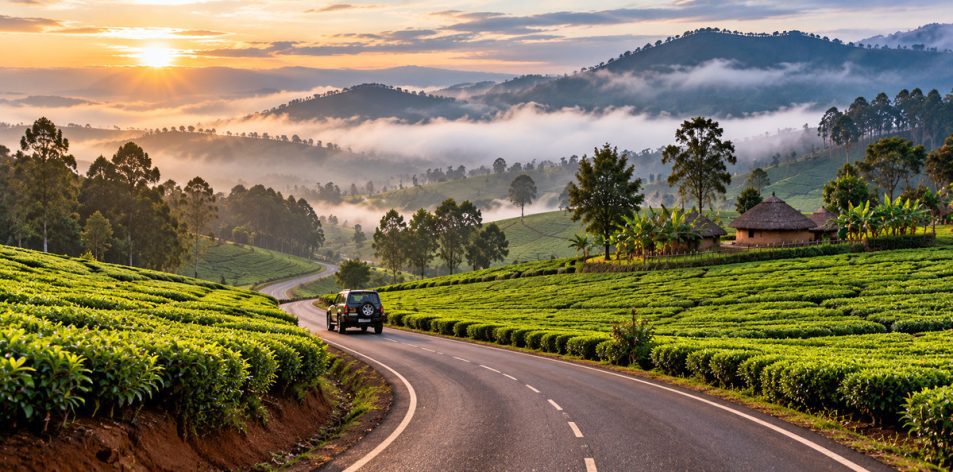
The Highlands of Kericho – Tea Trails and Cloud Forests
A drive through the rolling tea estates of Kericho feels like stepping into a living postcard. The road winds between neatly trimmed rows of tea bushes, punctuated by mist‑clad hills that rise suddenly from the landscape. Beyond the plantations, the Kericho Forest Reserve offers short walks among towering eucalyptus and indigenous trees, where the air is cool and the scent of fresh rain lingers.
Culturally, the area is home to the Kipsigis community, whose traditional homesteads and occasional market stalls provide a glimpse of rural life that has changed little over decades. Visitors can stop at a small tea factory to watch the plucking and processing of the leaves, and perhaps sample a steaming cup of locally grown tea.
Practical tips
The main road from Nakuru to Kericho is paved, but the final stretch into the tea country can be gravelly. A vehicle with good ground clearance is advisable, especially after rain. Early morning is the best time to experience the mist; bring a light jacket and sturdy shoes for the forest walks. Accommodation ranges from modest guesthouses in Kericho town to eco‑lodges on the edge of the forest, many of which offer breakfast with tea harvested that very day.
The Rift Valley’s Lesser‑Known Loop – From Eldoret to Marigat
Most travellers head straight to the famous Maasai Mara, but the road that snakes from Eldoret through the highlands to Marigat reveals a quieter side of the Rift Valley. The route passes the stunning Lake Kamnarok, a shallow alkaline lake that attracts flocks of flamingos and other waterbirds. Further on, the landscape opens to the Kerio Valley, where sheer cliffs rise on either side and the occasional Maasai village appears on the horizon.
Cultural encounters are intimate here. Small homesteads often welcome curious visitors with a cup of chai and a brief explanation of pastoral life. The annual Kerio Valley Cultural Festival, when it takes place, showcases traditional dances and beadwork, offering a colourful insight into Maasai heritage.
Practical tips
The road is a mix of tar and well‑maintained gravel. Fuel stations become scarce after Eldoret, so fill up before you set off. Mobile coverage is patchy; a physical map or offline GPS is useful. Carry enough water, a basic first‑aid kit, and a spare tyre. Simple campsites dot the valley, but for a more comfortable night consider the modest lodges near Marigat, which often arrange guided walks along the lake shore.
Coastal Secrets – The Road from Malindi to Tiwi
The coastal highway between Malindi and Tiwi is a stretch of palm‑lined road that many tourists overlook in favour of the busier Mombasa‑Diani corridor. Along this quieter segment, the Indian Ocean reveals secluded bays where coral reefs fringe white sand. The village of Watamu, though gaining popularity, still offers quiet stretches of beach at the southern end, perfect for early‑morning swims.
The Swahili culture thrives in the small fishing hamlets that pepper the route. Wooden dhows bob in shallow lagoons, and the scent of grilled fish drifts from modest shacks. If you time your visit with a local “Mwaka” celebration, you may witness traditional dances and the rhythmic beating of drums against a backdrop of sunset.
Practical tips
The road is fully paved but can be dusty during the dry season. A reliable vehicle is sufficient; a 4×4 is not required unless you plan to venture onto the sand dunes near Tiwi. Sun protection is essential – a wide‑brimmed hat, sunscreen, and plenty of water. Accommodation ranges from beachfront cottages in Watamu to simple beachside bungalows in Tiwi, many of which can be booked on the spot.
The Samburu‑Lake Baringo Corridor – Wildlife and Water
Traveling north from Samburu National Reserve towards Lake Baringo uncovers a corridor where savannah meets water. The road skirts the rim of the reserve, offering occasional glimpses of giraffes, zebras and the occasional leopard lounging on a kopje. As you approach the lake, the landscape softens into reed beds and papyrus islands that attract a variety of birdlife.
The Samburu people, known for their distinctive red‑shrouded clothing and intricate beadwork, often greet passing motorists. Small markets sell hand‑crafted jewellery and woven baskets, providing an opportunity to support local artisans directly.
Practical tips
The road alternates between tar and compacted earth; a vehicle with moderate clearance handles it well. Early mornings are ideal for wildlife spotting, while late afternoon brings cooler temperatures for a walk along the lake’s edge. Portable mosquito repellent is advisable, especially near the water. Simple lodges on the lake’s western shore offer rooms with lake views and the chance to join guided bird‑watching tours.
The Kakamega Forest Edge – A Green Escape
Western Kenya’s Kakamega Forest is a tropical rainforest that receives far fewer visitors than the highland parks. The road that skirts its southern edge, from Mumias to Kakamega town, passes through rolling tea farms before entering a zone of dense canopy. The forest’s understory is alive with orchids, ferns and the occasional colobus monkey swinging overhead.
Local communities, primarily of the Luhya tribe, maintain small cultural centres where traditional music and dance are performed for visitors. The area is also known for its honey production; a stop at a beekeeping cooperative often includes a tasting of raw honey and a brief explanation of sustainable beekeeping practices.
Practical tips
The approach road is paved, but the final turn into the forest reserve is a narrow, unpaved track. A sturdy vehicle is recommended, especially after rain. Bring a rain jacket and waterproof shoes, as sudden showers are common in the rainforest. Guided walks are the safest way to explore the forest, and several community‑run campsites provide basic amenities and the chance to share a meal with local families.
Planning Your Journey – Making the Most of Kenya’s Lesser‑Known Roads
Kenya’s hidden routes reward patience and a willingness to stray from the usual itineraries. Before setting off, map your chosen roads and note the locations of fuel stations, as they can be spaced far apart. Carry a spare tyre, basic tools and a first‑aid kit – the remote nature of these journeys means assistance may not be immediate.
Respect for local customs enhances the experience. Dress modestly in rural areas, ask permission before photographing people, and consider small purchases from market stalls as a direct way to support the communities you encounter.
Finally, allow flexibility in your schedule. The charm of these routes lies in spontaneous stops – a roadside tea shop, a sudden rainstorm that creates a rainbow over a lake, or a local celebration that invites you to join. By travelling with an open mind, you’ll discover that Kenya’s beauty extends far beyond the well‑trodden paths.