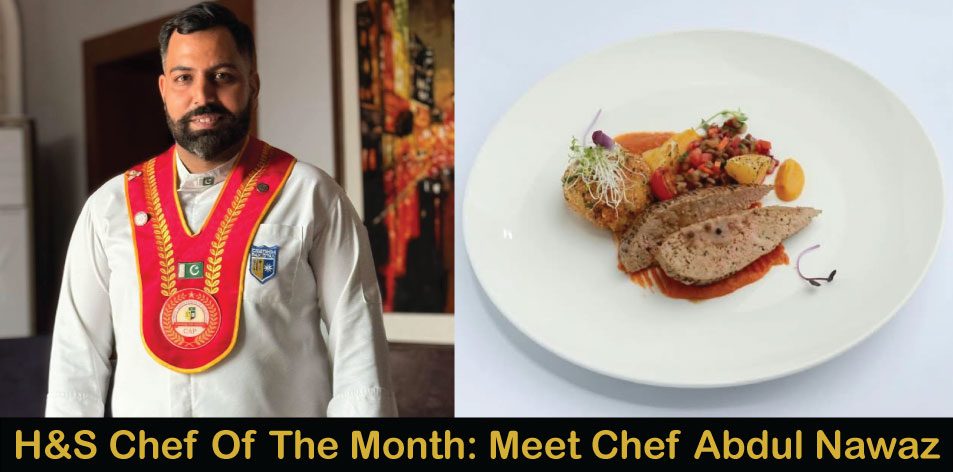
H&S Chef Of The Month
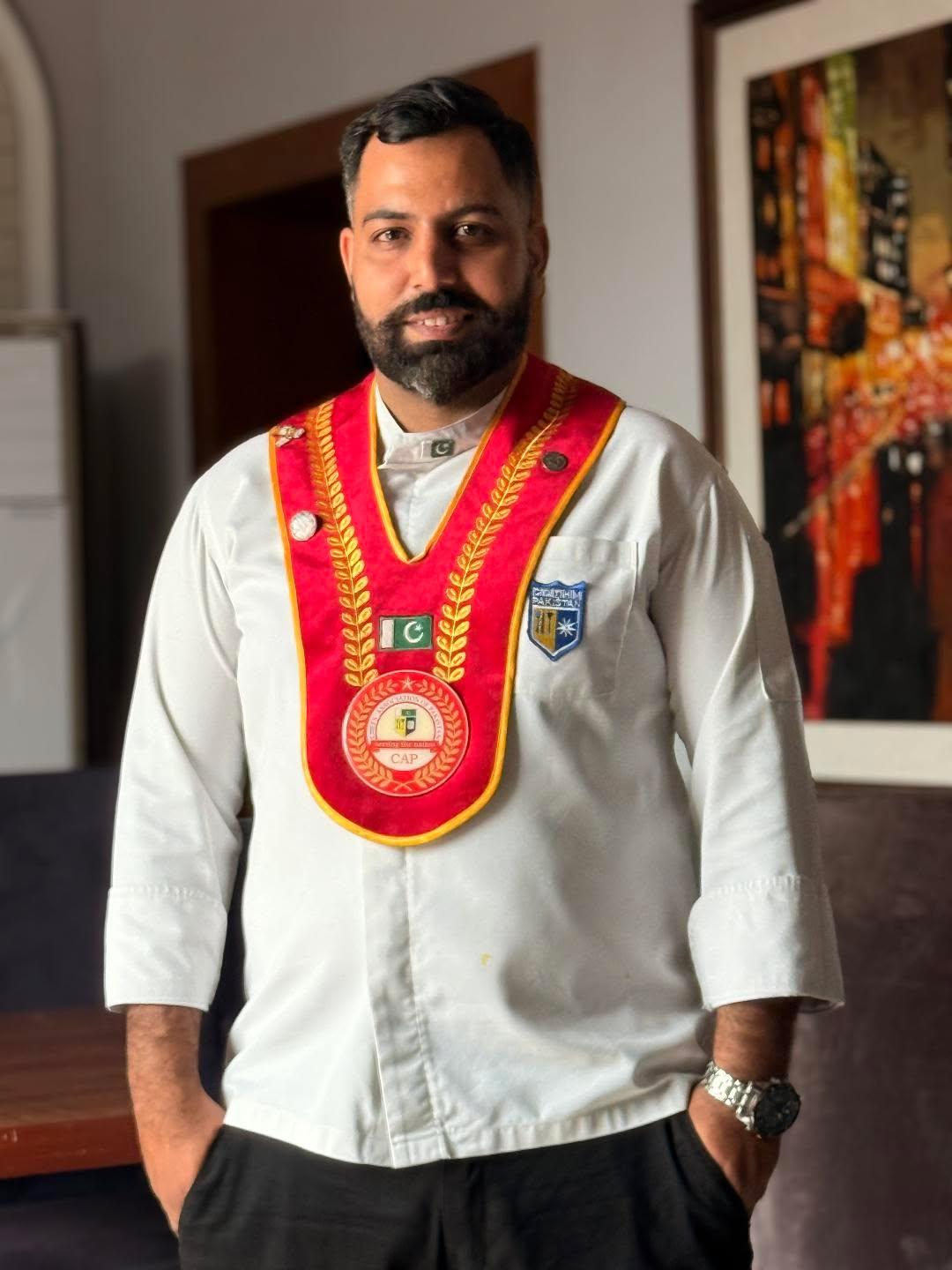
Chef Abdul Nawaz
Nationality: Pakistan
Interview With H&S Magazine
Who Is Chef Abdul Nawaz?
I am Chef Abdul Nawaz, a Pakistani chef from Lahore, Punjab, currently working as an Executive Sous Chef, Kitchen Manager and Culinary Instructor. I specialise in hot kitchen operations and the principles of cooking science.
My culinary journey began in the hospitality industry in the United Arab Emirates, where I started in housekeeping at five-star hotels. Through hard work, determination and a willingness to learn, I gradually moved into the restaurant and kitchen departments, beginning as a kitchen helper and later working as a kitchen assistant before progressing into the role of a chef.
This journey allowed me to experience different stages of the hospitality industry and develop a deep practical understanding of gastronomy. Working alongside chefs from different countries also exposed me to diverse culinary techniques, cultures and professional standards, shaping the chef and mentor I am today.
Type Of Cuisine?
Over the course of my career, I have explored and worked with a diverse range of international cuisines, including Continental, Modern French, Pakistani, Turkish, Chinese, Italian, Mexican and Arabic.
For me, cuisine is never just about taste; it is about meaning. Every ingredient carries a story, every dish reflects an intention, and every meal creates an atmosphere. Through gastronomy, I strive to bring together different traditions, connect cultures and create experiences that go beyond the plate.
Beyond my professional ambitions, I hold a personal dream of one day visiting Africa to prepare a large shared table, feed people with love and dance together to music. To me, this represents true unity: people from different backgrounds coming together through food and music, without the need for unnecessary words.
I believe that when a dream is sincere and carries good intentions, Allah opens the way. I see this opportunity with the magazine as a meaningful step towards bringing that vision closer to reality.
What Inspired You To Become A Chef?
My greatest inspiration has always been my mother. Growing up in Lahore, Pakistan, a city where life is deeply connected to hospitality, rich aromas and the joy of sharing meals, I learned that food was never simply about nourishment. It was an expression of love, warmth and togetherness.
Watching how a single dish could bring family members and neighbours together planted the earliest seed of my passion for cooking.
What truly inspired me to pursue cooking professionally was the realisation that food is a universal language. Regardless of where people come from or what language they speak, sharing a meal can bring them closer and break down barriers.
I wanted to dedicate my life to creating those moments of connection: taking simple ingredients, preparing them with care and intention, and turning them into experiences that people remember.
What Is The Biggest Challenge You Have Faced In The Culinary Industry?
Working across the culinary landscapes of the UAE and Pakistan has taught me that the greatest challenges in a professional kitchen are not always about the heat of the stove. They often involve bringing people, cultures and standards together while maintaining consistency under pressure.
In the UAE, I experienced the challenge of leading and working within highly diverse, multicultural teams. Bringing together people from different countries, languages and culinary backgrounds requires strong communication, mutual respect and the ability to work towards one common standard. In an industry where expectations are high, consistency and teamwork are essential.
In Pakistan, the challenges are different. Our culinary heritage is rich in flavour, creativity and instinct, but translating that passion into modern, structured kitchen systems requires discipline. Managing food costs, reducing waste and establishing accountability while preserving the authenticity and warmth of our cuisine takes patience, leadership and continuous mentorship.
These experiences have taught me that true culinary leadership is about much more than recipes. It is about building trust, teaching the science behind cooking and transforming a demanding kitchen environment into a team that works together with purpose and harmony.
What’s Your Biggest Achievement In The Culinary Industry?
My greatest achievement is shaping and inspiring the next generation of chefs. While professional recognition has been an important part of my journey, I consider the opportunity to teach, mentor and prepare young culinary professionals for the industry to be my proudest accomplishment.
I am honoured to have received the Esteemed Faculty Member award from COTHM Management and a Certificate of Contribution to the Industry at Food Asia Live. I have also had the privilege of serving as an official judge at culinary arts championships. Another significant milestone in my career was achieving the title of Best Cuisiner of Pakistan.
However, transitioning from leading demanding hot kitchen operations to becoming a culinary instructor has given my career a deeper purpose. It allows me to share everything I have learned, from international culinary techniques and professional kitchen discipline to the science behind cooking.
Watching my students enter the industry with confidence, discipline and respect for the craft is immensely rewarding. Their growth is a legacy I am proud to contribute to.
When It Comes To Cooking, What Is More Important To You, The Technique, The Ingredients Or The Creativity?
For me, technique, ingredients and creativity cannot be separated. They are three essential pillars of good cooking, and if one is missing, a dish will always fall short. Each has a distinct role in creating something meaningful.
Ingredients are the soul of a dish. Every ingredient has its own story, character and origin. I believe a chef must first respect the raw product and understand its qualities before attempting to transform it.
Technique is the backbone. As a culinary instructor, I place great importance on the science and discipline behind cooking. Precision, temperature control and the correct application of techniques are what bring out the best in ingredients and ensure consistency.
Creativity is the voice. Once you understand your ingredients and master your techniques, creativity allows you to connect cultures, express your individuality and transform a simple meal into an unforgettable experience.
If there is one element that brings all three together, it is intention. When your intention is pure, you choose ingredients with care, apply technique with discipline and allow creativity to flow from the heart.
Recipe Of The Week: Duck Mousse With Savoury Reduction Sauce
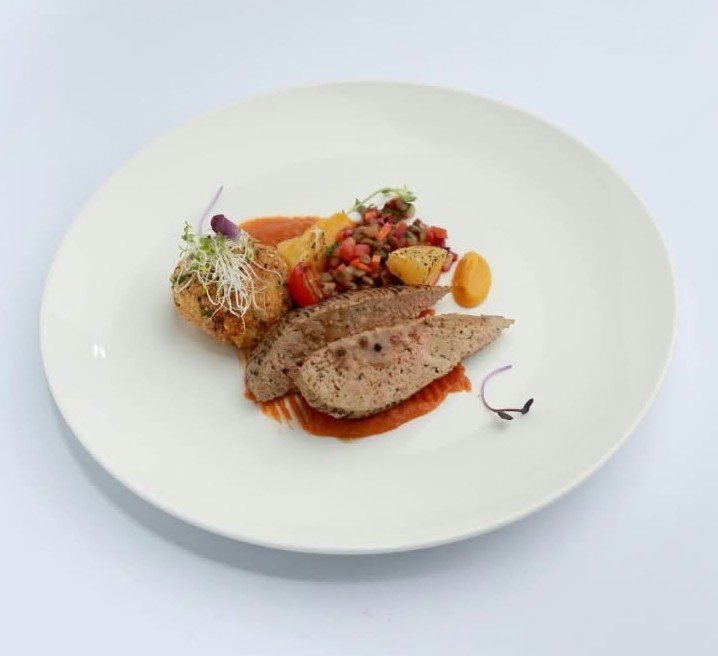
The Duck Mousse
Ingredients:
• 300–400 g prepared duck mousse, trimmed and shaped into portions
• 2 Tbsp olive oil
• 1 Tbsp butter
• 2 garlic cloves, crushed
• A few sprigs of fresh thyme
• A few sprigs of fresh rosemary
• Salt, to taste
• Freshly ground black pepper, to taste
The Savoury Reduction Sauce
Ingredients:
• 2 shallots, finely minced
• ½ cup rich jus or demi-glace
• ½ cup chicken stock
• 1 Tbsp unsalted butter, for finishing
• Salt and freshly ground black pepper, to taste, if required
The Sautéed Vegetable Brunoise
Ingredients:
• ½ cup red and yellow bell peppers, finely diced
• ⅓ cup zucchini or eggplant, finely diced
• 4–5 cherry tomatoes, quartered
• 1 Tbsp olive oil
• Salt, to taste
• Freshly ground black pepper, to taste
The Crispy Potato Cake
Ingredients:
• 1 cup grated potatoes, prepared and shaped into rounds
• 2 Tbsp breadcrumbs, optional
• Frying oil or butter, for pan-searing
• Salt, to taste
• Black pepper, to taste
The Garnish
Ingredients:
• A small handful of fresh microgreens or amaranth sprouts
Preparation: The Duck Mousse
Season the prepared duck mousse portions with salt and freshly ground black pepper.
Heat the olive oil in a suitable frying pan over medium heat. Add the duck mousse portions and carefully sear until lightly golden on the outside, taking care not to break their shape.
Add the butter, crushed garlic, thyme and rosemary to the pan. Baste the portions gently with the infused butter to develop their flavour.
Transfer to a preheated oven at approximately 180°C, if required for the type and size of mousse portions being used. Cook according to the preparation method of the duck mousse, ensuring it is thoroughly cooked.
Remove from the heat and allow the portions to rest briefly before slicing or arranging for presentation.
Preparation: The Savoury Reduction Sauce
Place a saucepan over medium heat and add a small amount of olive oil or butter. Add the finely minced shallots and sauté until softened and translucent.
Add the rich jus or demi-glace and chicken stock. Stir well to combine and bring the mixture to a gentle simmer.
Allow the sauce to reduce gradually until it reaches a rich consistency that lightly coats the back of a spoon.
Remove from the heat and whisk in the unsalted butter to give the sauce a smooth, glossy finish. Adjust the seasoning if necessary and keep warm until ready to serve.
Preparation: The Sautéed Vegetable Brunoise
Heat the olive oil in a frying pan over medium heat. Add the finely diced red and yellow bell peppers and sauté briefly until they begin to soften while retaining their colour and texture.
Add the diced zucchini or eggplant and continue cooking until tender but not mushy.
Add the quartered cherry tomatoes and gently toss to combine. Season with salt and freshly ground black pepper.
Cook briefly until the tomatoes are warmed through and the vegetables are evenly coated in the olive oil. Remove from the heat and set aside.
Preparation: The Crispy Potato Cake
Peel and grate the potatoes, then squeeze out as much excess moisture as possible using a clean kitchen towel.
Place the grated potatoes in a bowl and season with salt and black pepper. Add the breadcrumbs if a firmer mixture and crispier outer coating are desired.
Shape the mixture into small, even rounds, pressing gently to help them hold their shape.
Heat the frying oil or butter in a non-stick pan over medium heat. Carefully place the potato cakes into the pan and cook until golden brown and crisp on the underside.
Turn carefully and cook the other side until equally golden and the potatoes are cooked through. Remove from the pan and place on kitchen paper to absorb excess oil.
Plating
Spoon the savoury reduction sauce onto the plate, creating a neat base or decorative sweep. Arrange the duck mousse portions on or alongside the sauce, allowing their shape and texture to remain visible.
Place the crispy potato cake beside the duck mousse, ensuring it retains its golden-brown appearance. Arrange the sautéed vegetable brunoise neatly around the main components, creating a balance of colour and texture.
Finish with a small handful of fresh microgreens or amaranth sprouts for an elegant touch.
Serve immediately while the duck mousse is warm, the reduction sauce is glossy, the vegetables retain their freshness and the potato cake remains crisp.