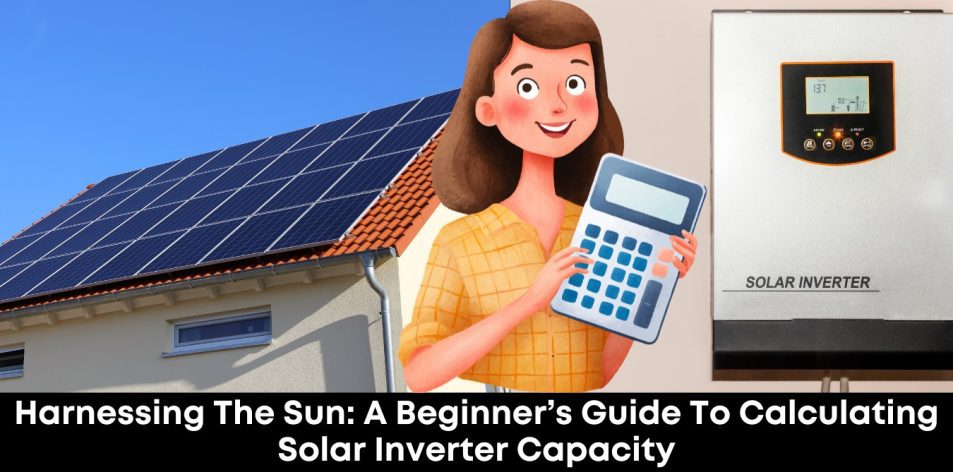
Empowering Your Home with Sustainable Energy and Wise Stewardship
In our journey toward building sustainable and resilient homes, transitioning to solar energy is a significant step. In Kenya’s abundant sunlight, solar power is not just an environmental choice but a practical way to ensure your household remains a place of light and comfort. As a homeowner, understanding the technical aspects of your system is an act of responsible stewardship (Amanah) over your resources. One of the most common questions for beginners is how to determine the correct size of a solar inverter, usually measured in KVA (Kilo-Volt-Amperes). Choosing the right capacity ensures your appliances run efficiently without overloading the system. This guide simplifies the calculation process, helping you make an informed and balanced decision for your family’s energy needs.
I. Understanding the Basics: Watts vs. KVA
Before we dive into the calculations, it is essential to understand the language of power. Most household appliances are rated in Watts, while inverters are often rated in KVA.
- What is a Watt (W)?: This is the real power used by your appliances. You can usually find this number on a sticker at the back of your fridge, television, or iron.
- What is KVA?: This stands for Kilo-Volt-Amperes, which represents the “Apparent Power.” Because no electrical system is 100 per cent efficient, the KVA rating of an inverter is usually higher than the actual Wattage it can handle.
- The Power Factor: In most residential settings, we assume a “Power Factor” of 0.8. This means a 1 KVA inverter actually supports about 800 Watts of power.
II. Step 1: Create Your Load Requirement List
The first step is to identify exactly what you want to power during a blackout or throughout the day. Honesty and moderation are key here; only include what is necessary for your comfort and productivity.
- List Your Appliances: Write down every item. For example: 10 LED bulbs (10W each), 2 fans (60W each), 1 refrigerator (200W), and 1 laptop (50W).
- Calculate Total Watts: Add them up. In this example: (10 x 10) + (2 x 60) + 200 + 50 = 470 Watts.
- Consider “Startup Load”: Some appliances, especially those with motors like fridges or pumps, require a burst of extra energy to start up. Always factor in a bit of “headroom” for these items.
III. Step 2: Converting Watts to KVA
Now that you have your total Wattage, you can calculate the minimum KVA rating your inverter should have to operate safely.
- The Simple Formula: To find the KVA, you divide your Total Watts by the Power Factor (0.8).
- Example Calculation: Using our total of 470 Watts, the calculation would be: 470 ÷ 0.8 = 587.5 VA.
- Convert VA to KVA: Since 1,000 VA equals 1 KVA, 587.5 VA is approximately 0.59 KVA.
IV. Step 3: Factoring in the Safety Margin
In the spirit of “Ihsan” (excellence) and long-term planning, it is never wise to run an inverter at its absolute limit. Overloading an inverter can lead to overheating and a shorter lifespan for the device.
- Add a 25 per cent Buffer: It is a standard industry recommendation to add a 25 per cent safety margin to your calculation. This allows the inverter to run cool and leaves room for a few extra lights or chargers in the future.
- Final Calculation: 587.5 VA + 25 per cent = 734 VA. In this scenario, a 1 KVA inverter would be the perfect, safe choice for your home.
V. Selecting the Right Inverter Type
Once you know your KVA, you must choose the “technology” of the inverter. For a residential home, the quality of the electricity matters.
- Pure Sine Wave Inverters: These are the gold standard. they produce electricity that is identical to (or cleaner than) the power from the grid. This is essential for protecting sensitive electronics like laptops, smart TVs, and modern refrigerators.
- Modified Sine Wave Inverters: These are often cheaper but can be “noisy” for electronics and may cause motors to run hot. For a harmonious and quiet home, a Pure Sine Wave inverter is always the better investment.
Calculating your solar needs is an empowering step toward energy independence. By taking the time to understand your KVA requirements, you ensure that your investment is sound and that your home remains a well-managed sanctuary. Remember, the goal of sustainable living is to use what we need with wisdom and to avoid waste. May your journey into solar energy bring both light to your home and peace to your heart, knowing you are treading lightly upon the earth.