1. Home‑Based Halal Catering for Corporate Events
Corporate lunches, board‑room breakfasts and small conferences are a steady source of demand in Nairobi, Mombasa and Kisumu. Companies increasingly look for reliable, halal‑certified caterers who can deliver quality meals without the overhead of a full‑time kitchen staff.
Market opportunity
A modest office of 30 staff typically spends KES 5,000–10,000 per week on meals. Securing just three regular contracts can generate a monthly turnover of KES 60,000–120,000, leaving room for profit after food costs.
Practical start‑up actions
- Identify a home kitchen that meets basic hygiene standards and obtain a food handling certificate from the local county office.
- Source halal‑certified meat and fresh produce from trusted wholesalers; buying in bulk reduces unit cost.
- Develop a simple menu of 5–7 dishes that can be prepared ahead of time and reheated without loss of quality.
- Register the business with the Kenya Revenue Authority (KRA) and apply for a small‑scale food vendor licence.
- Offer free tasting sessions to nearby offices to secure the first few clients.
Essential digital tools
- WhatsApp Business – for order taking, quick confirmations and sharing menu PDFs.
- Google Workspace – to keep invoices, client contacts and recipes organised.
- M‑Pesa Business – for receiving payments instantly and tracking daily cash flow.
Funding or mentorship options
Micro‑finance institutions such as Kenya Women Micro‑Finance Bank often provide loans up to KES 150,000 for food‑related start‑ups. Local entrepreneurship hubs run by universities also offer mentorship programmes that pair new caterers with experienced chefs.
2. Mobile Water‑Saving Car Wash
Car owners in urban centres value convenience, and a mobile service that uses minimal water aligns with both environmental concerns and halal‑friendly business practice.
Market opportunity
With over 1.5 million registered vehicles in Kenya, even a 0.1 % capture rate translates to 1,500 regular customers. A single operator can service 8–10 cars per day, earning KES 300–500 per wash.
Practical start‑up actions
- Purchase a portable pressure‑washer kit (approximately KES 70,000) and eco‑friendly cleaning agents.
- Obtain a trade licence from the county government and ensure the vehicle used for transport is insured.
- Map high‑traffic areas—office parks, shopping malls and residential estates—where you can set up a temporary wash point.
- Offer a subscription model (e.g., KES 2,500 for four washes) to encourage repeat business.
- Promote the service through flyers and a simple Instagram page showcasing before‑and‑after shots.
Essential digital tools
- Instagram – visual showcase and direct messaging for bookings.
- Google Calendar – schedule appointments and avoid double‑booking.
- PayGo loan apps – for short‑term cash flow support if equipment repair is needed.
Funding or mentorship options
The Youth Enterprise Development Fund (YEDF) runs a “Micro‑Enterprise” scheme that can provide up to KES 100,000 for equipment. Business incubators in Nairobi often host “green‑business” workshops that include mentorship on sustainable practices.
3. Online Modest‑Fashion Boutique
Modest clothing lines have grown in popularity across East Africa, driven by a desire for stylish yet culturally respectful apparel. An online boutique reduces the need for a physical storefront, keeping start‑up costs low.
Market opportunity
Search data shows a steady increase in queries for “modest dresses Kenya” and “abaya Nairobi”. A curated collection of 20–30 pieces can attract a niche audience willing to pay a premium for quality.
Practical start‑up actions
- Partner with a local seamstress or small factory that can produce small batches on demand.
- Invest in a modest inventory of fabrics and basic trims (approximately KES 80,000).
- Create a simple e‑commerce site using platforms such as Shopify Lite or WooCommerce, which charge minimal monthly fees.
- Set up a professional Instagram and Facebook shop, linking directly to the checkout page.
- Offer free shipping for orders above a certain value to encourage larger purchases.
Essential digital tools
- Canva – design product images and social media graphics without a designer.
- Shopify Lite – adds a “Buy Now” button to Instagram posts.
- M‑Pesa Pay‑Bill – enables customers to pay directly from their phones.
Funding or mentorship options
Women‑focused micro‑finance schemes, such as those run by the Women Enterprise Fund, often allocate up to KES 120,000 for inventory and marketing. Online entrepreneurship programmes hosted by NGOs provide mentorship on branding and digital marketing.
4. Digital Tutoring for Primary and Secondary Subjects
Parents continue to seek supplemental education for their children, especially in maths, science and English. A digital tutoring service can be run from home, requiring only a laptop, reliable internet and a quiet space.
Market opportunity
The average Kenyan household spends KES 2,000–4,000 per term on extra tuition. With 10 students per week at KES 500 per session, a tutor can earn KES 20,000 weekly.
Practical start‑up actions
- Register as a private tutor with the local education office to gain credibility.
- Develop a curriculum outline for each subject, aligning with the national syllabus.
- Offer a free introductory lesson to attract the first batch of students.
- Set up a booking system using Google Forms that automatically sends calendar invites.
- Collect feedback after each session to refine teaching methods.
Essential digital tools
- Zoom or Google Meet – for live video lessons.
- Microsoft Teams – to share files, quizzes and homework.
- WhatsApp Business – for quick communication and reminders.
Funding or mentorship options
The Kenya Education Fund occasionally offers micro‑grants for innovative tutoring models. Local teachers’ associations run peer‑coaching circles that provide mentorship on pedagogic techniques and pricing.
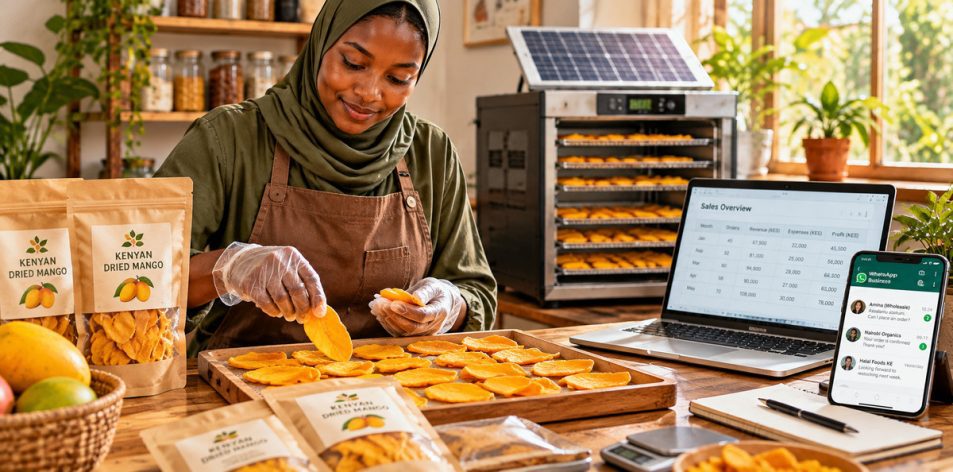
5. Small‑Scale Agro‑Processing of Dried Fruit
Kenya’s mango and pineapple harvests provide a reliable raw material for dried‑fruit products, which fetch higher prices in urban markets and for export.
Market opportunity
Urban supermarkets and boutique grocery stores are willing to pay a premium for locally sourced, preservative‑free dried fruit. A modest operation can produce 20 kg per week, translating to roughly KES 150,000 in revenue.
Practical start‑up actions
- Secure a small plot or lease a section of a farmer’s field for fruit collection.
- Purchase a basic solar‑powered dehydrator (around KES 90,000) and stainless‑steel trays.
- Obtain a food processing licence from the Kenya Bureau of Standards (KEBS).
- Develop simple packaging—recyclable sachets with clear labelling of ingredients and halal certification.
- Approach local supermarkets and health‑food stores with sample packs.
Essential digital tools
- QuickBooks Online – track inventory, sales and expenses.
- WhatsApp Business – coordinate with fruit suppliers and buyers.
- Google My Business – improve online visibility for local searches.
Funding or mentorship options
The Agricultural Finance Corporation (AFC) runs a “Micro‑Agri” loan scheme that can fund equipment up to KES 200,000. Agricultural extension officers in county offices often provide free training on post‑harvest handling and value addition.
Putting It All Together
Each of these five ideas respects halal principles, stays within a KES 200,000 budget and offers a clear path to scalability. The common thread is the use of digital tools to streamline operations, reach customers and manage cash flow. By tapping into existing micro‑finance programmes or mentorship networks, aspiring entrepreneurs can mitigate risk while building a business that grows with demand.
Start small, stay consistent, and let the market dictate the next step. With the right blend of practicality and digital savvy, a modest investment can turn into a thriving, halal‑friendly enterprise.