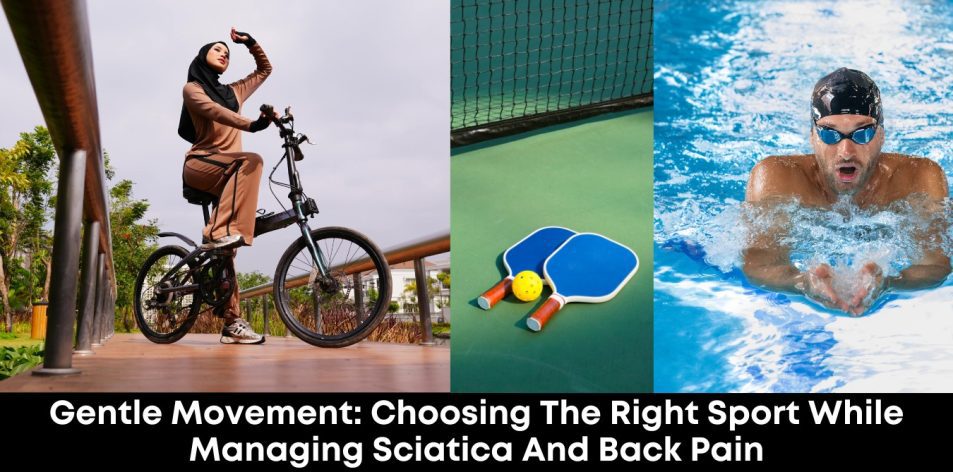
Gentle Movement: Choosing the Right Sport While Managing Sciatica and Back Pain
Empowering Your Fitness Journey Through Low-Impact Activities and Mindful Recovery
The desire to stay active is a noble pursuit, as our physical health is a significant trust (Amanah) from the Almighty. However, for those who suffer from sciatica or recurring back pain, the fear of re-injury can often lead to a sedentary lifestyle. Sciatica—pain that radiates along the path of the sciatic nerve—can be particularly debilitating, but it does not have to mean the end of your sporting life. The key is to transition from “high-impact” activities to “low-impact” sports that strengthen the core and support the spine without causing jarring movements. By choosing a sport that aligns with your body’s current capabilities and practicing “Sabr” (patience) in your progress, you can enjoy the benefits of fitness while protecting your back. This guide explores the best sporting options for those with back sensitivities and how to stay active with wisdom.
I. Understanding Your Body’s Limits
Before taking up any new sport, it is essential to understand the mechanics of back pain. Sudden twisting, heavy jumping, and high-velocity movements are the primary triggers for sciatic flare-ups.
- Identify the Trigger: Sciatica is often caused by a herniated disc or narrowing of the spine pressing on the nerve. Avoid sports that require deep forward bending or sudden explosive power until your core is sufficiently strong.
- The Role of the Core: Think of your core muscles as a “natural corset” for your spine. Any sport you choose should ideally help strengthen these muscles, which in turn reduces the pressure on your lower back.
II. Recommended Low-Impact Sports
The following sports provide excellent cardiovascular and muscular benefits while being remarkably gentle on the spinal discs.
- Swimming and Aqua Aerobics: Water provides natural buoyancy, which unweights the spine. The horizontal position during swimming helps decompress the vertebrae. Focus on the backstroke or a gentle breaststroke, avoiding the butterfly or aggressive flip-turns.
- Cycling (on Flat Terrain): Cycling is a low-impact way to improve leg strength and stamina. Ensure your bike is professionally fitted; a “step-through” frame or a more upright handlebar position prevents you from hunching over, which is crucial for those with sciatica.
- Walking and Power Walking: Simple, brisk walking on even surfaces is one of the best exercises for back health. It improves circulation to the spinal structures and maintains mobility in the hips.
- Racket Sports (with Modification): While tennis can be demanding, “Pickleball” or casual badminton can be enjoyed if played at a moderate pace. Focus on footwork rather than reaching or twisting your torso excessively.
III. Therapeutic Disciplines for Spinal Support
Integrating specific movement practices into your routine can act as both a sport and a form of preventative medicine.
- Clinical Pilates: Pilates focuses specifically on deep core activation and spinal alignment. Under the guidance of a qualified instructor, it is perhaps the most effective way to build the “internal armour” needed to protect against future back injuries.
- Tai Chi and Mindful Movement: These ancient practices focus on slow, controlled movements and balance. They encourage “Muraqabah” (mindfulness) and help improve the mind-body connection, allowing you to move more gracefully in daily life.
IV. Pre-Sport and Post-Sport Rituals
Preparation is the best defence against injury. Never jump straight into a game without preparing your nervous system and muscles.
- Dynamic Stretching: Instead of static holding, use gentle “dynamic” stretches like pelvic tilts and cat-cow movements to wake up the spine.
- Listen to the Pain Signals: There is a difference between “good” muscle soreness and “bad” nerve pain. If you feel a sharp, shooting sensation or numbness, stop immediately. Respecting these signals is an act of “Ihsan” (excellence) toward your body.
- Ice and Heat Therapy: After activity, if you feel a slight ache, apply a cold pack to reduce inflammation. Use heat later in the day to relax tight muscles around the spine.
V. Living an Active, Modest Life
As you take up a new sport, remember that your goal is long-term wellness and the ability to serve your family and community with energy. Ensure your sporting attire remains modest and comfortable, allowing for a full range of motion without restriction. By choosing a sport that respects your physical boundaries and staying consistent, you invite “Barakah” into your health. Your journey may be slower than others, but it is a journey of resilience and wisdom. May your pursuit of fitness lead to a stronger body and a more tranquil mind.