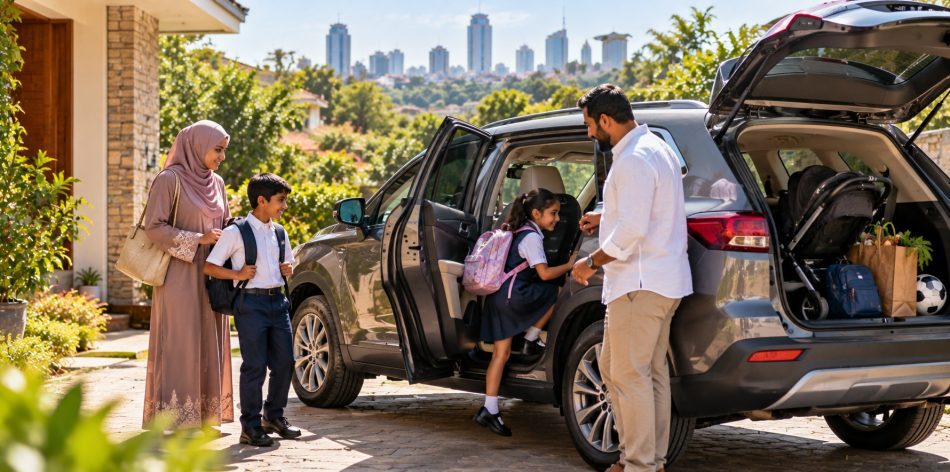
Choosing a family car in Nairobi is about much more than finding a vehicle that looks good on the driveway.
For many families, the same vehicle has to handle the morning school run, the commute to work, supermarket shopping, weekend errands, family visits, traffic jams, uneven roads and the occasional journey outside the city.
That means the ideal family-friendly vehicle needs to balance several competing priorities: fuel efficiency, safety, reliability, seating space, luggage capacity, comfort and the ability to cope with the roads you actually drive on.
For Muslim families, there can also be an additional consideration: buying a vehicle responsibly rather than stretching the household budget simply to own a larger or more luxurious model.
The best family vehicle is therefore not necessarily the biggest, most expensive or most powerful one. It is the one that fits your family’s real needs while remaining financially and practically manageable.
Start With How You Actually Use Your Vehicle
Before comparing makes and models, think about your family’s typical week.
How many children need to be transported? Do you regularly carry school bags and sports equipment? Do you have a baby who needs a child seat? Does one parent use the vehicle for commuting? Do you frequently travel outside Nairobi? Do you visit rural areas during school holidays?
Your answers will immediately narrow down the type of vehicle that makes sense.
A family with two children who spends most of its time driving around Nairobi may have very different requirements from a family with four children that regularly travels long distances.
Do Not Automatically Buy The Biggest Vehicle You Can Afford
A large SUV can be attractive when you are shopping for a family car.
It provides plenty of space, gives a commanding driving position and can be useful on rougher roads.
But bigger is not automatically better.
A larger engine may consume more fuel. A bigger vehicle can be harder to park. Tyres can cost more, replacement parts may be more expensive and manoeuvring through tight urban spaces can be less convenient.
If your family genuinely needs the additional space or capability, a larger vehicle may make sense. If you rarely use those advantages, you could be spending considerably more simply to have capacity that you do not need.
Think About Nairobi’s Traffic
A family vehicle in Nairobi spends a significant amount of time in traffic.
That makes fuel efficiency particularly important.
A vehicle that performs well on an open highway may have very different fuel consumption when it spends long periods moving slowly, stopping and accelerating through congested roads.
When comparing vehicles, look beyond the manufacturer’s headline fuel-consumption figure. Your actual consumption will depend on traffic, driving style, vehicle load, tyre pressures, air-conditioning use, road conditions and maintenance.
It can be useful to ask existing owners what fuel consumption they achieve in real Nairobi driving rather than relying entirely on brochure figures.
Fuel Efficiency Is About More Than Saving Money
Fuel efficiency affects the total cost of owning a family vehicle.
Consider how many kilometres you drive each month and multiply that by the vehicle’s realistic fuel consumption.
A vehicle that uses slightly less fuel may save a meaningful amount over several years, particularly if it is used every day for school runs and commuting.
Kenya’s fuel prices also make running costs an important part of household budgeting. KNBS continues to track fuel prices as a significant component of the household and transport cost environment.
For this reason, it is worth considering fuel economy before becoming attached to a particular vehicle.
Consider A Hybrid If It Suits Your Driving
Hybrid vehicles can be attractive for families who spend substantial amounts of time in urban traffic because they can be particularly efficient in stop-start driving.
However, do not assume that every hybrid will automatically be cheaper to own.
Investigate the particular model, battery system, availability of qualified technicians, parts supply and long-term maintenance requirements in Kenya.
Also consider whether you are buying a vehicle with a proven local support network or one for which specialist repairs could become difficult and expensive.
Safety Should Come Before Luxury
When choosing a family-friendly vehicle, safety equipment should be higher on the list than features such as a panoramic sunroof, large entertainment screens or premium interior finishes.
Look for features such as:
- Electronic stability control.
- Anti-lock braking systems.
- Multiple airbags.
- Strong occupant protection.
- Reliable seat-belt systems.
- ISOFIX or other appropriate child-seat attachment points where applicable.
- Reversing camera or parking sensors.
- Blind-spot monitoring where available.
- Autonomous emergency braking and other driver-assistance systems where available.
The exact equipment varies between models and specifications, so check the vehicle you are actually buying rather than assuming that every version has the same safety equipment.
Child Safety Should Be A Major Consideration
If you have young children, think carefully about how they will actually sit in the vehicle.
Can child seats be installed securely? Is there enough rear-seat space? Can you easily buckle the children in? Is there sufficient room between the child seats and the front seats?
Do not buy a vehicle based solely on how many passengers the brochure says it can accommodate.
Take your children’s actual seats with you when viewing a potential vehicle if possible. Install them and see how the arrangement works.
A vehicle that technically accommodates five people may be very uncomfortable when two child seats, school bags and other belongings are added.
Do Not Ignore Seat Belts
Seat belts are among the most important safety features in any family vehicle.
Make sure every passenger has an appropriate seat and functioning restraint.
Do not allow children to develop the habit of travelling without being properly restrained simply because the journey is short.
The school run may only take 15 minutes, but accidents do not require a long journey to happen.
NTSA is Kenya’s statutory road-transport safety authority and is responsible for vehicle inspection, registration and road-safety regulation.
Think Carefully About The Number Of Seats
Five seats may be enough for one family and completely inadequate for another.
If you have three children, grandparents regularly travelling with you or a household helper who sometimes joins the family, the practical seating requirement can be very different.
Three-row vehicles can provide useful flexibility, but there is an important question to ask:
Can adults actually sit comfortably in the third row?
Also check what happens to boot space when all the seats are occupied.
A seven-seater with virtually no luggage space behind the third row may not be particularly useful for a family travelling with several bags.
Boot Space Matters More Than You Think
Families accumulate things.
School bags, groceries, sports equipment, baby equipment, luggage, shopping and other everyday items can quickly fill a boot.
When comparing family vehicles, take a practical approach.
Imagine loading the vehicle after a supermarket trip. Then imagine adding school bags. Then add a stroller if you have a young child.
Does everything still fit comfortably?
Do not judge boot space simply by looking at the manufacturer’s stated litre capacity. The shape of the luggage area and the height of the loading opening also matter.
Ground Clearance Can Be Useful In Nairobi
You do not necessarily need a 4×4 just because you live in Nairobi.
However, reasonable ground clearance can be useful depending on where you drive.
Speed humps, rough estate roads, uneven access roads, potholes, drainage channels and occasional poor road surfaces can make a low-slung vehicle less convenient.
If your daily route includes well-maintained tarmac, a conventional saloon or hatchback may be perfectly adequate.
If you regularly drive on rough estate roads, unpaved roads or travel outside Nairobi, additional clearance may be worth considering.
Do Not Confuse Ground Clearance With Off-Road Ability
A vehicle with good ground clearance is not automatically a serious off-road vehicle.
Four-wheel drive, traction systems, tyre choice, suspension design, approach and departure angles and other factors determine how capable a vehicle is away from paved roads.
If you simply need to deal with Nairobi’s occasional rough road, you probably do not need to pay for extreme off-road capability.
Buy for the conditions you actually encounter.
Consider The Suspension And Tyres
Families sometimes focus on engine size and technology while overlooking tyres and suspension.
These have a major effect on comfort, handling and the vehicle’s ability to cope with poor surfaces.
When buying a used vehicle, inspect the tyres carefully and look for uneven wear, cracks, damage and mismatched tyres.
Also have the suspension checked by a competent mechanic.
A vehicle can look excellent from the outside while hiding expensive suspension or steering problems underneath.
Choose Tyres For Your Actual Driving
If most of your driving is on tarmac, road-oriented tyres may provide the best balance of comfort, noise and fuel efficiency.
If you regularly drive on gravel roads or rough surfaces, a suitable all-terrain option may make more sense.
Do not buy aggressive off-road tyres simply because they make an SUV look tougher.
They can be noisier, affect fuel consumption and may not provide the advantages you expect for normal urban driving.
Visibility Is An Important Family-Car Feature
A family vehicle should be easy to drive in real-world conditions.
Good outward visibility can be valuable when manoeuvring around schools, shopping centres, residential estates and busy parking areas.
Parking sensors and cameras can also be useful, particularly with larger vehicles.
However, driver-assistance technology should complement attentive driving rather than replace it.
Air Conditioning Matters In A Family Vehicle
When you have children in the car, cabin comfort matters.
Check how effectively the air-conditioning system cools the entire cabin rather than just the front seats.
For three-row vehicles, pay particular attention to whether passengers at the back receive adequate airflow.
A comfortable cabin can make a significant difference during long journeys and Nairobi traffic.
Look At Rear-Seat Access
Getting children in and out of the vehicle several times a day can become surprisingly important.
Check how wide the rear doors open and whether a child can comfortably climb in and out.
If you regularly carry younger children, think about how easy it is to install and remove their seats.
For larger families, sliding or folding rear seats can provide useful flexibility.
Think About School-Run Practicality
The perfect family vehicle for a school run needs to cope with repetitive short journeys.
That means easy access, good visibility, adequate storage, reliable air conditioning and sensible fuel consumption can be more important than high performance.
You may also want to consider how easy the vehicle is to park near the school and whether its dimensions are manageable in tight spaces.
A huge SUV can provide plenty of space, but if it becomes difficult to manoeuvre every morning, you may eventually wish you had chosen something smaller.
Weekend Errands Require Flexibility
A family car often becomes a mobile storage area at the weekend.
One trip might involve groceries. Another might involve visiting relatives. The next could involve sports equipment or a day out.
This is where flexible seating and boot space become particularly valuable.
Look for rear seats that fold easily and create a useful, reasonably flat loading area when required.
Reliability Should Be A Priority
A family vehicle needs to start when you need it.
Imagine discovering a major mechanical problem on the morning of a school run or just before an important family journey.
When comparing vehicles, investigate the reliability record of the specific model and the availability of qualified technicians and spare parts in Kenya.
A vehicle that is slightly more expensive to purchase but has good local parts availability and a strong network of mechanics may be more practical over the long term.
Research Spare Parts Before Buying
Ask a simple question before purchasing:
How easy is it to get parts for this vehicle in Kenya?
Do not limit your research to major components. Find out about the availability and cost of routine service parts, brake components, suspension parts, body panels, lights and other commonly replaced items.
This is especially important when considering an uncommon import.
A low purchase price can become less attractive if routine repairs require long waits for parts.
Check The Service History On Used Vehicles
If you are buying a second-hand family vehicle, the service history can be more important than a shiny exterior.
Ask for maintenance records and verify them where possible.
Have the vehicle independently inspected before buying.
Check the engine, transmission, suspension, brakes, steering, cooling system, electrical systems, tyres and bodywork.
Also verify the vehicle’s documentation through the appropriate official channels. NTSA provides online vehicle services including logbook verification.
Be Especially Careful With Imported Used Vehicles
Kenya has a substantial market for imported used vehicles, and some can represent good value.
However, the history of an imported vehicle matters.
Find out where it came from, whether it has been involved in an accident, how it was maintained and whether the mileage appears credible.
Do not rely solely on what a seller tells you.
An independent inspection can provide valuable protection before you commit your money.
Calculate The Total Cost Of Ownership
The purchase price is only the beginning.
When comparing two vehicles, consider:
- Purchase price.
- Fuel consumption.
- Insurance.
- Routine servicing.
- Tyres.
- Brake components.
- Suspension repairs.
- Spare-parts availability.
- Expected depreciation.
- Parking costs.
- Financing costs, if applicable.
A vehicle that costs KSh3 million to buy is not necessarily more expensive to own than one costing KSh2.5 million, and the reverse can also be true.
Look at the whole picture.
Do Not Stretch The Family Budget For A Luxury Badge
For Muslim families, responsible spending should be part of the vehicle-buying decision.
There is nothing wrong with buying a comfortable, attractive or well-equipped vehicle. But there is little value in putting unnecessary financial pressure on your household simply to drive a more prestigious badge.
A car is a means of transportation. It should serve your family rather than become a financial burden that dictates your lifestyle.
Consider whether the additional money is buying genuine practical value or simply status.
Consider Financing Carefully
If you are financing your vehicle, look beyond the monthly payment.
Calculate the total amount you will pay over the full financing period and understand all fees, charges and conditions.
For Muslim buyers who avoid interest-based financing, investigate whether an appropriate Shariah-compliant vehicle-financing structure is available and understand the actual contract before signing.
As with any financial product, do not assume that a product is Shariah-compliant simply because it is marketed to Muslim customers. Understand the underlying structure and seek qualified advice where necessary.
Do Not Buy A Seven-Seater Just Because You Have A Family
Seven seats sound attractive, but think about how often you will actually use them.
If your family consists of four people and the third row will only be used once or twice a year, you may be better served by a comfortable five-seater with a larger boot.
On the other hand, if you regularly transport extended family members, a genuine seven-seater may be worth the additional size and running costs.
Buy according to your actual life.
Think About Resale Value
Even if you plan to keep your vehicle for many years, resale value is worth considering.
Some models have strong demand in Kenya and are relatively easy to sell. Others can take considerably longer to find a buyer.
Resale value can be influenced by reliability, fuel economy, parts availability, brand reputation, vehicle condition and demand for the particular model.
A vehicle with strong resale demand can give you greater flexibility when it is eventually time to upgrade.
Take A Proper Test Drive
Do not buy a family vehicle after sitting in it for five minutes in a showroom.
Test drive it properly.
Try it in traffic. Park it. Drive over different road surfaces where appropriate. Test the brakes. Listen for unusual noises. Check the steering. Assess visibility.
If possible, take your spouse or another family member along and have them sit in the rear seats.
Everyone who will regularly use the vehicle should have a chance to experience it.
Test The Vehicle With Your Family’s Actual Equipment
If you have a child seat, bring it.
If you have a stroller, bring it.
If your children have large school bags or sports equipment, consider how these will fit.
This simple test can reveal problems that you would never notice during a normal showroom visit.
Do Not Ignore Insurance
Insurance is another part of the real cost of owning a vehicle.
Obtain quotations before purchasing if the cost will materially affect your budget.
Ask what the policy covers, understand the excess and check the conditions surrounding repairs, theft and other claims.
A vehicle may appear affordable until you discover that its insurance and replacement parts are considerably more expensive than expected.
Maintenance Is Part Of The Purchase Decision
Ask yourself whether you are realistically prepared to maintain the vehicle properly.
Regular servicing, correct tyre pressures, brake inspections, fluid checks, alignment and timely repairs are all part of responsible vehicle ownership.
Saving money by postponing essential maintenance can eventually cost much more.
It can also compromise the safety of your family.
Keep An Emergency Kit In The Vehicle
A family vehicle should be prepared for minor problems.
Depending on the vehicle and your circumstances, consider carrying:
- A properly inflated spare tyre or appropriate manufacturer-approved alternative.
- Jack and wheel-changing equipment.
- Warning triangle and required safety equipment.
- First-aid supplies.
- Reflective clothing or other visibility equipment where appropriate.
- Phone charging equipment.
- Basic tools.
- Water.
Check the equipment periodically rather than assuming it is still there.
Do Not Forget The Driver
The safest family vehicle cannot compensate for dangerous driving.
A responsible family-car choice should therefore include a commitment to responsible driving.
Observe speed limits, avoid distracted driving, use seat belts, maintain appropriate following distances and never drive while impaired.
NTSA’s mandate specifically includes road safety regulation and enforcement, with the Authority describing its mission as helping create a safer road-transport system in Kenya.
Think About Your Family’s Real Priorities
Before you choose a vehicle, write down your top five requirements.
For example:
- Excellent safety.
- Good fuel economy.
- Enough space for four family members.
- Good ground clearance.
- Reliable and affordable maintenance.
Then use those criteria to compare vehicles.
This is much more useful than walking into a showroom and choosing whichever vehicle catches your eye first.
A Practical Family Vehicle Checklist
Before buying, ask:
- Does it comfortably fit the whole family?
- Can all children be safely restrained?
- Is the boot large enough for our normal needs?
- Is the fuel consumption realistic for our driving?
- Is the ground clearance suitable for our routes?
- Are spare parts readily available in Kenya?
- Can competent mechanics service it locally?
- Is the service history credible if it is used?
- Have I had it independently inspected?
- Are the safety features appropriate?
- Can I comfortably afford its total running costs?
- Have I considered insurance and maintenance?
- Is the financing structure acceptable to me?
- Does the vehicle provide genuine value rather than simply status?
- Will it still suit my family several years from now?
The Best Family Car Is The One That Fits Your Life
There is no single best family vehicle for every Nairobi household.
A compact crossover may be ideal for one family. A saloon may be perfectly practical for another. A seven-seater SUV may make sense for a larger household, while a hybrid could be attractive for someone spending most of their time in urban traffic.
The important thing is to avoid buying according to fashion, pressure or appearances.
Look at the roads you drive, the people you carry, the distances you travel, the amount of luggage you need, your fuel budget and the level of maintenance you can comfortably manage.
For a Muslim family, there is also value in approaching the purchase with moderation and responsibility. A vehicle should make family life easier, not create unnecessary financial stress.
Do your research. Inspect carefully. Compare the total cost of ownership. Prioritise safety. Choose the right size for your family rather than the biggest vehicle you can afford.
Then make your decision with confidence and place your trust in Allah.