Why Electric Two‑Wheels Are Gaining Ground
Kenya’s urban centres are feeling the pressure of congestion, fuel price volatility and a growing demand for greener mobility. Against that backdrop, electric motorcycles have moved from a niche curiosity to a visible part of the streets of Nairobi, Mombasa and Kisumu. Their quiet acceleration, low operating costs and modest purchase price make them an attractive option for anyone who needs to move quickly through traffic‑laden corridors.
A Commuter’s Perspective: Saving Money and Time
For the daily commuter, the most immediate benefit is the reduction in fuel expenditure. An electric motorcycle runs on a battery that can be recharged from a standard household outlet, eliminating the need for regular visits to the pump. The cost per kilometre is typically a fraction of that of a petrol‑powered bike, and the simplicity of the drivetrain means fewer routine maintenance tasks – no oil changes, spark plugs or carburettor adjustments.
Beyond the wallet, electric two‑wheelers offer a smoother ride in stop‑and‑go traffic. The instant torque of an electric motor means the rider can accelerate away from a light without the lag associated with a combustion engine. That responsiveness can shave minutes off a daily journey, especially during rush hour when traffic queues are long and unpredictable.
Small‑Business Entrepreneurs: Mobility That Grows With You
For traders, delivery riders and mobile service providers, the motorcycle is often the backbone of the business. Switching to electric can improve cash flow in two ways. First, the lower running costs free up capital that can be redirected into inventory or marketing. Second, the quieter operation can be a subtle branding advantage – customers notice a clean, modern vehicle and may associate it with reliability and forward‑thinking service.
Battery life has improved to the point where a single charge can comfortably cover a full day’s work in most urban settings. When a recharge is needed, it can be done during a lunch break or after hours, meaning downtime is minimal. Some entrepreneurs are also exploring the possibility of swapping batteries at designated stations, a model that reduces the need for a large on‑site charger.
Charging Solutions: From Home to Public Hubs
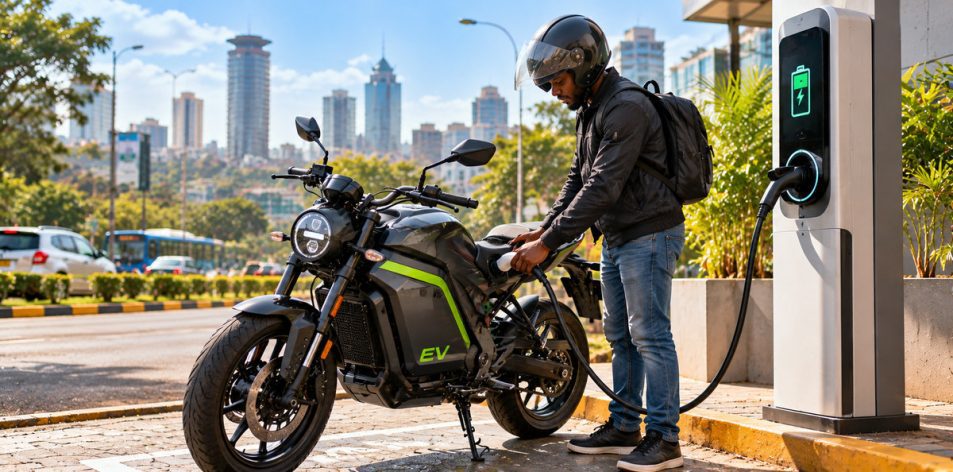
The practicality of an electric motorcycle hinges on accessible charging. Most riders can plug into a standard 230‑volt socket, which makes home charging the simplest solution. A typical overnight charge restores full range, and the modest electricity cost keeps the overall expense low.
For those without a private parking space, public charging points are emerging in shopping centres, office complexes and near transport interchanges. These stations often provide a single‑phase charger that can top up a battery in a few hours – sufficient for a mid‑day refill.
Workplaces are also recognising the benefit of offering charging bays. By installing a few wall‑mounted units, companies can support staff who choose electric two‑wheelers, reinforcing a green corporate image while reducing the need for employees to seek external charging facilities.
Regulatory Landscape: What Riders Need to Know
Kenyan authorities have begun to adapt existing vehicle regulations to accommodate electric motorcycles. Registration processes remain similar to those for conventional bikes, but there are emerging incentives aimed at encouraging adoption. These may include reduced road‑tax rates, exemption from certain congestion charges or preferential parking zones in city centres.
Safety standards are also being refined. While electric motorcycles share many of the same mechanical requirements as their petrol counterparts – such as lighting, brakes and helmet use – there is a growing emphasis on battery safety. Riders are advised to use chargers that meet recognised standards and to store batteries away from extreme temperatures.
City Planning: Building an Infrastructure for the Future
Urban planners have a pivotal role in ensuring that the surge in electric two‑wheelers translates into lasting benefits for the city. Dedicated parking spaces equipped with charging points can prevent the clutter of ad‑hoc charging cables on sidewalks. Integrating these facilities into existing transport hubs – for example, near bus terminals or train stations – encourages multimodal journeys.
Beyond parking, planners can consider the placement of rapid‑charge stations along major arterial routes. While most commuters will rely on overnight home charging, a network of fast chargers can support longer trips or commercial fleets that need to stay on the road for extended periods.
Policy makers may also look at incentives that lower the upfront cost of electric motorcycles, such as tax rebates or low‑interest financing schemes. By reducing the barrier to entry, more residents can experience the benefits, which in turn can reduce overall traffic emissions and improve air quality.
Looking Ahead: What the Next Few Years May Hold
The momentum behind electric motorcycles is unlikely to stall. Battery technology continues to advance, promising greater range and shorter charging times. As local manufacturers and importers respond to demand, the price gap with conventional bikes is expected to narrow further.
For commuters, the promise is a reliable, low‑cost ride that fits neatly into a busy schedule. Entrepreneurs can anticipate a more predictable operating expense and a brand image that aligns with sustainability. City planners have the opportunity to shape a transport ecosystem that reduces congestion, curbs emissions and supports a growing urban population.
The transition will require coordination – from clear regulatory guidance to the rollout of charging infrastructure – but the fundamentals are already in place. As electric motorcycles become a familiar sight on Kenya’s streets, they may well redefine what affordable, eco‑friendly urban mobility looks like.