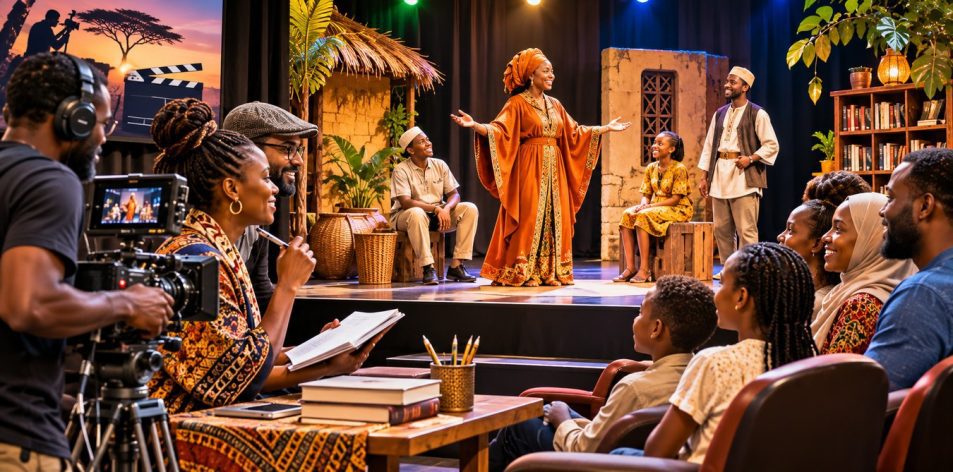
East Africa’s Creative Renaissance: Films, Festivals And Cultural Experiences To Discover
From award-winning cinema and live theatre to literary festivals and creative city experiences, discover the people and places bringing East African culture to life
East African culture and entertainment offer far more than the places visitors know from guidebooks. Across Nairobi, Kampala, Kigali, Dar es Salaam and Zanzibar, a lively mix of cinema, theatre, books, festivals and contemporary art is giving audiences fresh ways to experience the region.
Think of an award-winning Rwandan film making its mark at Cannes, a Kampala theatre festival bringing performers together from across borders, or a Nairobi literary gathering where books meet music, film and conversation. These are not just industry milestones. They are invitations to discover the ideas, talent and stories shaping modern East Africa.
For residents, these experiences offer new ways to enjoy their own cities. For visitors, they can add a memorable cultural dimension to a trip. And for the diaspora, a film in Kiswahili, a familiar story told on stage or a book by an emerging East African writer can offer a meaningful connection with home.
This is a guide to some of the creative voices, cultural platforms and experiences worth knowing about — whether you are looking for your next film, planning a city break, choosing an outing or simply curious about what is happening across the region.
Not every production or event will suit every audience, and programmes change from year to year. We have included links to organisers and official sources so readers can explore further and check the latest details before making plans.
In This Article
- Nairobi: A City For Film Lovers, Theatre-Goers And Curious Readers
- A Night At The Theatre: Nairobi’s Live-Performance Scene
- Macondo: Where Nairobi’s Literary World Meets Art And Ideas
- Kampala: Discovering Ugawood And Uganda’s Award-Winning Films
- Kampala On Stage: A Theatre Festival With Regional Connections
- Kampala Writes: A Festival For Readers And Storytellers
- Kigali: The Rwandan Film Making An Impression At Cannes
- Kigali Cine Junction And The Pleasure Of Discovering Independent Film
- Umurage: Books, Art And New Ways Of Telling Stories
- Dar es Salaam: Kiswahili Stories And Contemporary Tanzanian Culture
- Zanzibar International Film Festival: Cinema By The Indian Ocean
- Beyond The Screen: Dar es Salaam’s Galleries And Cultural Spaces
- What Makes East Africa’s Creative Scene Worth Discovering
- Choosing Films And Performances For The Whole Family
- Simple Ways To Enjoy And Support East African Creativity
- The People And Support Behind The Creative Success
- A Region Of Stories Waiting To Be Discovered
East Africa’s Creative Scene: Four Places To Start Exploring
- Nairobi: Start with live performance, independent film and literary events such as the Macondo Literary Festival.
- Kampala: Explore Ugawood, the Uganda Film Festival’s award-winning productions and a theatre festival with regional and international participation.
- Kigali: Discover internationally recognised Rwandan cinema alongside book, art and storytelling platforms.
- Tanzania and Zanzibar: Experience Kiswahili screen culture and the Zanzibar International Film Festival’s regional cinema showcase.
Nairobi: A City For Film Lovers, Theatre-Goers And Curious Readers
Nairobi’s creative energy is not confined to one neighbourhood or one art form. The city brings together independent filmmakers, actors, writers, photographers, musicians and performers, giving residents and visitors plenty of ways to experience contemporary Kenyan culture.
On screen, Kenyan stories move between family life, urban relationships, comedy, romance, history and social change. Some productions are made for cinema and television; others find audiences through digital releases. For viewers, that variety means there is no single version of Kenyan life being presented — the stories are as varied as the people who make them.
Digital distribution has also made it easier to discover independent work beyond the traditional cinema or television schedule. When choosing where to watch, look for legitimate releases and the filmmaker’s or distributor’s official channels so that audiences support the people behind the production.
However, access to a streaming platform should not be confused with guaranteed international success. Licensing arrangements change, platforms adjust their regional strategies, and competition for commissioning budgets remains considerable. Kenya’s creative industry continues to face challenges around financing, distribution, piracy and the cost of producing content to international standards.
These realities make the work of local festivals and industry organisations particularly important. The Kenya Film Commission, film festivals, training initiatives and independent production networks help connect creative talent with audiences, professional development and potential collaborators.
A Night At The Theatre: Nairobi’s Live-Performance Scene
For an experience that feels different from watching a screen, Nairobi’s theatre scene offers live storytelling, music, movement and the shared excitement of an audience discovering a performance together.
The Kenya National Theatre continues to provide a platform for productions, cultural performances and community engagement. Events such as the Kenya International Theatre Festival (KITFest) bring together local and international practitioners, giving audiences opportunities to experience different approaches to performance.
There is also a growing place for children’s theatre and family-oriented performances. KITFest’s 2026 Kids Fiesta programme, for example, included children’s performances, storytelling, interactive workshops, games and cultural activities. Its advertised programme featured The Lion King Jr. Musical and Atieno in a Red Hood, alongside a puppet-making workshop.
For families, children’s performances and workshops can turn a weekend outing into something creative and memorable. They introduce young audiences to imagination, language, teamwork and the pleasure of watching a story unfold live.
Parents should still check the age recommendations, performance themes and suitability of individual productions before attending. A festival may offer family activities while also presenting adult-oriented performances elsewhere in its programme.
Macondo: Where Nairobi’s Literary World Meets Art And Ideas
Literature is another area in which Nairobi is attracting attention beyond Kenya’s borders. The Macondo Literary Festival has developed into a gathering for writers, readers, artists and cultural thinkers interested in African histories and contemporary storytelling.
Its sixth edition, held on 19 and 20 September 2026 under the theme Ink, Sea, Silence, brought together writers and creative practitioners to explore Africa’s histories and futures through literature. The University of Nairobi’s Department of Literature reported on the festival’s programme and participation, connecting cultural memory, heritage and historical archives with contemporary literary conversations.
It also extended beyond conventional author discussions, incorporating music, film, dance, art and interdisciplinary performances. Some sessions were livestreamed, creating opportunities for audiences outside Kenya to participate.
For readers, the appeal is the chance to discover new writers and ideas in one place. For the diaspora, gatherings such as Macondo can also be a way to reconnect with African literature and conversations that may be less visible in mainstream international bookshops.
Find out more through the Macondo Literary Festival.
Kampala: Discovering Ugawood And Uganda’s Award-Winning Films
Kampala is an exciting place to follow the growth of Ugandan screen storytelling. Often described as Ugawood, the country’s film scene brings together independent production houses, emerging directors, actors and writers creating work for local audiences and beyond.
Known by many through the term Ugawood, the industry has developed a strong identity around stories that reflect Ugandan society. Productions often draw on local languages, familiar social experiences, family relationships, humour and the realities of everyday life.
The Uganda Film Festival, organised by the Uganda Communications Commission, has become an important part of this development. It provides a platform for screening local productions, recognising creative achievement and encouraging professional development in areas such as filmmaking, distribution and commercialisation.
The 13th Uganda Film Festival, whose awards gala took place in Kampala on 28 August 2026, recognised productions including Adui, You May Kiss the Bride Goodbye and Small Gods. According to the Uganda Communications Commission’s official results, Adui won Best Screenplay, Best Film in an Indigenous Language, Best Cinematography and Best Post-Production/Editing. You May Kiss the Bride Goodbye received four awards, including Best Feature Film and Best Director, while Small Gods also collected four awards.
The festival is part of a broader effort to strengthen the production pipeline. In a separate update, the UCC said 299 local films had been submitted for the 2025/26 cycle and announced 22 beneficiaries of its Content Development Support Programme, covering animation, short films, feature films, documentaries and television drama. The Commission’s announcement about the supported filmmakers offers an indication of the scale of activity and the importance of structured development support.
The film’s progress provides a more concrete example of what industry support can achieve. In a 4 September 2026 update distributed on behalf of the International Trade Centre, the project team confirmed that the filmmakers had signed a distribution agreement with Okada Media, which was negotiating deals to bring the Ugandan feature to international audiences. This is a confirmed distribution agreement, although the international deals being negotiated should not be described as completed releases in every market.
For viewers, these award stories are useful starting points when exploring Ugandan cinema. They also reveal the work that happens behind the scenes: recognition can open doors, but getting a film in front of audiences and building a sustainable career requires distribution, partnerships and continued support.
For Ugandan filmmakers, the opportunity lies in developing stories that remain authentic to their communities while being presented with the production quality, subtitles and distribution strategy needed to travel internationally.
Kampala On Stage: A Theatre Festival With Regional Connections
Uganda’s creative activity is not limited to film. Kampala has a lively performance culture, with theatre companies, independent artists and cultural organisations creating opportunities for live storytelling.
The Kampala International Theatre Festival is one of the events helping to strengthen these connections. Its 2026 edition runs from 25 to 29 November and brings together 11 productions and staged readings from Uganda, Kenya, Rwanda and Italy, alongside workshops, community activities and professional conversations. Readers should consult the organiser’s website for the latest programme and ticket information.
The festival’s programme also includes community activities, creative networking and conversations around playwriting and the professional development of theatre practitioners.
This kind of collaboration is important because theatre is often built through relationships. Actors, directors, playwrights, designers and technical teams benefit from meeting colleagues, exchanging ideas and working across borders.
For audiences, the festival is an opportunity to experience different performance styles and stories from neighbouring countries in one city. If you are considering attending, check the organiser’s programme for individual show descriptions, venues, ticketing and age guidance before you go.
Families interested in attending should review the programme carefully. Some performances may be suitable for children, while others are intended for mature audiences.
Kampala Writes: A Festival For Readers And Storytellers
Uganda’s literary scene is also finding new ways to connect writers and readers. Kampala Writes LitFest has become a platform for conversations around literature, identity, creativity and the changing ways stories are told.
Its 2026 edition, held in August, explored the theme Where Stories Begin: The Imaginary and the Art of Possibility. The festival’s earlier edition in 2025 focused on belonging and brought together local, emerging and established writers, including members of the diaspora.
Its programme has included discussions, writing workshops, masterclasses, storytelling sessions and opportunities for creative exchange.
For young readers and aspiring writers, such events can make literature feel more accessible. Meeting authors, listening to poetry and participating in writing activities can help children and young adults see storytelling as something they can take part in, rather than something that exists only in books.
Learn more through the Kampala Writes LitFest.
Kigali: The Rwandan Film Making An Impression At Cannes
Kigali has become an increasingly important location for Rwanda’s developing film and audiovisual industries. The country’s creative sector is supported by initiatives that seek to improve production skills, encourage investment and attract international filming projects.
The Rwanda Film Office, established under the Rwanda Development Board, provides information and support for local and international audiovisual productions. Its role includes helping filmmakers navigate production requirements and promoting Rwanda as a filming destination.
One of the most significant recent achievements for Rwandan cinema came through filmmaker Marie-Clémentine Dusabejambo and her feature film BEN’IMANA.
The film was selected for the Un Certain Regard section of the 2026 Cannes Film Festival and received the Caméra d’Or. The official Cannes Film Festival record for BEN’IMANA confirms its 2026 selection and award. This recognition placed a Rwandan-led production in one of international cinema’s most visible festival conversations.
For anyone curious about contemporary Rwandan cinema, BEN’IMANA is an important title to know. Its Cannes recognition puts a spotlight on the creative talent behind the film and offers an entry point into a wider conversation about the stories being told by Rwandan filmmakers.
The film explores the difficult process of justice and reconciliation in Rwanda following the 1994 Genocide against the Tutsi. Its subject matter is serious and emotionally demanding, so it should not be presented as a children’s or general family viewing recommendation. Its international recognition is an example of artistic achievement, not an indication that every acclaimed film is suitable for every audience.
For Rwanda, the achievement offers encouragement to emerging filmmakers and demonstrates the value of developing distinctive stories with strong creative partnerships and international production networks.
Kigali Cine Junction And The Pleasure Of Discovering Independent Film
Film festivals play an important role in helping local productions find audiences and connecting filmmakers with industry professionals.
Kigali Cine Junction is one of the initiatives contributing to this activity. Its 2026 edition brought together filmmakers and cultural stakeholders, while discussions around the country’s film industry highlighted the importance of skills development, funding, infrastructure and international partnerships.
These are practical issues that affect whether a film can progress from an idea to a finished production and, eventually, reach audiences beyond its home market.
For young creatives, festivals can provide access to screenings, discussions and professional networks that might otherwise be difficult to reach. For audiences, they offer a chance to discover films that may not receive a conventional cinema release.
Umurage: Books, Art And New Ways Of Telling Stories
Rwanda is also developing its literary and publishing profile through events such as the Umurage International Book and Art Festival.
Its inaugural 2026 edition in Kigali brought together authors, publishers, artists, educators and creative professionals. The theme, The Future Is Written: Human Voices, Intelligent Tools, explored the relationship between storytelling, culture and emerging technology, including multilingual publishing, intellectual property, indigenous languages and digital innovation. The organiser’s festival theme overview sets out these priorities.
Discussions included multilingual publishing, intellectual property, digital innovation, indigenous languages and the opportunities created by new creative tools.
This is an important conversation for the wider region. Technology can help writers and publishers reach readers in different countries, but the value of a story still depends on the people, experiences and cultural knowledge behind it.
For East African writers, the challenge is to embrace new distribution opportunities without losing the languages, perspectives and local details that make their work distinctive.
Explore the festival through the Umurage International Book and Art Festival.
Dar es Salaam: Kiswahili Stories And Contemporary Tanzanian Culture
Dar es Salaam has a distinctive place in East Africa’s creative landscape. As Tanzania’s largest city and an important commercial and cultural centre, it supports a wide range of film, television, music, publishing and performance activity.
Tanzania’s screen industry includes commercial productions, independent films, television content and creative work in Kiswahili. The language itself is an important cultural asset, allowing productions to connect with audiences across Tanzania and other Kiswahili-speaking communities.
For viewers outside Tanzania, subtitles can open the door to stories that might otherwise feel less accessible. For East African diaspora audiences, hearing familiar expressions, humour and cultural references can make a film or programme feel like a welcome connection with home.
As in other countries in the region, the industry must continue developing sustainable production models, professional distribution and reliable routes to international audiences.
Zanzibar International Film Festival: Cinema By The Indian Ocean
One of the most established cultural platforms associated with Tanzania’s film industry is the Zanzibar International Film Festival (ZIFF).
For a cultural experience beyond the mainland, the Zanzibar International Film Festival (ZIFF) is one of Tanzania’s best-known creative platforms. Set against the island’s distinctive Swahili heritage and Indian Ocean setting, the festival brings together films from Africa and the wider region. It is a reminder that a cultural itinerary in Tanzania can extend well beyond the beach.
The 2026 festival selection included productions from Tanzania, Uganda, Kenya and other countries. Its awards recognised achievements across several categories, including Best East African Film, Best Actor East Africa and Best Actress East Africa.
Ugandan productions also featured prominently in the awards. Small Gods received the Golden Dhow for Best East African Film, while Lice N’ Shine received the award for Best Animation. Tanzanian film Couple Goals was recognised in the country’s acting categories.
Such recognition helps demonstrate the range of creative work emerging from the region. It also gives filmmakers an opportunity to meet distributors, festival organisers and other professionals who may help their productions travel further.
Discover the festival’s programmes and awards through the Zanzibar International Film Festival.
Beyond The Screen: Dar es Salaam’s Galleries And Cultural Spaces
Film festivals are only one part of a city’s creative life. Cultural centres, independent venues, galleries and community organisations also help develop audiences and support artists.
The Alliance Française de Dar es Salaam, for example, hosts cultural programming that includes cinema, exhibitions, music and creative events. Its activities provide opportunities for local and international artists to meet audiences and exchange ideas.
Its programme has also included animation, comics and gaming-related activities, helping introduce younger audiences to different forms of visual storytelling.
These spaces are valuable because they make culture part of everyday city life. A visitor may attend a film screening, discover an exhibition, meet an author or participate in a workshop without needing to attend a large international festival.
What Makes East Africa’s Creative Scene Worth Discovering
There is no single reason why East African creative work is receiving wider recognition. Several developments are contributing to the change. Across film and theatre, stronger creative networks, festival platforms and new distribution routes are helping distinctive regional stories reach more people.
Stories That Feel Authentic
Audiences around the world are increasingly exposed to productions from different countries and cultures. East African creators have an opportunity to tell stories that are rooted in their own communities rather than trying to imitate the style of another market.
Stories about family, ambition, friendship, identity, history, education, migration and everyday life can resonate across borders when they are told with honesty and skill.
Improving Production Skills
Better access to cameras, editing tools, sound equipment and digital production technology has created opportunities for independent filmmakers. Training, mentorship and professional collaboration are helping emerging creators improve the quality of their work.
Technology is also changing the wider creative economy, from the way campaigns are developed to how stories are presented to audiences. H&S Magazine has explored this in its feature on AI, advertising and storytelling for Kenyan brands and creators.
However, equipment alone does not create a successful film. Strong scripts, thoughtful direction, good sound, convincing performances and careful editing remain essential.
Streaming And Digital Distribution
Digital platforms have changed how audiences discover film and television content. Productions can reach viewers through licensed streaming services, broadcasters, online video platforms and specialist distribution channels.
For East African creators, this creates opportunities to reach diaspora communities and international viewers who may not have access to local cinema releases.
Nevertheless, streaming platforms do not offer a guaranteed route to success. Licensing deals can be selective, regional availability varies and platforms change their commissioning priorities. A film appearing at a festival does not automatically mean it has secured a streaming contract.
Independent distribution, legitimate online releases, film festivals and partnerships with broadcasters remain important parts of the wider ecosystem.
Subtitles And Multilingual Storytelling
Language is one of East Africa’s greatest cultural strengths. Kiswahili, English, Luganda, Kinyarwanda and many other languages carry distinct ways of expressing humour, emotion, history and identity.
Subtitles can help productions reach audiences who do not speak the original language, while dubbing may create additional opportunities in selected markets.
Good translation is more than converting words. It needs to preserve meaning, cultural references and the tone of the original performance.
Festivals Create International Connections
Film, theatre and literary festivals provide opportunities for creators to meet people who can help develop their work. These relationships may lead to co-productions, distribution discussions, invitations to international events or future creative partnerships.
They also give audiences access to stories that might otherwise remain difficult to discover.
Choosing Films And Performances For The Whole Family
One of the most exciting opportunities in the region is the potential to create more quality entertainment for families and younger audiences.
There is room for animated films, educational productions, children’s theatre, cultural storytelling, documentaries about wildlife and nature, historical stories and imaginative adventures inspired by East African folklore.
However, it would be misleading to suggest that all locally produced films or theatre performances are suitable for children. Like productions from any other region, East African films cover a wide range of themes and age categories.
Parents should check the official classification, age guidance, synopsis and content information before choosing a film or performance for the family. A production may be culturally important or internationally acclaimed while still containing themes that are unsuitable for younger viewers.
For Muslim families, it may also be worth considering language, clothing, relationships, humour and other themes in a production when deciding whether it aligns with their household values. This is a personal viewing decision, and families may have different standards.
When it comes to live theatre, ask organisers about the intended age group and whether a performance includes mature themes. Children’s workshops and storytelling sessions can be particularly good starting points for younger audiences.
Simple Ways To Enjoy And Support East African Creativity
Supporting the region’s creative industries does not require a large budget. There are practical ways for families, schools and communities to encourage local talent.
- Attend local theatre: Look for children’s performances, storytelling sessions and cultural productions at established venues.
- Watch licensed local films: Choose legitimate cinema, broadcaster or streaming releases so that creators and rights holders can benefit.
- Buy books by regional writers: Explore children’s literature, novels, biographies, poetry and educational titles from East African publishers.
- Visit literary festivals: Attend author talks, book exhibitions, writing workshops and family activities.
- Introduce children to local stories: Encourage them to read and watch productions that reflect the region’s languages, history and cultural diversity.
- Support independent artists: Purchase legitimate creative work, attend performances and share official event announcements.
- Encourage creative skills: Schools and parents can introduce children to writing, acting, animation, photography, filmmaking and stage design.
For the diaspora, supporting East African creativity can also be a way to maintain a connection with home. Buying books, watching licensed productions and attending cultural events abroad can help keep regional stories in circulation.
The People And Support Behind The Creative Success
International recognition is encouraging, but the long-term strength of East Africa’s creative industries will depend on more than a handful of successful productions.
Filmmakers need access to reliable financing, professional training, production facilities and distribution networks. Theatre practitioners need suitable venues, technical resources and sustainable opportunities to stage their work. Writers need publishing support, fair contracts, translation opportunities and access to readers.
Intellectual property protection is another important issue. Creative work takes time, skill and investment to produce. When films, books and performances are distributed without permission, creators can lose income and opportunities to reinvest in future work.
Audiences also have a role to play. Choosing legitimate platforms, purchasing tickets and supporting local publishers helps build a market in which creative professionals can continue working.
Regional collaboration could make an even greater difference. Kenya, Uganda, Rwanda and Tanzania have different strengths, languages, institutions and creative networks. Co-productions, shared festivals, cross-border training and regional distribution arrangements can help creators access a wider market.
A Region Of Stories Waiting To Be Discovered
The creative industries in East Africa are developing in different ways, but there is a shared opportunity: to tell stories that reflect the region’s identity while connecting with audiences across the world.
Nairobi’s film and theatre communities, Kampala’s growing screen and performance scene, Kigali’s developing audiovisual industry and Dar es Salaam’s cultural networks all contribute to a wider creative landscape. Festivals in these cities and across the region provide platforms for new voices, established artists and audiences to meet.
International awards and distribution opportunities are important milestones, but the real measure of progress will be whether talented people can build lasting careers, whether local audiences have access to quality productions and whether the next generation feels encouraged to tell its own stories.
From a thought-provoking film in Kigali to a lively theatre evening in Kampala, a literary discovery in Nairobi or a festival by the Indian Ocean in Zanzibar, East Africa offers many ways to experience its creativity. The most rewarding cultural experiences often begin with curiosity — and with a willingness to look beyond the familiar. There are stories, performances and creative voices across the region waiting to be discovered.