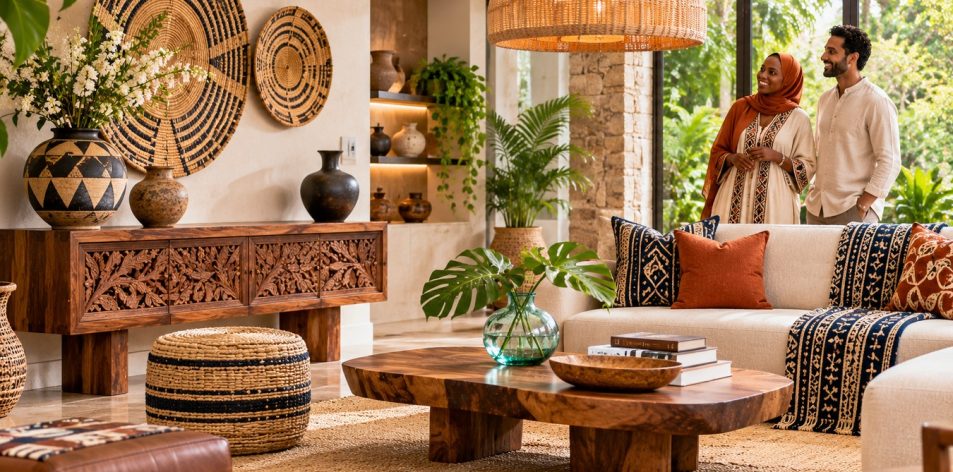
How Regional Crafts, Traditional Techniques And Contemporary Design Are Creating Homes With Character, Meaning And Timeless Appeal
Luxury interiors are no longer defined solely by expensive furniture, imported finishes or perfectly coordinated accessories. Increasingly, homeowners are looking for something more personal: spaces that tell a story, reflect their identity and bring a sense of warmth into everyday living.
Across Kenya and the wider East African region, artisans are creating beautiful pieces that offer precisely that. From handwoven baskets and intricately carved furniture to contemporary ceramics, woven lighting, natural-fibre rugs and decorative glass, local craftsmanship is finding its place in sophisticated modern homes.
What makes these pieces particularly appealing is the combination of heritage and individuality. A handwoven basket may take hours of skilled work to complete, while a carved wooden console or handmade ceramic vessel carries the character of the person who created it. These are not simply decorative objects; they represent knowledge, creativity and techniques passed between generations, often reinterpreted by a new generation of makers.
For homeowners, the opportunity is to bring these elements together in a considered way. A contemporary living room can feature a traditional woven wall piece without feeling rustic. A modern dining area can be complemented by handmade ceramics, while a carefully selected piece of carved furniture can become the focal point of an otherwise understated space.
East African artisan interiors are not about filling a home with as many locally made objects as possible. They are about choosing meaningful pieces, understanding where they come from and allowing craftsmanship to complement the architecture and lifestyle of the people who live there.
Why East African Craftsmanship Belongs In Contemporary Luxury Interiors
East Africa has a rich variety of craft traditions, shaped by local materials, communities, landscapes and ways of life. Basket weaving, wood carving, pottery, textile production, beadwork and metalwork are among the many skills practised across the region.
For generations, many of these crafts served practical purposes. Baskets were used for carrying and storing goods, woven textiles provided warmth and decoration, pottery supported everyday household needs, and carved wooden objects served functional and artistic roles.
Today, designers and artisans are finding new ways to interpret these skills for contemporary homes. A traditional weaving technique may be used to create a sculptural pendant light. A familiar basket form may become an elegant storage piece, while locally sourced timber can be transformed into furniture with clean lines and modern proportions.
This evolution is important because it shows that traditional craftsmanship does not need to remain confined to historical or rural settings. It can develop alongside contemporary architecture, new materials and changing lifestyles.
There is also a growing appreciation for objects that are made with care rather than mass-produced in large quantities. A handmade item may have small variations in colour, texture or shape. Rather than viewing these as imperfections, many homeowners appreciate them as part of the object’s individuality.
The Beauty Of The Kiondo And Contemporary Basketry
Few Kenyan craft objects demonstrate the relationship between tradition and modern interiors as clearly as the kiondo. Traditionally associated with communities in Kenya, including the Kikuyu and Kamba, the woven basket has long served practical purposes, particularly for carrying and storing goods.
Its construction, patterns and materials vary according to the maker and region. Sisal and other natural fibres are commonly used, with different weaving techniques creating distinctive textures and finishes.
Today, baskets have found a place in contemporary homes as more than functional storage. A well-made kiondo can be used to hold throws, organise household accessories, display a potted plant with a suitable inner container or add texture to an otherwise simple corner.
Some homeowners also use larger woven pieces as wall decoration, creating a layered arrangement of different shapes, sizes and natural tones.
The key is to avoid treating every basket as interchangeable. Ask about the maker, the materials, the weaving technique and the community or region associated with the piece. This helps preserve the story behind the craft rather than reducing it to a generic decorative trend.
For a closer look at how traditional baskets have entered contemporary interiors, Business Daily Africa’s feature on how the kiondo became a luxury décor item offers an interesting perspective.
Handcrafted Woodwork That Makes A Statement
Wood remains one of the most versatile materials in interior design. It brings warmth, texture and a sense of permanence, making it particularly suitable for homes that combine contemporary architecture with natural finishes.
East African woodworkers can create everything from dining tables and console units to bed frames, occasional chairs, shelving and decorative panels. Traditional carving techniques can also be adapted into modern furniture, with detailed workmanship used selectively rather than covering every surface.
Consider a solid timber dining table with a simple silhouette, supported by carefully crafted legs. It can become the centrepiece of a dining room without requiring elaborate decoration. Similarly, a carved wooden console placed against a neutral wall can provide a strong focal point in an entrance hall.
For a more understated look, homeowners can commission furniture with clean lines and subtle details inspired by regional carving traditions. This allows the craftsmanship to be appreciated without making the room feel overly themed.
When sourcing wooden furniture, ask about the timber species, where the wood comes from and how it has been dried and treated. Properly seasoned timber, good joinery and suitable finishing are essential, particularly in areas where humidity and temperature changes may affect the material.
Responsible sourcing is equally important. Choose suppliers who can explain the origin of their timber and demonstrate that it has been obtained legally and sustainably. Beautiful furniture should not come at the expense of forests or protected natural resources.
Pottery And Ceramics: Everyday Objects With Artistic Character
Handmade pottery can introduce a softer, more organic quality into a home. Unlike mass-produced decorative accessories, artisan ceramics often have distinctive glazes, subtle variations and textures that make each piece individual.
Across East Africa, potters continue to work with clay using traditional methods, while contemporary ceramic artists experiment with new forms, colours and finishes.
For modern interiors, handmade ceramic bowls, vases, planters and serving pieces can be used to introduce earthy tones and tactile interest. A collection of vessels in complementary shades can look particularly effective on a console, open shelf or dining table.
There is no need to display everything at once. One substantial ceramic vessel can have more visual impact than several smaller objects competing for attention.
When purchasing ceramics, ask whether a piece is decorative or suitable for food use. Not every glaze or finish is intended for contact with food, and a decorative vessel should not automatically be used for serving.
Woven Lighting And Natural-Fibre Details
Lighting has a significant influence on the atmosphere of a home. A carefully selected pendant can become a focal point, while softer lamps and indirect lighting create a more relaxed environment.
Woven lighting made from suitable natural fibres can bring warmth and texture into contemporary spaces. Depending on the design, materials may include sisal, raffia, reeds, grasses or other locally available fibres.
A woven pendant above a dining table can complement timber furniture and neutral walls. Smaller woven shades can work in bedrooms, reading corners or covered outdoor spaces.
However, lighting should never be selected on appearance alone. Natural fibres are combustible, so the shade must be designed for use with an appropriate light source, suitable clearance and safe electrical fittings. Ask the supplier about heat management, installation instructions and compliance with relevant electrical safety requirements.
For a more layered approach, combine woven lighting with ceramic table lamps, simple wall lights and carefully positioned task lighting. The result can feel warm and inviting without relying on a single dramatic fixture.
Textiles That Bring Colour, Pattern And Softness
Textiles are among the easiest ways to introduce regional craftsmanship into a home. Handwoven throws, cushion covers, rugs, table runners and wall hangings can add colour and texture without requiring major changes to the furniture or layout.
Kenyan and East African makers work with a variety of fibres and techniques, including weaving, embroidery, dyeing and textile embellishment. These can be interpreted in ways that suit both traditional and contemporary interiors.
A neutral sofa, for example, can be given more character through a small selection of cushions featuring handwoven textures or carefully chosen regional patterns. A wool or cotton throw can add warmth to a bedroom, while a woven rug can help define a seating area.
When choosing textiles, consider how they will be used. A decorative wall hanging has different requirements from a rug that will receive daily foot traffic. Ask about fibre composition, washing instructions, colourfastness and durability before purchasing.
It is also worth considering the scale of a pattern. Large, bold designs can work well in spacious rooms, while smaller motifs may be more suitable for compact spaces. A restrained colour palette can help different textile traditions sit comfortably together.
Handmade Glass And Contemporary Decorative Objects
Glass is another area where East African craftsmanship is finding an exciting place in contemporary interiors. Hand-blown glass, recycled glass objects, decorative panels and bespoke lighting can introduce colour and transparency while adding an artistic dimension to a room.
One of Kenya’s best-known examples is Kitengela Glass, a studio outside Nairobi that has developed an internationally recognised practice around recycled glass and handmade production.
Its work includes hand-blown objects, lighting, furniture, architectural glass panels, beads and sculptural pieces. The studio demonstrates how discarded materials can be transformed into functional and artistic objects through skilled making and creative experimentation.
For homeowners, handmade glass can be introduced through a distinctive vase, a set of drinking glasses, a decorative bowl or a commissioned lighting feature. Larger architectural pieces may also be considered during a renovation or new-build project.
Because glass is a strong visual material, it often works best when given room to stand out. A colourful handmade vase against a neutral background, for instance, can create a focal point without overwhelming the rest of the room.
Bringing East African Motifs Into Modern Design
Traditional motifs can provide a strong sense of identity, but they need not be used in an obvious or repetitive way. A sophisticated interior often works best when cultural references are introduced selectively.
Geometric patterns, woven textures, architectural details, natural forms and regional colour palettes can all provide inspiration. The objective is not to reproduce an entire traditional setting, but to interpret selected elements in a way that complements contemporary living.
For example, a living room might combine a modern sofa and simple timber furniture with woven wall pieces and cushions inspired by regional textile patterns. A dining area could feature handmade ceramics alongside clean-lined tableware, while an entrance hall might use a carved console and a large woven basket.
Coastal influences can also be introduced through natural textures, light fabrics, carved timber and a palette of sand, cream, ocean blue and warm brown. In contrast, interiors inspired by the landscapes of the Rift Valley or highlands might draw on terracotta, ochre, stone, muted greens and deeper earthy tones.
When using cultural motifs, it is important to understand their origins and meanings. Some patterns or objects may have ceremonial, spiritual or community-specific significance. Designers should research these references and consult the relevant makers rather than using them simply because they appear attractive.
How To Blend Traditional Crafts With Contemporary Luxury
The most successful interiors are usually those in which traditional and modern elements feel as though they belong together. This does not happen by accident. It requires attention to proportion, colour, material and the overall function of the room.
Here are practical ways to achieve that balance.
Begin With A Calm Foundation
Use a simple foundation of neutral walls, well-proportioned furniture and quality flooring. Shades such as warm white, sand, stone, taupe and soft grey allow handcrafted objects to stand out without competing with one another.
This does not mean every room needs to be beige. A deep green wall, muted blue cabinetry or a terracotta feature can work beautifully when balanced with natural materials.
Choose A Few Meaningful Statement Pieces
Rather than filling every surface with accessories, select a few pieces that deserve attention. This might be a hand-carved console, an oversized woven wall piece, a distinctive ceramic vessel or a locally made coffee table.
Give each object enough space to be appreciated. A well-chosen piece should contribute to the room rather than compete with everything around it.
Mix Textures Instead Of Matching Everything
One of the easiest ways to create visual depth is to combine different textures. Smooth stone, natural timber, woven fibres, ceramics, glass and soft textiles can work together beautifully.
For example, a polished stone coffee table can be balanced with a woven rug and textured cushions. A smooth wall can provide the perfect background for a handwoven basket arrangement.
Keep The Colour Palette Connected
Choose a small group of colours that appear throughout the room. Natural browns, cream, charcoal, muted green and terracotta can provide a cohesive foundation, while a few brighter accents introduce personality.
When working with colourful regional textiles, take inspiration from the colours already present in the fabric rather than introducing several unrelated shades.
Allow Modern And Traditional Furniture To Coexist
A contemporary sofa can sit comfortably alongside a handcrafted wooden side table. A modern dining table can be paired with artisan-made accessories, while a traditional carved chair can become an accent piece in a minimalist bedroom.
The important consideration is proportion. Furniture should be comfortable and appropriate for the room, with enough space for people to move around naturally.
Where To Find Authentic East African Crafts
Finding good craftsmanship requires more than browsing decorative shops. Homeowners should look for makers, workshops, design studios and responsible retailers who can explain how their products are made and where the materials originate.
Kenya and the wider region offer several interesting starting points.
Crafting Kenya
Crafting Kenya works with artisans and makers across the country, presenting contemporary craft products that combine traditional techniques with modern design. Its approach highlights the people behind the work and the creative possibilities of locally made products.
The organisation’s work is particularly relevant to homeowners looking for handmade objects with a clear connection to the makers and techniques involved.
Kitengela Glass, Kenya
Kitengela Glass offers a distinctive example of Kenyan craftsmanship through recycled glass, hand-blown objects, lighting and architectural pieces. Its studio near Nairobi also provides opportunities to learn more about the making process.
For a home renovation or bespoke interior project, its larger design work may be worth exploring alongside smaller decorative pieces.
WomenCraft, Tanzania
WomenCraft is a design-led social enterprise based in north-western Tanzania, working with artisans in Tanzania and Burundi. It combines traditional weaving skills with contemporary design to create home décor, furniture and lighting.
Its work demonstrates how regional craft traditions can be developed for modern homes while creating economic opportunities for artisan communities.
Kukua, Zanzibar
Kukua is a design studio based in Zanzibar that works across furniture, interiors and bespoke projects. Its approach brings together design, architecture, material research and collaboration with artisans and local production networks.
For homeowners, designers and hospitality businesses interested in contemporary interiors with a strong connection to place, Kukua offers an interesting example of how local craft and international design thinking can work together.
Akamba Cultural Centre And Museum, Kenya
The Akamba Cultural Centre and Museum showcases craft products associated with local Kamba artisans, including baskets, pottery, beadwork and wood carvings.
It offers another route for discovering regional craftsmanship while supporting the preservation and appreciation of local creative traditions.
These are starting points rather than an exhaustive directory. There are many independent artisans, workshops, cooperatives and small businesses across East Africa whose work may be discovered through design exhibitions, craft markets, professional referrals and local communities.
Collaborating Directly With Artisans And Makers
For a truly distinctive interior, consider commissioning pieces rather than relying entirely on ready-made products. Working directly with an artisan can allow a homeowner or interior designer to specify dimensions, materials, colours, finishes and practical requirements.
A woven pendant, for example, may need to be made to suit a particular ceiling height. A dining table may require a specific length, while a set of ceramic vessels may need to coordinate with the colours and proportions of a room.
Before commissioning a piece, discuss the following:
- Design brief: Explain how the item will be used, where it will be placed and the overall style of the room.
- Dimensions: Provide accurate measurements and consider access through doors, staircases and corridors.
- Materials: Confirm the materials, their origin and whether they are suitable for the intended environment.
- Finish: Agree on colour, texture, polish, protective treatments and other finishing details.
- Price: Request a clear quotation covering materials, labour, transport and installation where applicable.
- Timeline: Handmade work takes time. Agree on realistic production and delivery dates.
- Payment arrangements: Establish deposits, milestone payments and the balance due on completion.
- Changes and approvals: Agree how design alterations will be handled and whether additional costs may arise.
It is also worth requesting photographs, sketches or a small sample before full production begins, particularly for large or expensive commissions.
Good collaboration respects the artisan’s expertise. A maker may understand the limitations of a particular fibre, timber or technique better than the client. Allowing room for professional advice can lead to a stronger final result.
Paying Artisans Fairly And Respecting Their Work
One of the most important aspects of sourcing authentic crafts is understanding the value of the work involved. Handmade products are not necessarily inexpensive alternatives to factory-made goods. They may require specialist skills, considerable time, careful material selection and years of experience.
When negotiating, avoid treating the lowest possible price as the only measure of value. A fair agreement should recognise the artisan’s labour, expertise, material costs and business needs.
Where possible, buy directly from the maker or through a retailer that can explain its relationship with the artisans. Ask whether the makers are credited, how they are paid and whether the production process provides safe and fair working conditions.
It is also important to respect intellectual property. Do not reproduce an artisan’s design, photograph their work for commercial use or commission a near-identical copy without permission. If a designer intends to use a traditional pattern or technique commercially, they should understand its origins and agree on appropriate collaboration and recognition.
For Muslim homeowners and businesses, fair dealing, honest agreements and avoiding exploitation are also consistent with the principles of Islamic business ethics.
Making Authentic Crafts Work In Different Rooms
Regional craftsmanship can be incorporated throughout a home, but the choice of object should reflect the function of each space.
The Living Room
The living room is often the easiest place to introduce artisan-made pieces. A woven rug, handmade cushions, a carved coffee table, ceramic vessels or a distinctive glass object can add warmth and character.
Try to create one or two focal points rather than decorating every available surface. A carefully arranged collection of woven baskets, for example, can make a striking wall feature when displayed against a simple background.
The Dining Room
Handmade ceramics, serving bowls, table runners and timber furniture can bring craftsmanship into the dining area. Choose pieces that are suitable for their intended use, especially when selecting pottery or wooden serving items.
A solid locally made dining table can also become a long-term investment, particularly when the timber, construction and finish are of good quality.
The Bedroom
Bedrooms benefit from a calmer approach. Soft woven throws, textured cushions, natural-fibre rugs and understated bedside accessories can introduce regional character without making the space feel busy.
Handcrafted bedside tables or a simple carved headboard can provide a distinctive detail while keeping the overall atmosphere restful.
The Entrance And Hallway
An entrance hall offers an opportunity to introduce a strong first impression. A handcrafted console, a large woven basket, a ceramic vessel or a locally made mirror frame can create a welcoming setting.
Ensure that decorative objects do not obstruct movement or create hazards, particularly in narrow corridors and areas used frequently by children or older family members.
Outdoor And Covered Spaces
Covered terraces, verandas and outdoor seating areas can benefit from suitable woven furniture, durable ceramics and locally made accessories. However, materials should be selected according to their exposure to sunlight, moisture, wind and temperature changes.
Natural fibres may require protection from rain and prolonged direct sunlight. Ask the maker whether a product is designed for outdoor use before placing it in an exposed area.
Choosing Quality Over Quantity
There is a temptation to purchase many decorative objects when discovering a new craft market or artisan studio. However, the most successful interiors are not necessarily those with the largest collections.
A better approach is to build a home gradually. Start with pieces that serve a purpose or have genuine personal meaning. Add objects as you discover makers whose work you appreciate, rather than buying simply to fill empty spaces.
Consider the durability, maintenance requirements and versatility of each purchase. A well-made basket, table or ceramic piece that remains useful for years is often a better choice than a fashionable accessory that quickly loses its appeal.
This approach also encourages more responsible consumption. Buying fewer, better-made items can reduce unnecessary waste and allow homeowners to invest in craftsmanship that deserves to be valued.
Bringing East African Craftsmanship Into A Global Luxury Aesthetic
One of the most exciting developments in contemporary interiors is the way regional craft traditions are being presented to international audiences. A handwoven object from Kenya, a textile made in Tanzania or a bespoke piece developed in Zanzibar can sit comfortably in a modern home in Nairobi, Kigali, Kampala, Dar es Salaam, London, Dubai or Toronto.
For the East African diaspora, these objects can offer a connection to family history, familiar materials and cultural identity. For international homeowners and travellers, they provide an opportunity to discover the region through its creative industries and skilled makers.
However, global appeal should not require local craftsmanship to lose its identity. The aim is not to make every object look like an imported European or American product. It is to demonstrate that East African materials, techniques and design ideas can be appreciated on their own merits.
Luxury is not a single international style. It can be expressed through a beautifully made woven light, a carefully finished timber table, a distinctive ceramic vessel or a thoughtfully designed interior that reflects the people who live in it.
Creating A Home That Tells A Meaningful Story
The most memorable interiors often reveal something about their owners. They may reflect places visited, family traditions, personal interests or an appreciation for particular materials and makers.
East African artisan craftsmanship offers an opportunity to create that sense of identity without relying on obvious themes or excessive decoration. A few carefully selected objects can bring warmth and individuality into a contemporary home while supporting the people and communities behind their creation.
For homeowners, the process begins with curiosity: learning about the craft, meeting the maker, understanding the materials and choosing pieces that genuinely suit the space. For interior designers, it means treating artisans as creative collaborators rather than simply suppliers of decorative accessories.
A beautifully designed home does not need to choose between contemporary luxury and cultural heritage. When thoughtful architecture, considered interiors and authentic East African craftsmanship come together, the result can be both sophisticated and deeply personal. The real luxury lies not only in how a space looks, but in the stories it carries, the people it supports and the care behind every piece.