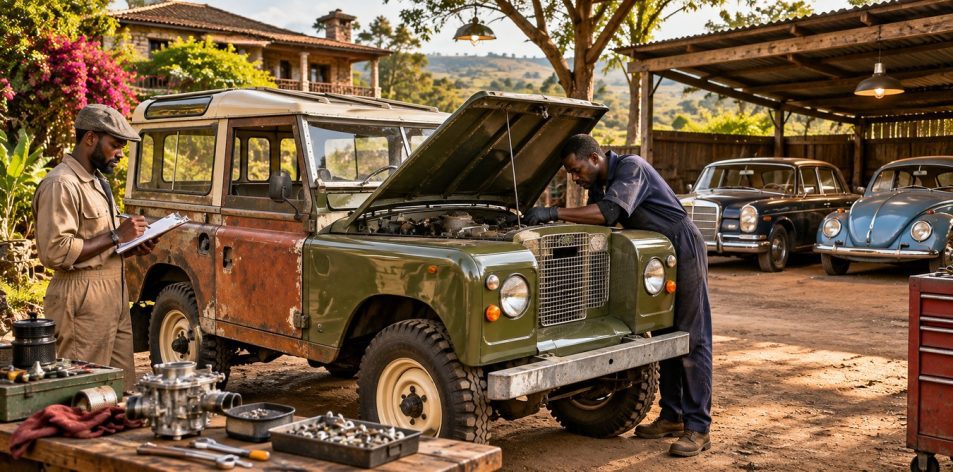
Discovering Forgotten Classics, Reviving Automotive Heritage And Exploring The Business Potential Of Barn-Find Vehicle Restoration
Imagine walking through an old family farm, opening the doors of a neglected garage and finding a vintage Land Rover beneath layers of dust. Its tyres are flat, the paint has faded, the interior is worn and the engine has not run for years. To someone unfamiliar with classic cars, it might look like little more than scrap. To an enthusiast, however, it could be the beginning of a fascinating restoration project.
Across Kenya and the wider East African region, old vehicles can still be found in rural properties, former commercial premises, private collections and family estates. Some have been parked for decades after mechanical problems made them uneconomical to repair at the time. Others have survived because their owners simply could not bring themselves to sell them.
These discoveries are often referred to internationally as barn finds: classic or historically interesting vehicles uncovered after years of storage or neglect. In East Africa, the setting may be a farm shed, an abandoned workshop, a former estate garage or a quiet corner of a family compound rather than a traditional barn.
The appeal is easy to understand. A forgotten Mercedes-Benz, Peugeot, Volkswagen Beetle or classic Land Rover represents more than an old means of transport. It carries a connection to another era of motoring, design and engineering. With the right expertise, patience and investment, some of these vehicles can be brought back to life.
There is also a business opportunity, although it is not as straightforward as buying an old car cheaply, repainting it and selling it for a large profit. Restoration requires careful assessment, specialist craftsmanship, access to parts, accurate budgeting and a realistic understanding of the market.
For enthusiasts and entrepreneurs, classic car restoration in Kenya and East Africa offers an interesting meeting point between automotive heritage, skilled workmanship and the potential to create value from something that might otherwise be forgotten.
Finding, Restoring And Selling Classic Cars: How The Opportunity Works
Why Forgotten Vehicles Are Attracting Attention
Classic vehicles have always had a following among collectors, but interest is no longer confined to a small group of long-established enthusiasts. Younger owners are also discovering the appeal of older models, particularly those with distinctive styling, mechanical simplicity and a strong connection to motoring history.
Kenya has a visible classic-car community, supported by enthusiasts, specialist garages, owners’ clubs and events such as the annual Africa Concours d’Elegance. These gatherings bring together restored and preserved vehicles, allowing owners to display their work and connect with other collectors.
Recent reporting by Business Daily in September 2026 highlighted the growing interest among Kenyan collectors, including younger enthusiasts who are buying and restoring older vehicles. The article also explored the financial realities of restoration, showing how the purchase price and restoration expenditure can quickly add up.
For some owners, the attraction is the satisfaction of bringing a neglected vehicle back to life. For others, it is the opportunity to own something distinctive that cannot simply be ordered from a modern showroom.
The wider East African region has its own automotive history. Land Rovers, Mercedes-Benz saloons, Peugeot models and Volkswagen vehicles have served families, businesses, farms, government institutions and safari operators over several generations. Some have remained in service, while others have been left unused as newer vehicles became more accessible.
That history creates opportunities for people who know what to look for. A vehicle that appears abandoned may still have a valuable original engine, a desirable body style, rare trim or an identifiable history that makes it worth investigating.
Where To Look For A Barn-Find Classic
Finding a worthwhile restoration project often requires patience and a willingness to look beyond the usual vehicle marketplaces. The most interesting discoveries may come through personal networks and conversations with people who have owned or maintained vehicles for many years.
Potential locations include:
- Rural farms and agricultural estates: Older Land Rovers, pickups and utility vehicles may have been used for farm operations before being parked when repairs became difficult or expensive.
- Family compounds: Some families retain older vehicles that belonged to parents or grandparents, even when nobody has driven them for years.
- Former commercial premises: Businesses, workshops, transport operators and contractors may have older vehicles stored on their properties.
- Old garages and workshops: Mechanics sometimes retain customer vehicles, incomplete projects or cars that were abandoned after repair costs became a problem.
- Private collections: Collectors may decide to sell vehicles they no longer have the time, space or resources to maintain.
- Classic-car networks: Owners’ clubs, motoring events and enthusiast communities can provide introductions to people who know where interesting vehicles are located.
Approach these discoveries respectfully. A vehicle parked on private land is not available for collection simply because it appears abandoned. Establish who owns it, obtain permission to inspect it and agree on the terms of any purchase before arranging recovery.
It is also worth speaking to family members and former employees who may know the vehicle’s history. An older mechanic might remember the model, its previous owner or the reason it was taken off the road. Such information can be useful when deciding whether the project is worth pursuing.
Which Classic Cars Are Worth Restoring?
Not every old vehicle is a good restoration candidate. Some are rare and desirable, while others are difficult to source parts for or have little demand among collectors. The best project is not necessarily the oldest car or the one with the most dramatic appearance. It is the vehicle with the strongest combination of condition, originality, parts availability and buyer interest.
Classic Land Rover Series Models And Defenders
Land Rover has a particularly strong connection with East Africa. Series I, Series II and Series III models, along with early Defenders, have been used across the region for agriculture, transport, conservation, safari operations and everyday motoring.
Their practical construction and recognisable design make them appealing to enthusiasts. A well-restored Series Land Rover can attract interest from collectors who appreciate its utility heritage, while a carefully maintained Defender may appeal to buyers looking for a vehicle with both character and off-road capability.
However, the condition of the chassis is particularly important. Corrosion, poorly repaired structural sections, accident damage and worn suspension components can turn an apparently affordable project into an expensive undertaking.
Originality also matters. Before replacing major components, establish which engine, gearbox, axles, body panels and other parts belong to the vehicle. A restoration that retains its original character may appeal to a different buyer from a heavily modified custom build.
Mercedes-Benz Classics
Older Mercedes-Benz models have a loyal following, particularly among buyers who appreciate traditional engineering, comfortable interiors and understated styling.
Models such as the W123, W124, W111 and selected older S-Class vehicles can make interesting restoration candidates, depending on their condition, specification and market demand.
Some Mercedes-Benz models are mechanically durable, but age-related problems can still be substantial. Rust around structural areas, worn suspension, ageing electrical systems, deteriorated rubber components and unavailable trim can all increase the cost of restoration.
Interior originality is another consideration. A vehicle with its original dashboard, seats, instruments and trim may be more appealing to a collector than one fitted with unrelated replacement parts.
Peugeot Classics
Peugeot has a long motoring history in East Africa, and older models can evoke memories of family transport, business travel and earlier generations of motoring.
Depending on the model, a restoration project may involve vehicles such as the Peugeot 504, 404 or other older saloons and utility models. Their appeal can come from their distinctive design, historical significance and connection to the region’s motoring past.
However, buyers should investigate parts availability before purchasing. Some mechanical components may be easier to source than body panels, interior fittings, glass or model-specific trim. A vehicle can be mechanically repairable but still difficult to complete authentically if essential parts are missing.
Volkswagen Beetles And Classic Kombis
The Volkswagen Beetle and classic Kombi have enduring international appeal. Their distinctive shapes, simple mechanical layouts and strong enthusiast communities make them familiar names in the restoration world.
In Kenya, the Beetle has a particularly interesting following. Some vehicles have survived in family ownership, while others have been rescued from neglected conditions and gradually returned to the road.
The Kombi, meanwhile, can appeal to collectors interested in classic utility vehicles, vintage travel and period-correct camper conversions. Originality, body condition and the quality of any modifications will influence its appeal.
As with any classic, a complete vehicle with identifiable ownership and a sound structure is generally a more promising starting point than a badly damaged shell with numerous missing components.
The First Inspection: Look Beyond The Paint And Appearance
When you discover a potential barn find, resist the temptation to make an immediate offer. A vehicle can look impressive in photographs but hide serious structural or mechanical problems. Conversely, an unattractive car may have a sound chassis and valuable original components beneath the surface.
Take a knowledgeable mechanic or restoration specialist to inspect it before agreeing on a price. If the vehicle is particularly rare or valuable, consider involving a marque specialist who understands the model’s known weaknesses and parts availability.
Pay particular attention to the following areas:
Chassis And Structural Rust
Rust is one of the most important issues to investigate. Check the chassis rails, crossmembers, suspension mounting points, floor panels, sills, wheel arches and other structural sections.
Surface corrosion may be manageable, but extensive corrosion around load-bearing areas can require major fabrication or replacement. Poor previous repairs may also conceal deeper damage.
Do not assume that a fresh coat of paint means the vehicle is structurally sound. A proper inspection may require removing carpets, examining the underside and checking areas that are normally hidden.
Engine And Gearbox
Find out whether the engine is present, whether it is believed to be original and whether it turns freely. A seized engine is not necessarily the end of a project, but rebuilding or replacing it can significantly affect the budget.
Inspect the gearbox, clutch, differential, transfer case where applicable and other drivetrain components. Ask whether the vehicle was parked because of a specific mechanical problem and whether any previous repair work was attempted.
Do not attempt to start an engine that has been standing for many years without first carrying out appropriate checks. Old fuel, degraded oil, stuck components and damaged cooling systems can cause further problems if the engine is started carelessly.
Originality And Missing Components
Check whether the vehicle still has its original dashboard, instruments, seats, steering wheel, lights, badges, bumpers, wheels and trim. Missing components can be difficult and expensive to replace, particularly on uncommon models.
Look for old photographs, service records, registration documents and previous restoration invoices. These can help establish the vehicle’s history and identify changes that may have been made over time.
Glass, Doors And Body Panels
Replacement windscreens, windows, doors and body panels may be available for popular classics, but rare shapes and original fittings can be difficult to source. Check whether the body panels are original, properly aligned and free from serious accident damage.
Verify Ownership Before Buying A Forgotten Vehicle
One of the most important parts of a barn-find purchase is establishing that the seller has the legal right to sell the vehicle.
Do not buy a car simply because someone has been keeping it on their property for many years. The person offering it may not be the registered owner, particularly where the original owner has died, the vehicle forms part of an estate or the ownership history is unclear.
In Kenya, request the original logbook or obtain the relevant official vehicle records. Verify the registration and chassis details, confirm the seller’s identity and establish whether there are outstanding ownership or succession issues.
Where the owner has died, the sale may require the involvement of the legally authorised personal representative of the estate. Obtain independent legal advice before making payment.
Use the official National Transport and Safety Authority (NTSA) process for ownership transfer and ensure that the sale is properly documented. Keep the signed sale agreement, payment evidence, identification details and all relevant vehicle documents.
The Directorate of Criminal Investigations (DCI) provides motor vehicle examination services for matters including verification, change of particulars and other registration-related issues. Its guidance is particularly relevant when engine, chassis or other identifying details need to be investigated.
A cheap classic is not a bargain if its ownership cannot be established or the vehicle’s identity is in doubt.
How A Professional Restoration Takes Place
A proper restoration is a staged process. It involves much more than removing rust, fitting new tyres and giving the vehicle a fresh coat of paint.
The exact work depends on the vehicle’s condition and the owner’s intended finish. Some projects aim to return the car to factory specification, while others retain the classic appearance but incorporate selected mechanical improvements for regular use.
Stage One: Documentation And Strip-Down
Before dismantling begins, photograph the vehicle from every angle. Record the engine and chassis details, identify original components and document the condition of the interior, exterior and mechanical systems.
As the vehicle is stripped, label components and store small parts in organised containers. Photograph wiring routes, brackets, fasteners and trim arrangements. This may appear time-consuming, but it can save considerable frustration when the vehicle is being reassembled.
Keep a record of parts removed, parts repaired, replacement components purchased and work carried out. This documentation can also add credibility when the restored vehicle is eventually offered for sale.
Stage Two: Bodywork And Rust Repair
Once the vehicle has been stripped, the body and chassis can be inspected more thoroughly. Rusted sections may need to be cut out and replaced with properly fabricated metal. Damaged panels can be repaired or replaced, depending on availability and the vehicle’s originality.
Structural work should be undertaken by skilled professionals using appropriate materials and methods. Poor welding or badly aligned panels can compromise safety, durability and the overall quality of the restoration.
For a serious classic restoration, it is often worth spending more time getting the structure right rather than rushing towards the paintwork.
Stage Three: Mechanical Rebuilding
The engine, gearbox, suspension, steering, brakes, cooling system and electrical components need to be assessed individually.
Depending on their condition, components may require servicing, rebuilding or replacement. Brake systems deserve particular attention because a vehicle that has been standing for years may have deteriorated hoses, seized callipers, leaking cylinders and contaminated fluid.
Safety-related components should be restored to a reliable standard before the vehicle is driven on public roads. A classic should retain its character, but there is no reason to compromise the safety of its occupants or other road users.
Stage Four: Interior Restoration
Seats, carpets, door cards, headlining, dashboard components and instruments can make a major difference to the finished vehicle.
Where possible, retain and repair original materials. If replacement is necessary, choose colours, textures and finishes that suit the model and period. A beautifully restored exterior can lose much of its appeal if the interior looks unrelated to the vehicle’s original design.
Stage Five: Paintwork And Finishing
Paintwork should begin only after structural and panel repairs have been completed. Proper preparation, corrosion protection, panel alignment and suitable paint products are essential for a durable finish.
Choose colours based on the vehicle’s original specification or a well-considered restoration plan. A striking modern colour may attract attention, but it could reduce appeal among collectors looking for an authentic example.
Chrome, badges, lights, wheels and exterior fittings should be restored or replaced carefully. Small details often distinguish a professional restoration from a basic refurbishment.
Stage Six: Reassembly, Testing And Road Readiness
Once the mechanical and cosmetic work is complete, the vehicle must be reassembled and tested systematically.
Check the braking system, steering, suspension, tyres, lighting, electrical systems, cooling, fuel delivery and fluid leaks. Conduct controlled road testing only after the vehicle has been inspected and confirmed safe for use.
Allow time for adjustments after the first drives. Older vehicles may reveal issues only after components have warmed up or the car has been driven for a reasonable distance.
Restoring Originality Or Creating A Restomod?
Not every buyer wants a vehicle that is identical to the way it left the factory. Some prefer a restomod: a classic vehicle that retains its recognisable appearance but incorporates selected modern improvements.
Depending on the model and the intended use, this might involve improved lighting, upgraded braking components, modern cooling systems, more comfortable seats, discreet audio equipment or carefully selected mechanical enhancements.
A restomod can appeal to buyers who want the character of a classic with greater usability. However, extensive modifications may reduce the appeal of a vehicle to collectors who value originality.
Before deciding which route to take, identify the likely buyer. A collector may pay more for a correctly restored, matching-specification vehicle, while someone looking for a weekend adventure vehicle may prefer a well-engineered Land Rover with practical upgrades.
Do not combine both approaches without a clear plan. A car that is neither authentically restored nor professionally modified can struggle to find the right market.
Finding Skilled Restoration Specialists In Kenya
Classic restoration requires a combination of mechanical knowledge, metal fabrication, bodywork, upholstery, electrical expertise and access to specialist parts. One workshop may not have every skill required, so some projects involve several specialists.
Kenya has businesses and enthusiasts working in this field. For example, Omar’s Classic Garage in Ruiru describes its work in ground-up classic restoration, structural rust repair, panel fabrication and period-appropriate finishing.
Safari Land Rovers documents its work sourcing and restoring classic Land Rovers from across East Africa, with restoration carried out in Nairobi. Its approach includes stripping vehicles down, assessing the original steel and restoring the mechanical and cosmetic components.
On The Road Again, based in Nairobi, also offers classic vehicle restoration, servicing, repair, modification, trimming and painting.
These examples show that restoration expertise exists locally, although the suitability of a workshop will depend on the vehicle, the scope of work and the specialist skills required.
Before appointing a restorer, inspect previous projects, request references, agree on the scope of work and obtain a written quotation. Ask for progress photographs, staged invoices and clear approval procedures for additional work.
Can Classic Car Restoration Become A Profitable Business?
It can, but profitability depends on buying the right vehicle, controlling costs and understanding what buyers are prepared to pay.
The biggest mistake is assuming that a rare or attractive classic will automatically sell for more than the total cost of restoration. The market for older vehicles is not as broad or predictable as the market for ordinary used cars.
A vehicle may have considerable sentimental value to its owner but limited demand among buyers. Another may be highly desirable to collectors but require an expensive restoration that makes a profit difficult to achieve.
Successful restoration businesses therefore approach each project as a commercial decision before work begins.
Step One: Research The Market Before Buying
Start by identifying the specific model and version you are considering. Research completed sales where possible, rather than relying entirely on asking prices in online advertisements.
Look at the condition, originality, engine specification, body style, documentation and quality of restoration of comparable vehicles. A restored vehicle with a clear history may command a different price from a modified example or a project car that still needs work.
Speak to classic-car dealers, owners’ clubs, restoration specialists and collectors. Attend motoring events and observe which vehicles attract attention and which are actually being offered for sale.
The Africa Concours d’Elegance is one useful place to meet enthusiasts and understand the standards expected by serious owners. It also provides an opportunity to learn about different marques and restoration approaches.
Step Two: Choose A Vehicle With A Realistic Resale Market
For a first commercial project, it may be wiser to select a model with an established enthusiast following and reasonable parts availability rather than a rare vehicle that requires extensive specialist fabrication.
Popular Land Rover models, selected Mercedes-Benz classics and Volkswagen Beetles may offer a more familiar starting point, although condition and specification remain decisive.
Before buying, identify at least a few potential buyers or dealers who understand the model. Their feedback can help you establish whether the project has realistic resale potential.
Step Three: Prepare A Full Restoration Budget
A restoration budget should cover the entire project, not just the purchase price and the obvious mechanical repairs.
Include:
- Vehicle purchase price and ownership transfer costs.
- Recovery and transport from the discovery location.
- Initial inspection and specialist assessment.
- Mechanical repairs and engine rebuilding.
- Chassis and bodywork repairs.
- Paintwork and finishing.
- Interior restoration and upholstery.
- Replacement parts, shipping and customs charges where applicable.
- Electrical, braking, suspension and tyre work.
- Professional labour and workshop charges.
- Registration or change-of-particulars costs where applicable.
- Storage, insurance and marketing.
- A contingency allowance for unexpected problems.
Do not treat the contingency as optional. Once a vehicle has been stripped, hidden corrosion, damaged components or missing parts may become apparent. A project that begins with a reasonable quotation can become much more expensive if these issues are not anticipated.
Step Four: Work Out Your Break-Even Price
Before restoration begins, calculate the minimum price at which the vehicle must be sold to recover the full cost of the project.
For example, consider the following illustrative project:
| Cost item | Illustrative amount |
|---|---|
| Purchase price | KES 350,000 |
| Recovery and inspection | KES 35,000 |
| Mechanical restoration | KES 300,000 |
| Bodywork and paint | KES 250,000 |
| Interior and trim | KES 120,000 |
| Parts and finishing | KES 100,000 |
| Contingency | KES 100,000 |
| Total project cost | KES 1,255,000 |
If the vehicle eventually sells for KES 1.5 million, the apparent difference is KES 245,000. However, that is not necessarily the final profit. Selling costs, advertising, storage, insurance, tax obligations and any additional expenses must also be considered.
The figures above are illustrative only. They are not current market quotations or an estimate for a particular vehicle. The actual cost and resale value will depend on the model, condition, parts, labour and buyer demand.
A project should be approved only when the expected selling price provides a reasonable margin above the complete cost, allowing for uncertainty and the time the money will remain tied up.
Step Five: Control The Project In Stages
One way to manage restoration risk is to divide the work into stages, with a budget and approval point for each.
For example, the first stage could cover inspection, strip-down and a full condition report. The second could focus on structural repairs, followed by mechanical work, body finishing, interior restoration and final testing.
At the end of each stage, review the actual cost against the budget. If the vehicle has revealed serious problems, decide whether to continue, change the scope or sell it as a project rather than committing further funds without reconsideration.
This approach is particularly useful when working with external workshops. It gives the owner better visibility over spending and helps prevent a small project from becoming an uncontrolled financial commitment.
Step Six: Document The Restoration Properly
Documentation can make a significant difference when selling a restored classic. Buyers want to know what was done, who carried out the work and whether the vehicle’s identity and history are credible.
Keep:
- Photographs of the vehicle when discovered.
- Records of the original engine, chassis and registration details.
- Inspection reports and quotations.
- Receipts for parts and labour.
- Photographs of structural and mechanical work.
- Records of replacement components and modifications.
- Evidence of inspections and roadworthiness checks where applicable.
- Copies of ownership and transfer documents.
A well-documented restoration allows a prospective buyer to understand the work rather than simply judging the finished paintwork. It also helps distinguish a carefully restored vehicle from one that has received only cosmetic attention.
Step Seven: Find The Right Buyer And Market The Vehicle
Once the restoration is complete, the next challenge is finding a buyer who appreciates the vehicle’s history, specification and workmanship.
Potential customers may include private collectors, classic-car enthusiasts, specialist dealers, hospitality businesses, safari operators, event organisers and buyers looking for a distinctive weekend vehicle.
Use clear photography to show the vehicle from different angles, including the engine bay, interior, chassis and important restoration details. A short video showing the engine running and the vehicle being driven can also help build confidence.
Describe the car honestly. State what has been restored, what has been replaced, whether modifications have been made and whether any known defects remain. Avoid claims such as ‘fully restored’ unless the work genuinely supports that description.
For rare or particularly desirable vehicles, specialist classic-car networks and motoring events may reach more relevant buyers than general used-car advertising platforms.
A Real Kenyan Example: A Volkswagen Beetle Rescued From An Unusual Past
The potential of finding and reviving forgotten vehicles is illustrated by a story reported by The EastAfrican in October 2024.
Classic-car enthusiast Steve Warui described buying a 1959 Volkswagen Beetle from his grandfather in 2009. He later acquired a Volkswagen Kombi that had reportedly been used as a toilet in the Mathare area of Nairobi. The vehicle cost him KES 30,000, and his first task was to clean it.
He used the Kombi for several years before gradually improving it. By 2015, it was in good enough condition for a road trip to Southern Africa, which he completed without a breakdown.
The story is a useful reminder that a vehicle’s condition and potential are not always obvious at first glance. It also demonstrates the importance of patient improvement, mechanical knowledge and an understanding of what makes a particular model special.
It is not evidence that every inexpensive old vehicle will become profitable. Rather, it shows how an enthusiast can recognise potential in an overlooked vehicle and develop it over time.
Read the report: At Concours, the cars are the stars as a 1977 Nissan steals the show – The EastAfrican.
Another Lesson: A Classic Car Can Be Worth More Than Its Resale Price
Business Daily reported in September 2026 on Rhys Mirindo, who purchased a battered 1974 Austin Mini for KES 150,000 during the Covid-19 pandemic. Over approximately four years, he spent around KES 1.4 million on restoration, and the car was estimated to have a potential value of between KES 2 million and KES 2.5 million to the right buyer.
However, he was not rushing to sell. For him, the pleasure of owning, driving and maintaining the car was more important than treating it purely as an investment.
This is an important distinction for anyone entering the restoration business. A collector may be happy to spend money on a vehicle because of the enjoyment and personal satisfaction it provides. A commercial restorer, on the other hand, must consider whether the final selling price will cover all costs and provide a worthwhile return.
Read the report: Why Kenya’s super rich are spending millions on old cars – Business Daily.
Important Legal Considerations When Restoring And Selling Classics In Kenya
Restoration work can involve changes to a vehicle’s colour, engine, fuel type, body or other registered particulars. These changes should not be treated as informal workshop decisions. The vehicle’s official records need to remain accurate.
NTSA has advised that where a change affects registered vehicle particulars, the Authority must be informed and the relevant inspection process initiated through its service portal. The registered details should match the vehicle’s physical features, as discrepancies can affect insurance and other processes.
The Directorate of Criminal Investigations also outlines examination requirements for changes involving body details, engine number, fuel type, engine rating and colour. For example, a proposed engine change requires relevant engine importation documents, identification documents and the existing registration records as part of the stated process.
Before making significant changes, consult NTSA and the relevant authorities to confirm the required procedure. Do not alter, remove or tamper with engine or chassis identification numbers.
Be Careful When Importing A Vintage Vehicle
There is an important distinction between restoring a classic vehicle that is already legally registered in Kenya and importing an old vehicle from another country.
Kenya’s standard used-vehicle import rules impose an eight-year age limit, require right-hand-drive vehicles and provide for roadworthiness inspection under the applicable Kenya Standards. The Kenya Bureau of Standards publishes annual notices explaining which first-registration years are eligible for importation.
Consequently, a 1970s Mercedes-Benz or classic Land Rover cannot simply be purchased overseas and shipped to Kenya through the ordinary used-car import process. Anyone considering a historic or specialist vehicle import should obtain written guidance from KRA and KEBS before paying for the vehicle or shipping arrangements. Do not assume that describing a vehicle as a classic automatically creates an exemption.
For more information, consult the KRA motor vehicle import procedures and the Kenya Bureau of Standards.
Preserving Automotive Heritage Across East Africa
Classic-car restoration is not only about money. It also helps preserve an important part of the region’s social and industrial history.
Older vehicles tell stories about how families travelled, how farms operated, how businesses moved goods and how different communities developed. A classic Peugeot may remind someone of family journeys several decades ago, while a Land Rover may have spent years serving a rural estate or conservation project.
When these vehicles are restored responsibly, their history can be preserved for future generations. Original components, period details, photographs and ownership records all contribute to that story.
There is also an opportunity to develop local skills. Restoration work creates demand for mechanics, panel beaters, welders, machinists, upholsterers, painters, electricians and parts specialists. These are valuable technical skills that can support employment and small businesses.
For East Africa, the opportunity is to build a restoration culture that combines local craftsmanship with international standards, while recognising the history and identity of the vehicles themselves.
Is Classic Car Restoration Right For You?
Before buying your first project vehicle, ask yourself a few practical questions:
- Do I genuinely understand the vehicle or have access to someone who does?
- Can I verify the seller’s ownership and the vehicle’s registration details?
- Have I inspected the chassis, body, engine and major mechanical components?
- Are replacement parts available at a reasonable cost?
- Do I know who the eventual buyer might be?
- Have I calculated the full restoration cost, including a contingency?
- Can I afford to keep the vehicle if it takes longer than expected to sell?
- Do I have access to a suitable workshop and skilled professionals?
If you are unsure about several of these questions, start with a smaller project or work alongside an experienced restorer before committing substantial funds.
From Forgotten Machinery To A Piece Of Motoring History
The appeal of a barn-find classic lies in the possibility of giving an old vehicle another chapter. A forgotten Land Rover can return to the roads, a neglected Mercedes can regain its elegant lines, a Peugeot can remind a new generation of its place in regional motoring history, and a Volkswagen Beetle can once again become a familiar sight at classic-car gatherings.
For enthusiasts, the reward may be the satisfaction of completing a restoration and enjoying the vehicle. For entrepreneurs, there may be a commercial opportunity in sourcing, repairing and selling carefully selected classics. For skilled craftspeople, the growing interest in restoration can create opportunities to develop specialist services.
But the most successful projects begin with patience and honest assessment. Verify ownership, inspect the vehicle thoroughly, understand the parts market, prepare a realistic budget and decide whether originality or a restomod approach is more appropriate. Above all, do not mistake an old car’s potential value for guaranteed profit.
Sometimes, the most interesting vehicle in a collection is not the newest or most expensive one. It is the forgotten classic waiting quietly in an old garage, carrying decades of history beneath its dust and rust. With the right knowledge, skilled hands and a realistic plan, that discovery can become a rewarding piece of automotive heritage – and, potentially, a sound business opportunity.