Understanding The Core Security Functions
A gate is the first line of defence for any home. It must deter unauthorised entry, control access and give residents confidence that the perimeter is secure. In practice this means paying attention to three basic factors: the physical barrier, the locking mechanism and the way the gate interacts with the surrounding environment.
Physical barrier
Height and spacing are the simplest yet most effective deterrents. A gate that is at least 1.8 metres tall and has narrow vertical bars (no more than 5 cm apart) makes climbing difficult. Reinforced hinges and sturdy posts prevent the gate from being forced open with a lever.
Locking mechanism
A lock is only as good as its installation. The bolt should engage deep into the post or a reinforced strike plate, and the hardware must be resistant to picking or forced entry. Regular inspection of the lock’s condition is essential – a rusted bolt or a warped strike plate can compromise the whole system.
Integration with the wider security system
Many homeowners now link their gate to an alarm or CCTV network. Even a basic magnetic contact that alerts the homeowner when the gate is opened adds a layer of awareness that can be decisive in preventing a break‑in.
Materials – weighing durability against cost
The choice of material influences not only security but also maintenance requirements and visual impact. Below are the most common options for Kenyan residences.
- Cold‑rolled steel – Offers high strength and can be fabricated into intricate designs. It is prone to rust in humid climates, so a quality powder‑coat finish is essential.
- Wrought iron – Traditionally favoured for its classic look. Modern wrought‑iron gates are often hollow, which reduces weight but can compromise strength if the thickness is insufficient.
- Aluminium – Lightweight and naturally resistant to corrosion. It is less robust than steel, making it suitable for low‑risk areas or as a decorative overlay on a steel frame.
- Hard‑wood – Provides a warm, natural aesthetic. Wood must be treated against termites and moisture; regular sealing is required to prevent warping.
- Composite panels – Made from a blend of wood fibres and polymer, these panels mimic timber while offering better durability and lower maintenance.
When budgeting, consider the long‑term cost of upkeep. A cheaper material that needs frequent repainting or replacement can become more expensive than a higher‑priced, low‑maintenance alternative.
Lock Systems – From Traditional to Smart
Locks have evolved from simple latch bolts to sophisticated electronic solutions. The right system depends on the homeowner’s comfort with technology, the level of security required and the existing infrastructure.
Mechanical locks
A heavy‑duty deadbolt with a hardened steel bolt offers reliable security without the need for power. Choose a lock with a double‑cylinder design – one that requires a key on both sides – to prevent a intruder from breaking a nearby window to reach the interior side.
Electronic keypad or card access
Keypads eliminate the need for physical keys and allow temporary codes for visitors or service personnel. Ensure the keypad is weather‑sealed and that the battery life is monitored regularly.
Smart locks and remote control
Bluetooth or Wi‑Fi enabled locks can be operated from a smartphone, providing real‑time status updates. For Kenyan homes where power outages are occasional, select a model with a backup battery and an option to operate manually.
Integration with alarms and cameras
A magnetic contact or vibration sensor on the gate can trigger an alarm or send a notification to a CCTV system. This integration is valuable for homes that already have a perimeter security network.
Design Aesthetics – Complementing the Home and Neighbourhood
A gate should enhance, not clash with, the overall look of the property. In many Kenyan suburbs, the visual harmony of a street contributes to perceived safety and property values.
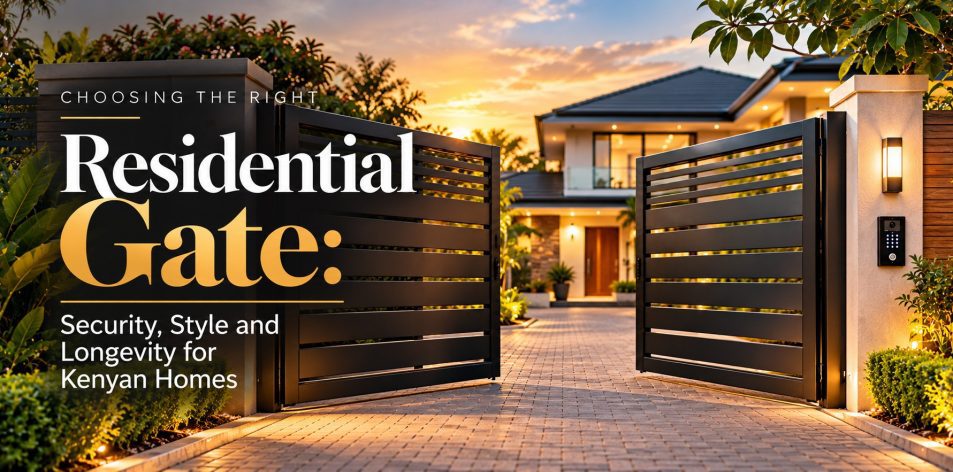
Consider the architectural style of the house – modern, colonial, or traditional – and choose a gate that echoes its lines. A minimalist aluminium gate with clean horizontal bars suits a contemporary façade, while a wrought‑iron gate with ornamental scrollwork pairs well with a classic design.
Colour is another subtle yet powerful tool. A powder‑coat finish in a neutral tone such as matte black, anthracite or deep bronze can blend with most exteriors while hiding minor scratches. If the neighbourhood has a uniform colour scheme, matching it can reinforce a sense of community cohesion.
Maintenance – Keeping the Gate Safe and Attractive
Even the most robust gate will deteriorate without regular care. A simple maintenance routine can extend its lifespan and preserve its security function.
- Inspect hinges, bolts and any moving parts quarterly; lubricate with a non‑corrosive oil to prevent squeaking and seize‑up.
- Check for rust or corrosion on metal surfaces at least twice a year; touch‑up paint or a fresh powder‑coat can halt further damage.
- For wooden or composite gates, reseal the surface every 12‑18 months to protect against moisture and termites.
- Test the lock mechanism regularly – a lock that sticks or fails to engage fully should be serviced immediately.
- Keep the surrounding area clear of vegetation that could trap moisture against the gate or provide a hiding place for pests.
A well‑maintained gate not only looks inviting but also signals to potential intruders that the property is cared for, which can be a deterrent in itself.
Adding Value – How a Well‑Chosen Gate Contributes to Property Worth
Curb appeal is a recognised factor in property valuation. A gate that combines security with an appealing design can raise the perceived value of a home in several ways.
First, it creates a clear boundary that defines the property’s limits, an attribute buyers often look for. Second, a high‑quality gate suggests that the owner has invested in the home’s upkeep, which can reassure prospective purchasers about the overall condition of the property. Finally, a gate that integrates with modern security systems aligns with the growing demand for smart‑home features, a selling point in many urban Kenyan markets.
Making the Decision – A Practical Checklist for Homeowners
- Determine the level of security needed based on the neighbourhood’s crime profile and personal risk tolerance.
- Choose a material that balances strength, maintenance effort and aesthetic preference.
- Select a lock system that matches your comfort with technology and offers a reliable backup.
- Ensure the gate’s design complements the architectural style of the house and the surrounding streetscape.
- Plan for regular maintenance – factor in the cost of paint, lubricants and occasional professional servicing.
- Consider how the gate will integrate with any existing alarm or CCTV system.
- Assess the impact on resale value – a gate that looks good and works well can be a genuine asset.
Choosing a residential gate is more than a decorative decision; it is an investment in safety, peace of mind and the long‑term value of your home. By weighing material durability, lock reliability, visual harmony and upkeep requirements, Kenyan homeowners can select a gate that protects their families while enhancing the property’s appeal.