Child Safety During School Holidays: How to Keep Children Safe at Home – H&S Education & Parenting
School holidays are an exciting time for children. With no early school mornings, homework or classroom routines, they finally have more freedom to relax, play, visit relatives and enjoy time at home. However, for parents and caregivers, the holidays also bring an important responsibility: making sure children remain safe when their usual school-day supervision and routines change.
Child safety during school holidays deserves particular attention in families where both parents work, older children spend time at home with younger siblings, or caregivers are responsible for supervision. Everyday situations that may seem harmless can become risky when children are left without appropriate guidance or when safety arrangements have not been discussed.
From household accidents and swimming pools to online interactions, visitors and outdoor activities, there are several areas parents should consider before the holiday begins.
Here are 10 essential ways to protect your children, prepare your home and create a safer, more enjoyable school holiday for the whole family.
1. Arrange Reliable Adult Supervision
One of the most important aspects of child safety during school holidays is ensuring that children have appropriate adult supervision. This is especially important for younger children who may not recognise danger or understand how to respond to an emergency.
If parents are working during the holidays, arrangements should be made in advance rather than relying on children to manage the day themselves.
Consider the following options:
- A trusted family member: A relative who knows the children and understands their daily needs may be able to provide supervision.
- A responsible caregiver: Choose someone with suitable experience, good references and a clear understanding of your expectations.
- A reputable holiday programme: Consider organised activities, sports programmes or supervised children’s clubs with appropriate safety arrangements.
- Shared childcare arrangements: Where suitable, families may organise childcare with relatives or trusted families, provided supervision responsibilities are clearly agreed.
Do not assume that an older child is automatically ready to supervise younger siblings. Being responsible for another child’s safety requires maturity, judgement and the ability to respond appropriately when something goes wrong.
If you are considering leaving a child at home without an adult, assess their age, maturity, local circumstances, length of time alone and ability to handle emergencies. Young children should not be left unsupervised, and there is no single age that makes every child ready to stay home alone.
2. Make Your Home Safer for Children
Children often spend more time at home during school holidays, which means parents should review their household safety arrangements. Familiar surroundings can sometimes create a false sense of security, but everyday household items and activities can present risks.
Walk through your home and look at it from a child’s perspective. Consider what they can reach, open, climb or operate without assistance.
Pay particular attention to the following:
- Medicines: Keep prescription medicines, vitamins and other medication securely stored and out of children’s reach. Never leave tablets in handbags, bedside drawers or easily accessible containers.
- Cleaning products: Store detergents, bleach, disinfectants and other household chemicals in secure cupboards. Keep them in their original containers.
- Electrical safety: Check damaged cables, exposed wiring and overloaded sockets. Keep electrical appliances away from water and supervise children’s use of electrical equipment.
- Kitchen safety: Keep hot liquids, sharp knives, matches and cooking equipment away from young children. Establish clear rules about when children may enter the kitchen and which tasks require adult supervision.
- Windows and balconies: Secure windows, balcony access and stairways. Do not rely on mosquito screens to prevent falls.
- Furniture and climbing: Secure unstable furniture where appropriate and discourage children from climbing shelves, cupboards or window ledges.
- Small objects: Keep coins, batteries, magnets and other small objects away from young children who may swallow them.
If you have younger children, check toys for loose parts, damaged components and age-inappropriate pieces. Button batteries and powerful small magnets require particular care because swallowing them can cause serious internal injuries.
A simple home safety inspection can prevent accidents and help children enjoy their holiday with greater freedom within safe boundaries.
3. Teach Children What to Do in an Emergency
Even with careful supervision, emergencies can happen. Children should know how to seek help, identify a trusted adult and communicate essential information when something goes wrong.
Explain the following in language appropriate to their age:
- How to contact a parent or another trusted adult.
- Where emergency contact details are kept at home.
- What to do if there is a fire, smoke or another immediate danger.
- Why they should never hide during an emergency.
- How to identify a safe adult who can help them.
- Why they should never attempt to handle serious injuries, electrical problems or dangerous substances themselves.
Keep a written emergency contact list in an accessible location. Include parents’ numbers, an alternative trusted contact, relevant medical information and the contact details of your preferred healthcare provider.
If children are old enough to use a phone, teach them how to make an emergency call and communicate their location. Practise simple scenarios so they know what to do rather than becoming confused or frightened.
4. Be Extra Careful Around Swimming Pools and Water
Swimming pools, water parks, beaches, rivers and other water activities can be enjoyable during the holidays, but they require careful supervision.
Drowning can happen quickly and quietly. Children should never be assumed safe simply because they have attended swimming lessons or are wearing flotation equipment.
Follow these essential precautions:
- Maintain active adult supervision: A responsible adult should remain within close reach of young children in or near water. Avoid distractions such as phones, conversations or other activities.
- Use properly secured pool barriers: Home swimming pools should have suitable barriers and secure access arrangements to prevent unsupervised entry.
- Do not rely on flotation toys: Inflatable rings, arm bands and pool toys are not substitutes for proper supervision or approved safety equipment.
- Choose supervised swimming facilities: Check that the venue has appropriate safety arrangements and trained personnel.
- Teach children basic water rules: Explain that they must never enter a pool, river or other body of water without permission and appropriate supervision.
- Be cautious around natural water: Rivers, dams, lakes and the ocean can have strong currents, sudden changes in depth and other hidden hazards.
Children should also be taught never to run around slippery pool edges, push others into water or attempt to rescue someone who is struggling without adult assistance.
For families visiting beaches or swimming facilities, agree on a designated supervising adult before children enter the water.
5. Establish Clear Rules for Online Safety
Children may spend more time using phones, tablets, computers and gaming platforms during school holidays. While technology can provide educational and recreational opportunities, unsupervised internet use can expose children to inappropriate content and potentially harmful interactions.
Parents should establish clear online safety rules before the holiday begins.
Discuss the following with your children:
- Protect personal information: Never share home addresses, school names, phone numbers, passwords or family details with strangers online.
- Be careful with online friendships: Explain that people may not always be who they claim to be. Children should never arrange to meet someone they first encountered online without a parent’s knowledge and appropriate safeguards.
- Use age-appropriate platforms: Check application age requirements, privacy settings and parental controls.
- Think before sharing: Teach children not to send private photographs, personal information or anything they would feel uncomfortable having shared more widely.
- Recognise cyberbullying: Encourage children to report threatening messages, harassment, humiliation or repeated unwanted contact.
- Avoid suspicious links: Explain why they should not download unknown files, click unfamiliar links or share verification codes.
- Tell a trusted adult: Children should know they can approach a parent or caregiver if something online makes them uncomfortable.
Parental controls can help manage content, applications and access, but they should not replace communication and appropriate supervision.
Most importantly, create an environment where children feel safe reporting an uncomfortable online experience. They should not be afraid that asking for help will automatically result in punishment or the loss of every digital privilege.
6. Teach Children About Personal Boundaries and Body Safety
School holidays may involve visits to relatives, family gatherings, social events, childcare arrangements and time spent with people outside the immediate household. It is important to prepare children to recognise inappropriate behaviour and understand that they have a right to personal boundaries.
Body safety conversations should begin early and develop as children grow. They do not need to be frightening or overly complicated. Use calm, age-appropriate language and encourage children to ask questions.
Important lessons include:
- Teach correct names for body parts: Help children understand their bodies and communicate clearly if something is wrong.
- Explain personal boundaries: Children should understand that they can say no to unwanted touching, uncomfortable physical contact or situations that make them feel unsafe.
- Discuss private body areas: Explain that private areas should not be touched by others except in appropriate care situations, such as necessary medical treatment or hygiene assistance, with suitable adult involvement.
- Encourage them to speak up: Children should know they can tell a parent or trusted adult if someone makes them uncomfortable.
- Identify several trusted adults: Help children identify more than one safe adult they can approach if they cannot immediately reach a parent.
- Challenge unsafe secrets: Explain the difference between a harmless surprise and a secret that makes them feel worried, frightened or uncomfortable.
Avoid forcing children to hug, kiss or sit on someone’s lap simply to appear polite. They can be taught to greet relatives and visitors respectfully while maintaining reasonable personal boundaries.
If a child shares something concerning, listen calmly, reassure them that they have done the right thing by speaking up and seek appropriate professional support. Avoid repeatedly questioning them or confronting the person they have identified before obtaining suitable guidance.
7. Know Where Your Children Are When They Go Out
Children may spend more time visiting friends, playing outdoors, attending activities or travelling with relatives during the holidays. Parents should know where their children are going, who they will be with and when they are expected to return.
Establish clear rules before allowing children to go out.
- Ask children to tell you where they are going and who will be accompanying them.
- Agree on a return time and what to do if their plans change.
- Make sure younger children are accompanied by a responsible adult.
- Teach children not to accept lifts or invitations from people without parental permission.
- Explain safe road-crossing habits and the importance of using appropriate pedestrian routes.
- Ensure children know how to contact you if they become separated from their group.
- Agree on safe meeting points when visiting busy public places.
For older children who are allowed more independence, discuss transport arrangements, trusted routes, communication expectations and what to do if they feel unsafe.
In busy shopping centres, parks, entertainment venues and public events, agree on a meeting point in case family members become separated.
8. Choose Holiday Activities and Caregivers Carefully
Holiday camps, sports programmes, swimming lessons, tutoring sessions and children’s clubs can be excellent ways to keep children engaged. However, parents should look beyond the advertised activities and assess the safety arrangements before enrolling their children.
Before choosing a programme, consider the following:
- Supervision: Ask how many adults supervise the children and whether arrangements are appropriate for their ages and activities.
- Staff suitability: Find out about staff experience, responsibilities and safeguarding procedures.
- Venue safety: Check the condition of facilities, play equipment, toilets, changing areas and access points.
- Medical arrangements: Ask how injuries, illness and emergencies are handled and whether appropriate first-aid support is available.
- Collection procedures: Confirm who is authorised to collect your child and how the programme verifies identity.
- Communication: Make sure you have reliable contact details and know how parents are informed about incidents or changes.
- Transport: If transport is provided, ask about vehicle safety, responsible supervision and collection arrangements.
Do not hesitate to ask questions or visit the venue before making a decision. A professional programme should be able to explain its safety policies clearly.
The same care should be taken when selecting a private caregiver. Check references, discuss responsibilities and make sure the person understands your household rules and emergency procedures.
9. Keep Children Safe During Family Visits and Gatherings
School holidays often bring family visits, celebrations and gatherings where children spend time with relatives, family friends and other guests. These occasions can be enjoyable, but changes in surroundings and supervision arrangements require attention.
Before visiting another home, consider whether the environment is suitable for your children. A house that is safe for adults may contain hazards for younger visitors.
Look out for:
- Unsecured balconies, staircases and swimming pools.
- Accessible medicines, cleaning products and sharp objects.
- Unprotected electrical equipment and exposed wiring.
- Pets that may not be comfortable around unfamiliar children.
- Unsupervised access to roads, parking areas or other dangerous spaces.
- Unclear arrangements about who is responsible for watching the children.
If children are visiting relatives or friends without you, make sure you know the supervising adult, the address and the arrangements for their return.
It is also helpful to remind children that household rules may differ between homes. They should ask before using unfamiliar equipment, entering restricted areas or going outside.
10. Create a Simple Family Safety Plan
A family safety plan brings all your holiday arrangements together. Rather than relying on verbal reminders, write down the important rules and make sure everyone understands them.
Your plan could include:
- Emergency contacts: Parents, trusted relatives, caregivers and relevant emergency services.
- Supervision arrangements: Who is responsible for the children at different times of the day?
- Home safety rules: Which rooms, appliances, activities and household items require restrictions?
- Online safety rules: Which applications and websites are permitted, and what should children do if they encounter something inappropriate?
- Outdoor arrangements: Where may children play, who must accompany them and what time should they return?
- Medical information: Relevant allergies, medication instructions and healthcare contacts.
- Collection arrangements: Who is authorised to collect the children from activities or visits?
Review the plan with your children and caregiver before the holidays begin. Keep a copy in an accessible place and update it if arrangements change.
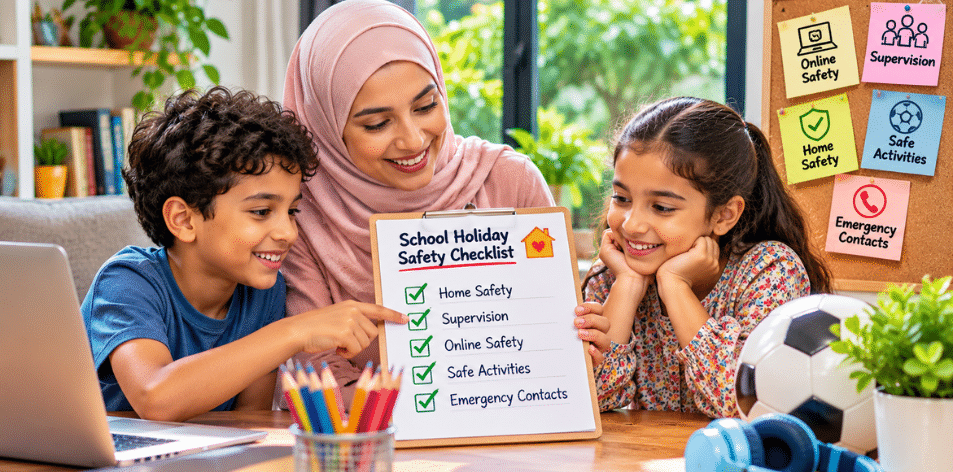
A Practical School Holiday Safety Checklist for Parents
Use this checklist before the school holidays begin and review it throughout the break.
- ☐ Reliable adult supervision has been arranged.
- ☐ Emergency contact details are accessible.
- ☐ Medicines and household chemicals are securely stored.
- ☐ Electrical equipment, windows, balconies and stairways have been checked.
- ☐ Swimming pool and water safety arrangements are in place.
- ☐ Children understand basic online safety rules.
- ☐ Children know how to communicate personal boundaries and seek help.
- ☐ Outdoor activities and transport arrangements have been discussed.
- ☐ Caregivers and holiday programme providers have been assessed.
- ☐ Family safety rules and emergency procedures have been explained.
You can adapt this checklist to suit your children’s ages, your home and the activities planned for the holidays.
The Final Verdict: Safe Holidays Begin With Preparation
School holidays should be a time for children to relax, explore, learn new skills and enjoy meaningful experiences with family and friends. Keeping them safe does not mean restricting every activity or preventing them from becoming independent. It means providing appropriate supervision, teaching them how to recognise risks and ensuring that responsible adults are prepared to respond when needed.
By checking your home, choosing caregivers carefully, establishing online safety rules and discussing personal boundaries, you can reduce avoidable risks and give your children more opportunities to enjoy their break.
Remember that safety arrangements should grow with your child. Younger children need close supervision, while older children can gradually take on more responsibility with clear guidance and support.
A memorable school holiday is not only about the places children visit or the activities they enjoy. It is also about giving them the freedom to explore within an environment where they feel protected, supported and cared for.
References
- World Health Organization – Drowning
- UNICEF Parenting – Child Care and Safety
- UNICEF Parenting – Online Safety for Children
- NSPCC – Keeping Children Safe
- World Health Organization – Child Maltreatment
- Childline Kenya – Child Protection and Support