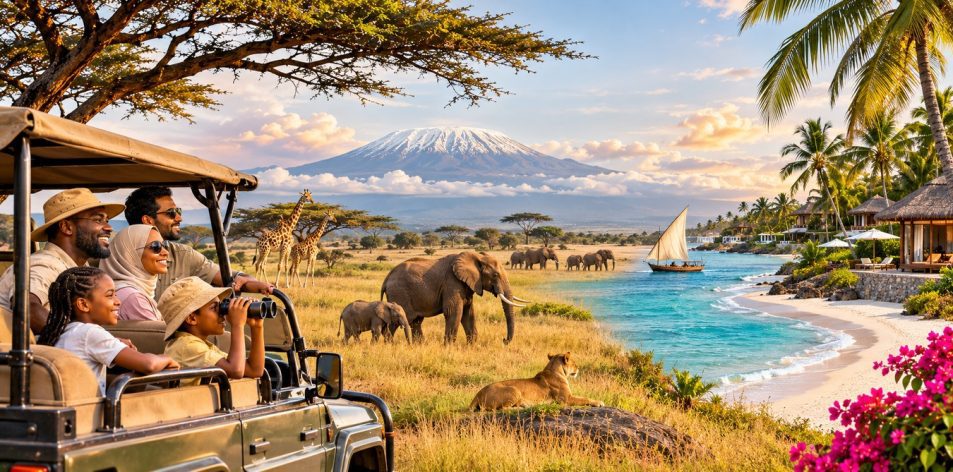
A Luxury East African Journey Linking The Maasai Mara, Amboseli And Serengeti With The Beautiful Beaches Of Diani, Watamu And Zanzibar
Imagine beginning your holiday watching elephants move across the Amboseli plains beneath Mount Kilimanjaro, spending a few days following wildlife across the Maasai Mara and Serengeti, and eventually exchanging early morning game drives for turquoise waters, white-sand beaches and the gentle rhythm of the Indian Ocean.
A bush-to-beach safari in Kenya and Tanzania brings together two of East Africa’s most memorable travel experiences: extraordinary wildlife encounters and the relaxed atmosphere of the Swahili Coast. It is an opportunity to explore some of the continent’s most celebrated landscapes before slowing down beside the ocean.
For travellers visiting East Africa from overseas, the combination can make a particularly rewarding long-haul holiday. Families can introduce children to wildlife, conservation and different cultures, while couples and groups of friends can enjoy private safari experiences, beautiful accommodation and time to unwind on the coast.
The journey can include Kenya’s Maasai Mara and Amboseli, Tanzania’s Serengeti, and coastal destinations such as Diani, Watamu and Zanzibar. Each offers something different. The Mara and Serengeti are famous for their wildlife and seasonal migration, Amboseli is renowned for its elephant herds and views of Mount Kilimanjaro, while the coast offers marine experiences, Swahili heritage and a slower pace of life.
However, combining all these destinations requires thoughtful planning. Distances are considerable, flights operate on different schedules, and Kenya and Tanzania have separate immigration arrangements. The best itinerary is not necessarily the one that covers the most ground, but the one that allows enough time to enjoy each destination without spending the holiday constantly travelling.
Planning Your Bush-To-Beach Safari In Kenya And Tanzania: A Step-By-Step Guide
Step 1: Decide How Long You Want To Travel
Before choosing lodges or booking flights, decide how much time you can comfortably dedicate to the journey. A multi-destination safari followed by three coastal stays is not a short break. It is a substantial holiday, and allowing enough time at each stop makes a considerable difference.
For the complete experience, I would recommend approximately 18–21 days. This allows for three nights in the Maasai Mara, two nights in Amboseli, three nights in the Serengeti, followed by time in Diani, Watamu and Zanzibar.
A possible allocation is:
| Destination | Suggested stay | Experience |
|---|---|---|
| Maasai Mara, Kenya | 3 nights | Big Five, wildlife viewing and conservancy experiences |
| Amboseli, Kenya | 2 nights | Elephants, open plains and Mount Kilimanjaro views |
| Serengeti, Tanzania | 3 nights | Vast savannah, predators and the Great Migration |
| Diani, Kenya | 3 nights | Beach relaxation, marine excursions and water activities |
| Watamu, Kenya | 2 nights | Marine park, coral reefs and coastal nature |
| Zanzibar, Tanzania | 3 nights | Island beaches, Stone Town and Swahili heritage |
This gives you 16 nights at the destinations, with additional time needed for international arrival, transfers and connections. In practice, a 19–21-day holiday is a more comfortable arrangement.
If you have only 12–14 days, consider removing one safari destination or one of the coastal stops. Trying to include everything in a shorter holiday can turn an otherwise wonderful experience into a series of airport transfers and hurried check-ins.
Step 2: Begin With The Maasai Mara – Kenya’s Iconic Wildlife Destination
The Maasai Mara is one of East Africa’s most recognised safari destinations. Its sweeping grasslands, acacia-dotted landscapes and remarkable concentration of wildlife make it an excellent starting point for a luxury safari.
The reserve and surrounding conservancies support a wide variety of wildlife, including lions, elephants, leopards, cheetahs, buffalo, giraffes, zebras and numerous antelope species. The region is also closely associated with the Great Migration, when vast herds of wildebeest and zebra move between the Serengeti ecosystem and the Mara in search of fresh grazing.
When Is The Best Time To Visit?
The Great Migration is often associated with the Maasai Mara between July and October, when large numbers of wildebeest and zebra may enter Kenya from Tanzania. River crossings can occur during this period, but they are natural events and cannot be guaranteed on a particular day.
Other months can be equally rewarding. January to March is generally a good period for wildlife viewing, while the green seasons bring beautiful landscapes, excellent photographic opportunities and, in some areas, fewer visitors.
Rather than planning the entire safari around a promised river crossing, choose a camp with knowledgeable guides and good access to the wildlife areas you want to explore.
Where To Stay In The Maasai Mara
The Mara offers everything from intimate luxury tented camps to larger safari lodges. Your choice should depend on the experience you want, the age of your children, the location of the camp and the type of safari activities available.
Angama Mara is known for its dramatic position above the Mara Triangle, with expansive views across the landscape. It offers an elevated luxury safari experience and is particularly appealing to travellers interested in photography and personalised guiding.
Olare Mara Kempinski provides a luxury tented camp experience within the Olare Motorogi Conservancy. Its family facilities include dedicated family tents and activities such as guided nature walks, birdwatching and opportunities to learn about Maasai culture. Its published child policy should be checked carefully when travelling with younger children.
Mara Serena Safari Lodge is another established option, positioned in the Mara Triangle with views across the savannah and towards the Mara River.
Family-Friendly Activities In The Mara
A safari can be an extraordinary educational experience for children. Instead of simply looking for animals, encourage them to learn about tracks, bird calls, animal behaviour and the relationship between wildlife and its environment.
Depending on the camp’s age policy and available activities, families can enjoy:
- Morning and afternoon game drives with experienced guides.
- Wildlife photography and animal-spotting challenges.
- Guided nature walks in suitable conservancy areas.
- Birdwatching and learning about different species.
- Maasai cultural experiences arranged respectfully with local communities.
- Junior ranger activities and conservation learning.
- Picnic breakfasts or lunches in designated wilderness locations.
Hot-air balloon safaris are another memorable experience, particularly for older children who meet the operator’s minimum age requirements. They usually begin before sunrise and provide a remarkable aerial perspective of the plains.
Always check the camp’s minimum age requirements, supervision arrangements and whether private vehicles are available. Some camps are unfenced, and children may need to remain under close adult supervision throughout their stay.
Step 3: Continue To Amboseli – Elephants Beneath Mount Kilimanjaro
After the Mara, the journey continues south-east to Amboseli National Park, one of Kenya’s most recognisable wildlife destinations.
Amboseli is famous for its large elephant herds and spectacular views of Mount Kilimanjaro, which rises just across the border in Tanzania. On clear mornings, the mountain provides an extraordinary backdrop to the open plains, swamps and acacia woodlands.
The park is particularly attractive to photographers because elephants can often be observed moving through the open landscape, with the mountain visible in the background when weather conditions allow.
What Makes Amboseli Special?
Amboseli’s ecosystem is shaped by underground water flowing from Kilimanjaro’s glaciers and forested slopes. This water supports swamps and wetlands that attract elephants, hippos, buffalo and a variety of birdlife.
The contrast between the dry plains and green wetlands makes the park particularly interesting. It also offers opportunities to learn about how wildlife adapts to different habitats and how water resources influence animal movement.
Where To Stay In Amboseli
Amboseli Serena Safari Lodge offers accommodation within the park, with architecture and interiors inspired by Maasai design. It also has dedicated family accommodation, including interconnecting rooms and family rooms.
Tortilis Camp is another established option, known for its setting within the Amboseli ecosystem and views towards Mount Kilimanjaro. It offers a more intimate tented safari experience.
For families, ask whether the lodge can arrange a private vehicle. This allows game drives to be adjusted around children’s interests, energy levels and meal times, rather than following a fixed schedule shared with other guests.
Activities Beyond Game Drives
Amboseli is a wonderful destination for families who enjoy learning about nature. Depending on the accommodation and park regulations, activities may include:
- Watching elephant herds around the wetlands.
- Birdwatching and identifying wetland species.
- Learning about the park’s ecosystem and conservation work.
- Enjoying photography sessions with experienced guides.
- Visiting approved cultural projects with local community guides.
- Relaxing at the lodge between morning and afternoon drives.
Two nights are a sensible starting point, although an additional night may be worthwhile if you want a slower pace or more time for photography.
Step 4: Cross Into Tanzania And Discover The Serengeti
The next major part of the adventure takes you into Tanzania and the legendary Serengeti National Park.
The Serengeti is part of the same wider ecosystem as the Maasai Mara, but it offers a different scale of landscape and wildlife experience. Its vast plains, kopjes, woodlands and river systems support extraordinary concentrations of wildlife.
For many travellers, the Serengeti is the centrepiece of a Tanzania safari. It is home to lions, leopards, cheetahs, elephants, giraffes, buffalo, hyenas and many other species. The Great Migration moves through different parts of the ecosystem throughout the year.
Understanding The Great Migration
The Great Migration is a continuous movement of wildebeest, zebras and other grazing animals across the Serengeti ecosystem and into the Maasai Mara. It is influenced by rainfall and the availability of fresh grazing rather than a fixed calendar.
Different areas become more attractive at different times of the year. The southern Serengeti and Ndutu region are particularly associated with the calving season, usually around January to March. The western corridor and Grumeti region can be important during the middle of the year, while the northern Serengeti is often associated with migration activity and river crossings between approximately July and October.
These are broad seasonal patterns, not guarantees. Wildlife movements change from year to year, so ask your safari operator where the herds are expected to be during your travel dates.
Where To Stay In The Serengeti
Four Seasons Safari Lodge Serengeti offers a luxury lodge experience within the national park. Its facilities include a Discovery Centre and children’s activities through its Kids For All Seasons programme. Children can learn about wildlife, Maasai traditions, conservation and the natural environment.
Meliá Serengeti Lodge provides another luxury option, combining safari accommodation with facilities such as a swimming pool and access to guided wildlife experiences.
For travellers seeking a more intimate tented experience, there are several smaller camps across the Serengeti. The best location depends on the season and the wildlife experience you want to prioritise.
Family Experiences In The Serengeti
The Serengeti can be a wonderful place for children to develop an appreciation for wildlife and conservation. Some lodges offer structured activities, while others can arrange experiences tailored to the age of the family.
At Four Seasons Safari Lodge Serengeti, for example, the children’s programme includes nature-based activities, storytelling, arts and crafts, Maasai cultural learning and opportunities to understand wildlife research.
Other experiences to consider include:
- Private game drives with a family-friendly guide.
- Learning to identify tracks and animal behaviour.
- Wildlife photography with suitable equipment.
- Birdwatching and nature observation.
- Learning about the role of conservation organisations.
- Hot-air balloon safaris, subject to minimum age and safety requirements.
Three nights provide a useful introduction to the Serengeti. If the Great Migration is a major reason for travelling, consider staying longer in the area where the herds are expected to be.
Step 5: Plan The Kenya–Tanzania Travel Connections Carefully
This is one of the most important parts of the itinerary. Although the Maasai Mara and Serengeti are geographically connected as part of a wider ecosystem, visitors cannot simply drive directly between the two parks through an open tourist gate.
The historic Bologonja border crossing between the parks is not available for ordinary tourist passage. Road transfers generally leave the park areas and use an official international border post, such as Isebania–Sirari, before continuing into the other country.
That can involve a substantial journey. For a luxury itinerary, scheduled regional flights or a private charter may be more comfortable, depending on the route and available services.
Regional Flights And Safari Airlines
Safarilink operates a network connecting major Kenyan safari destinations, coastal locations and northern Tanzania. Its published connections include the Maasai Mara, Amboseli, Arusha, Diani and other destinations. The airline also describes connections from Arusha towards the Serengeti through its northern Tanzania network.
AirKenya offers scheduled safari flights and charter services across Kenya and the wider region, including connections to Tanzania’s Kilimanjaro gateway.
Within Tanzania, Coastal Aviation and Auric Air serve safari destinations and coastal locations. Depending on the season and route, flights may connect the Serengeti with Arusha, Zanzibar and other destinations.
One possible arrangement is to travel from Amboseli back through Nairobi or connect through an appropriate regional hub before flying to Arusha and continuing to the Serengeti. A private charter may reduce transfers, but it will generally cost more and must be arranged around aircraft availability, landing permissions and luggage restrictions.
Safarilink publishes its flight connections information, which is useful when planning multi-stop safari journeys. However, flight schedules and routes can change by season, so ask the airline or a specialist safari operator to confirm the complete routing before paying for accommodation.
Understand Bush Flight Luggage Restrictions
Small aircraft serving remote safari airstrips often have stricter luggage limits than international airlines. Some operators require soft-sided bags because of limited baggage compartment space, and weight restrictions may include hand luggage.
Before packing, obtain the exact allowance for every flight. If you are travelling as a family, consider arranging secure storage for larger suitcases in Nairobi or another agreed hub, and carrying only what you need for the safari section.
Do not assume that a standard international suitcase will fit into a small safari aircraft.
Step 6: Complete Your Visa, Entry And Travel Insurance Arrangements
Travelling between Kenya and Tanzania involves separate immigration requirements. The documents you need depend on your nationality, residence status, route and length of stay.
For international visitors, the most important point is not to assume that permission to enter one country automatically allows entry into the other.
Kenya Electronic Travel Authorisation
Kenya operates an Electronic Travel Authorisation (eTA) system for most foreign visitors. Applications are made through the official Kenya eTA portal.
The official application guidance states that visitors, including infants and children, generally need an approved eTA before travelling, unless they fall within an exemption. Applicants should have a passport valid for at least six months after the planned arrival date, a passport-style photograph, travel itinerary and accommodation details.
Citizens of East African Community partner states, including Kenya, Tanzania, Uganda, Rwanda, Burundi, South Sudan and the Democratic Republic of Congo, are exempt under the applicable arrangements for the specified period of stay. Always check the current exemption list before travelling. Read Kenya’s official eTA guidance.
Tanzania Visa And Entry Requirements
Tanzania has its own immigration system. Many international visitors travelling for tourism require an ordinary single-entry visa, while some nationalities are exempt or have different requirements.
The official Tanzania eVisa portal allows travellers to apply online for entry to Tanzania Mainland and Zanzibar. The immigration guidance states that a visitor travelling to both Mainland Tanzania and Zanzibar does not need a separate new visa for Zanzibar, provided the visa remains valid and the relevant entry conditions are met.
Travellers should check whether their nationality falls under the referral visa category, as some applicants must obtain approval before travelling. The Tanzanian authorities also require visitors to have appropriate passport validity and may request evidence of onward or return travel.
Do not rely on a third-party website promising guaranteed approval. Use the official government portal and allow adequate time for processing.
Mandatory Inbound Travel Insurance In Tanzania
There is an important recent requirement for international visitors. From 1 October 2026, Tanzania Mainland introduced mandatory inbound travel insurance for foreign visitors, with Zanzibar operating its own inbound insurance arrangement.
The Zanzibar Insurance Corporation has clarified that the applicable policy depends on the visitor’s first point of entry into Tanzania. Visitors entering Mainland Tanzania first should consult the National Insurance Corporation’s official arrangements, while those entering through Zanzibar should use the Zanzibar Insurance Corporation. A qualifying policy is intended to cover the same journey across Mainland Tanzania and Zanzibar, so travellers should not automatically purchase duplicate policies.
The Zanzibar Insurance Corporation’s October 2026 notice also explains that qualifying EAC and SADC travellers are exempt from the Mainland Tanzania requirement, while Zanzibar’s own entry insurance arrangements must be checked separately.
Review the latest details directly with the Zanzibar Insurance Corporation and the relevant Tanzanian authorities before travelling. Keep the insurance certificate and any verification QR code accessible throughout the trip.
Yellow Fever And Other Health Preparations
Yellow fever vaccination requirements depend on the countries visited before arrival, the route taken and any transit through countries where yellow fever transmission is a risk. Travellers may be asked to present an International Certificate of Vaccination or Prophylaxis.
Families should consult a qualified travel-health professional well before departure, particularly when travelling with young children. Discuss routine vaccinations, malaria prevention, suitable insect repellent, sun protection and any personal medical requirements.
For current information, consult the relevant government health authorities and the World Health Organization’s yellow fever guidance.
Step 7: Head To Diani – Your First Swahili Coast Escape
After several days of early starts and game drives, the transition to the coast is one of the most enjoyable parts of the journey.
Diani Beach, on Kenya’s southern coast, is known for its long stretch of white sand, warm Indian Ocean waters and tropical surroundings. It offers a welcome change of pace after the safari section.
The beach is backed by palm trees, coastal forests and a selection of resorts, villas and boutique properties. Depending on the season and tide, the reef-protected waters can offer excellent opportunities for swimming, snorkelling and other marine activities.
Where To Stay In Diani
Almanara Luxury Boutique Hotel offers an intimate villa-style experience, while Leopard Beach Resort & Spa provides a larger resort setting with accommodation, dining and leisure facilities.
Baobab Beach Resort & Spa is another option for families looking for extensive grounds and organised activities. Its Rafiki Kids Club has been designed for children within its stated age range, so confirm the current programme and supervision arrangements before booking.
Family Activities In Diani
Diani is particularly appealing because the coast offers more than simply spending the day beside a swimming pool.
- Snorkelling and glass-bottom boat excursions, subject to sea conditions.
- Boat trips to explore the reef and surrounding marine environment.
- Visits to Kisite-Mpunguti Marine National Park and Wasini Island.
- Kayaking and other suitable water activities.
- Nature experiences in nearby coastal forests.
- Relaxed beach walks and family photography.
- Swimming and supervised children’s activities at the resort.
Kisite-Mpunguti Marine National Park is an especially interesting excursion. It protects coral reefs and marine habitats and is known for snorkelling, diving and opportunities to observe marine life.
Remember that ocean conditions, tides and currents can change. Choose reputable operators, follow local safety guidance and supervise children closely around the water.
Step 8: Continue North To Watamu – Marine Life And Coastal Heritage
From Diani, the journey continues northwards towards Watamu. This is a longer road transfer, so it is worth arranging a private vehicle and allowing sufficient time. Depending on traffic and the route, the journey may take much of the day.
Watamu offers a different coastal atmosphere from Diani. It is particularly well known for its marine park, coral reefs, protected lagoons and nearby natural attractions.
The Watamu Marine National Park and Reserve is an important part of the area’s appeal. It protects a rich marine environment, including coral gardens and habitats for sea turtles, dolphins and many fish species.
Where To Stay In Watamu
Hemingways Watamu is a well-known beachfront option. Its published family facilities include interconnecting rooms, shallow pool areas, children’s menus and activities, with babysitting available on request.
Medina Palms offers a residential-style resort experience with suites and villas, which may suit families or groups who prefer more space.
Things To Do In Watamu
Watamu is an excellent place to introduce children to the marine environment. Activities can include:
- Snorkelling in suitable reef areas with a qualified operator.
- Glass-bottom boat trips to observe marine life.
- Learning about sea turtle conservation.
- Exploring Arabuko-Sokoke Forest with an authorised guide.
- Visiting the Gede historical ruins.
- Enjoying relaxed beach days and coastal photography.
The nearby Kenya Wildlife Service protected areas and conservation initiatives provide opportunities to learn about the region’s biodiversity.
For families, it is worth balancing organised excursions with unstructured time. Children who have spent several days on safari may appreciate a quieter day at the beach before the next international flight.
Step 9: Finish In Zanzibar – The Spice Island
The final destination is Zanzibar, a beautiful archipelago off Tanzania’s coast with a distinctive Swahili heritage and a long history of Indian Ocean trade.
Zanzibar offers a different experience from Kenya’s mainland coast. Its combination of historic architecture, spice-growing traditions, turquoise waters, dhow sailing and island culture makes it an excellent way to conclude an extended East African holiday.
Three nights provide a good introduction, although four or five nights may be preferable if you want a slower stay with time for both cultural exploration and beach relaxation.
Where To Stay In Zanzibar
Zuri Zanzibar offers a luxury beachfront experience in Kendwa, with accommodation set among tropical gardens. Its published children’s programme includes activities for younger guests, and babysitting can be arranged.
Meliá Zanzibar is another established resort option, with accommodation, dining and leisure facilities. Check the location and room arrangements carefully to ensure they suit your family’s needs.
For those interested in a more private experience, Zanzibar also has villas and boutique accommodation options. The best choice will depend on whether you prefer a resort with organised facilities or a quieter property with more independence.
Explore Stone Town
A visit to Stone Town, a UNESCO World Heritage Site, adds cultural depth to the beach experience.
Its narrow streets, carved wooden doors, historic buildings, markets and waterfront reflect centuries of interaction between African, Arab, Persian, Indian and European influences.
A guided walk can introduce visitors to Zanzibar’s history, architecture and trading heritage. Families may enjoy learning about the island’s role in the Indian Ocean trading networks and the cultural influences that shaped its identity.
Family-Friendly Activities In Zanzibar
- Explore Stone Town with a knowledgeable local guide.
- Visit a spice farm and learn how cloves, cinnamon, nutmeg and other spices are grown.
- Enjoy a carefully arranged dhow excursion.
- Explore suitable beaches and shallow swimming areas.
- Visit Jozani Forest to learn about the Zanzibar red colobus monkey.
- Enjoy resort-based children’s activities and family swimming time.
- Discover local crafts, food traditions and Swahili architecture.
Choose boat trips and marine excursions carefully, particularly when travelling with children. Ask operators about safety equipment, weather conditions, life jackets and responsible wildlife interaction. Avoid activities that involve chasing, feeding or disturbing marine animals.
Step 10: Choose The Best Time For Your Bush-To-Beach Journey
East Africa can be visited throughout the year, but seasonal weather patterns influence wildlife movements, beach conditions, flight schedules and accommodation availability.
For a safari focused on the Great Migration in the Maasai Mara and northern Serengeti, July to October is a popular period. However, this is also a busy travel season, and premium camps can become fully booked well in advance.
January to March can be particularly attractive for wildlife viewing in parts of Tanzania, including the southern Serengeti and Ndutu area during the calving season. Amboseli can also offer excellent elephant viewing, although conditions vary.
April and May are generally wetter months across much of the region. Some camps and routes may operate differently, while coastal conditions can also be affected by seasonal rainfall.
June to October is often considered a favourable period for combining safari travel with the coast, although the exact conditions vary between destinations. December to March can also offer warm coastal weather and good opportunities for beach activities.
Rather than relying on a single best month, plan around the wildlife experience that matters most to you and then select the coastal dates accordingly.
Step 11: Make The Journey Comfortable For Children
A luxury family safari should be exciting without becoming exhausting. Children may love seeing elephants, lions and giraffes, but long drives, early starts and frequent changes of accommodation can become tiring.
There are several ways to make the journey more enjoyable:
- Choose family accommodation: Look for interconnecting rooms, family suites or private villas rather than assuming every lodge can accommodate children comfortably.
- Arrange private game drives: A private vehicle allows the guide to adjust the pace and return to camp when younger children need a break.
- Check minimum age policies: Some lodges restrict walking safaris, balloon flights or certain activities to older children.
- Allow downtime: Swimming pools, quiet afternoons and flexible meal times can make a substantial difference.
- Pack practical essentials: Include sun hats, sunscreen, insect repellent, comfortable clothing, refillable water bottles and suitable footwear.
- Keep travel days manageable: Avoid scheduling a long game drive immediately before an international flight.
- Prepare children for the experience: Books, wildlife guides and simple animal-spotting activities can make the safari more engaging.
Most importantly, remember that a safari is not a race to see every animal. Give children time to observe, ask questions and appreciate the environment.
Step 12: Plan Meals And Accommodation Around Your Family’s Needs
Food is an important part of any long holiday, particularly when travelling with children or family members who have specific dietary requirements.
East Africa offers a rich variety of dishes, including grilled fish, rice, fresh fruit, coconut-based preparations, chapati, vegetable dishes and traditional coastal meals. The Swahili Coast has a particularly distinctive culinary heritage, influenced by local ingredients and centuries of Indian Ocean trade.
For Muslim families, it is worth confirming halal dining arrangements directly with each lodge or resort before booking. Ask whether meat is halal-certified or sourced from an approved supplier, whether separate preparation arrangements are available and whether the kitchen can accommodate your requirements.
If you prefer an alcohol-free environment, ask the property to confirm its arrangements in writing rather than assuming that a hotel or resort will meet that preference. Some properties may be able to provide suitable dining and accommodation arrangements, while others may not.
Also ask about children’s menus, allergies, meal timings, packed lunches for excursions and whether private dining can be arranged.
How Much Should You Budget For A Luxury Bush-To-Beach Safari?
The cost of this journey can vary considerably. A luxury safari in the Maasai Mara and Serengeti is priced differently from a beach resort stay, and private charters can add significantly to the overall budget.
Rather than relying on a single advertised package price, request a quotation that separates the main cost categories.
Your budget should account for:
- International flights to and from East Africa.
- Accommodation in each safari and coastal destination.
- Park entry fees and conservancy charges.
- Game drives and professional guiding.
- Regional flights and private transfers.
- Charter flights, where required.
- Visa and travel authorisation fees.
- Mandatory inbound travel insurance where applicable.
- Travel insurance covering the full trip and any relevant activities.
- Meals, excursions and optional experiences.
- Tips, personal expenses and contingency funds.
When comparing lodge quotations, check what is included. Some safari rates include accommodation, meals, selected drinks, game drives and transfers, while park fees, conservancy fees, premium experiences and flights may be charged separately.
On the coast, a room rate may include breakfast only, while an all-inclusive arrangement may cover additional meals and selected activities. Compare the full package rather than the headline price.
Responsible Travel: Make Your Journey Count
One of the greatest privileges of travelling through East Africa is the opportunity to experience extraordinary wildlife and natural landscapes. It also comes with a responsibility to travel thoughtfully.
Choose safari operators and accommodation providers that demonstrate a genuine commitment to conservation, responsible tourism and local employment. Ask how their operations support surrounding communities and whether they work with established conservation initiatives.
During game drives, follow your guide’s instructions, maintain appropriate distances from wildlife and avoid disturbing animals for photographs. Never encourage a driver to pursue an animal or leave designated routes without permission.
At the coast, choose responsible marine operators who respect coral reefs, sea turtles and other marine life. Avoid touching coral, collecting shells from protected areas or supporting excursions that disturb dolphins and other wildlife.
When visiting cultural sites or local communities, ask permission before taking photographs and support genuine local businesses and artisans. A respectful visit is more meaningful than treating a community as simply another tourist attraction.
Your Ideal East African Bush-To-Beach Itinerary
For travellers who want to experience all six destinations, the following is a practical outline to discuss with a specialist regional safari operator. The exact flight routing should be confirmed before accommodation is paid for, particularly for the Kenya–Tanzania transfer and the final coastal connections.
| Day | Destination | Suggested experience |
|---|---|---|
| 1 | Nairobi, Kenya | Arrive, rest and prepare for the safari. |
| 2–4 | Maasai Mara | Three nights of game drives, wildlife photography and selected family activities. |
| 5–6 | Amboseli | Travel to Amboseli and enjoy elephant viewing and Mount Kilimanjaro scenery. |
| 7–9 | Serengeti, Tanzania | Connect through the confirmed regional route and enjoy three nights of safari. |
| 10–12 | Diani, Kenya | Travel to the coast and enjoy marine activities and relaxation. |
| 13–14 | Watamu, Kenya | Explore the marine park, beaches and coastal heritage. |
| 15–17 | Zanzibar, Tanzania | Enjoy Stone Town, island excursions and beach relaxation. |
| 18–19 | Departure arrangements | Allow for international flight connections and a comfortable departure. |
This is an itinerary framework, not a guaranteed flight schedule. It may need to be extended to 20 or 21 days depending on flight connections, the season and the international departure airport.
For a more relaxed holiday, I would consider adding a night in Amboseli or the Serengeti and avoiding a same-day connection between separate international and bush-flight bookings.
Making The Most Of Your East African Adventure
A bush-to-beach holiday is one of the most rewarding ways to experience the diversity of East Africa. The journey takes you from the open savannahs of the Maasai Mara to the elephant-filled landscapes of Amboseli, across the vast Serengeti and finally to the Indian Ocean.
It also reveals how much variety the region offers. Kenya’s wildlife destinations and coastal towns have their own character, while Tanzania’s Serengeti and Zanzibar bring another dimension to the experience. Together, they create a journey that can appeal to first-time visitors, returning travellers, families and the East African diaspora looking to rediscover the region.
The secret is to plan thoughtfully. Allow enough time for each destination, choose accommodation that suits your family, confirm every flight and border arrangement, and understand the entry requirements before departure. Give yourself permission to enjoy the journey rather than trying to fit too much into each day.
From the golden light of an early morning game drive to the sound of the Indian Ocean reaching the shore, East Africa offers a remarkable contrast of experiences. A well-planned bush-to-beach journey is more than a holiday; it is an opportunity to discover the region’s wildlife, landscapes, heritage and hospitality, while creating memories that will stay with the entire family long after the journey ends.