Innovative Techniques and Materials to Maximise Value Without Compromising Quality
In the pursuit of homeownership, we are often reminded of the importance of being “Wakeel” (stewards) over our wealth. Designing a home on a modest budget is an exercise in “Sabr” (patience) and strategic planning. In 2026, the Kenyan construction landscape has evolved to offer several cost-effective alternatives to traditional brick-and-mortar methods. By choosing the right foundation, roofing, and walling technologies, you can significantly reduce your initial capital outlay while ensuring your home remains a sturdy and dignified sanctuary for your family. This guide explores modern, reliable building types and materials that help you build smartly, efficiently, and within your means.
I. Foundations: The Benefits of a Suspended Floor
Traditional “slab-on-grade” foundations can be incredibly expensive, especially if your land is uneven or has black cotton soil. An alternative to consider is the suspended foundation.
- Minimal Excavation: A suspended foundation, often using steel or reinforced concrete pillars, allows the house to sit above the ground. This reduces the need for massive earthmoving and expensive backfilling.
- Moisture Protection: Because the house is elevated, it is naturally protected from rising damp and ground moisture, which are common causes of structural damage in older Kenyan homes.
- Cost Savings: On sloped terrain, a suspended foundation can be up to 20 per cent cheaper than a traditional foundation that requires extensive retaining walls.
II. Precast Concrete and Walling Technologies
Labour and time are two of the biggest costs in construction. Moving toward “pre-engineered” solutions can save both.
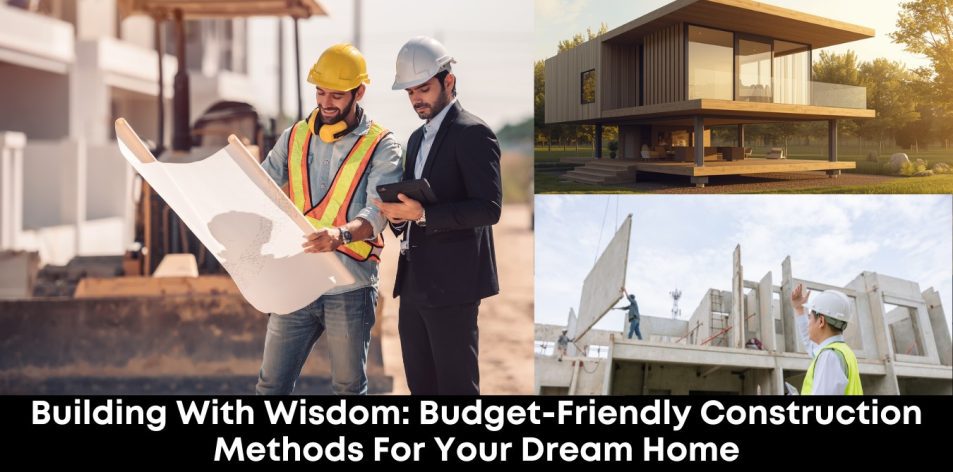
- Precast Concrete Panels: These are manufactured in a controlled factory environment and brought to your site for assembly. They are remarkably strong, provide excellent insulation, and can reduce walling time from weeks to just a few days.
- Interlocking Stabilised Soil Blocks (ISSB): Instead of expensive fired bricks or quarry stones, ISSBs use local soil mixed with a small amount of cement. They interlock like Lego bricks, requiring far less mortar and reducing the cost of finishes as they look aesthetically pleasing even when unplastered.
- Expanded Polystyrene (EPS) Panels: These lightweight panels are sandwiched between wire mesh and sprayed with concrete. They offer incredible thermal insulation—keeping your home cool in the heat—and are significantly faster to install than traditional stone.
III. Roofing Efficiency: The Butterfly Roof and Beyond
The roof is often one of the most expensive components of a house blueprint. Changing the “pitch” and style can lead to significant savings.
- The Butterfly Roof: This V-shaped roof consists of two surfaces sloping inward toward the middle. Because it requires fewer complex trusses than a traditional hip roof, it uses less timber and roofing material. It is also excellent for water harvesting, as it funnels rain directly into a central gutter system.
- Monopitch (Lean-to) Roofs: A single-sloping roof is perhaps the most cost-effective design. It is simple to construct, requires the least amount of structural support, and offers a modern, minimalist aesthetic.
- Decra-style vs. Iron Sheets: While traditional tiles are heavy and require expensive reinforced timbering, modern stone-coated steel sheets provide the same look with much lighter structural requirements.
IV. Internal Finishes: Moderation and Style
You can save thousands of shillings by being selective about your internal finishes without losing the “Ihsan” (excellence) of the design.
- Polished Concrete Floors: Instead of expensive imported tiles, a professionally polished concrete floor offers a sleek, industrial, and highly durable finish that is easy to clean and maintain.
- Open-Beam Ceilings: Skipping the gypsum or PVC ceiling and leaving your structural timber beams exposed (if treated well) can save on materials and create an airy, spacious feel in your living areas.
- Sourcing Local Reclaimed Timber: For doors and window frames, consider using high-quality reclaimed timber. It is often more seasoned and stable than new wood and carries a unique character at a fraction of the cost.
V. The Spirit of the Build: Trust and Planning
Building on a budget requires a heart filled with “Tawakkul” (reliance) and a mind focused on precision. Avoid the temptation to take shortcuts that compromise safety; instead, focus on “Value Engineering”—finding the most efficient way to achieve a high-quality result. By being involved in the sourcing of materials and choosing modern building types, you demonstrate a commitment to being a wise manager of your family’s future. A home built with honesty and careful spending is a home that will be filled with “Barakah.”
May your building journey be filled with ease and may your new home be a source of constant peace and security for your household.