
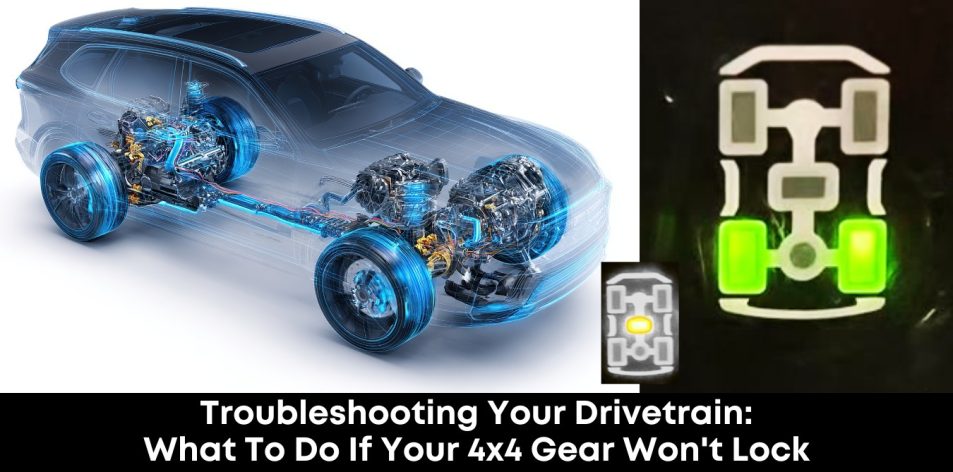
Restoring Control and Functionality to Your Four-Wheel Drive System
For the off-road enthusiast or the rural property owner, the reliability of a 4×4 system is paramount. It provides the necessary traction and confidence to navigate challenging terrains safely. However, it can be incredibly frustrating when your 4×4 gear refuses to lock into two-wheel drive (2WD) or four-wheel drive (4WD). This issue not only limits your vehicle’s capability but can also lead to significant mechanical damage if forced or ignored. Understanding why this happens and knowing the immediate steps to take can save you from a costly repair bill and ensure your vehicle remains a dependable tool for your family. This article explores common causes for 4×4 engagement issues and practical solutions to get you back on track.
I. Understanding the Mechanics of the Shift
Most modern 4×4 systems operate through a transfer case that directs power to either the rear wheels or all four wheels. This shift is controlled either by a manual lever on the floor or an electronic switch/dial on the dashboard. When the system fails to lock, it is usually due to a breakdown in communication between your command and the mechanical components under the car.
II. Immediate Troubleshooting Steps
Before assuming a major mechanical failure, try these simple, low-impact techniques to help the gears align:
- The Reverse Trick: Sometimes, the drivetrain can experience “binding”—where the gears are under too much tension to shift. Stop the vehicle, shift into reverse, and drive backward for about 10 to 15 metres. This often releases the built-up tension, allowing the gear to snap back into 2WD or 4WD easily.
- Check Your Positioning: For many vehicles, shifting into 4WD Low (4L) requires the car to be completely stationary and the transmission to be in Neutral (N). Consult your owner’s manual to ensure you are following the specific sequence required for your model.
- Rolling Shift: If you are trying to shift into 4WD High (4H), try doing so while moving slowly at a steady speed (usually below 40 km/h) on a straight path. This slight movement can help the synchroniser gears align more smoothly.
III. Common Causes for 4×4 Gear Failure
1. Faulty Electronic Actuators
In electronic systems, a small motor called an actuator is responsible for physically moving the gears inside the transfer case. If this motor fails due to age, moisture, or lack of use, the 4×4 light on your dash may flash, but the gears will not engage. This is one of the most common issues in modern SUVs and pick-ups.
2. Damaged or Seized Linkage
For vehicles with a manual shift lever, the physical rod or cable connecting the lever to the transfer case can become bent, rusted, or disconnected. If the lever feels unusually loose or “stuck,” the linkage is likely the culprit. A simple cleaning and lubrication with penetrating oil can often fix a stiff linkage.
3. Vacuum Leaks
Many older 4×4 systems rely on vacuum-actuated locking hubs on the front wheels. A small crack in a rubber vacuum hose can prevent the front wheels from “locking in,” even if the transfer case has shifted correctly. Inspect the rubber lines near your front wheels for any signs of wear or disconnection.
4. Fluid Issues and Binding
Low or contaminated fluid in the transfer case can cause internal friction and binding. If the fluid hasn’t been changed in years, it may have lost its lubricating properties, making it difficult for the internal forks to move the gears. Regularly checking for leaks and maintaining fresh fluid is vital.
IV. Prevention and Best Practices
- Exercise the System: The most common reason for 4×4 failure is lack of use. Even if you don’t go off-road, engage your 4WD system on a straight, gravel or dirt road once a month for a few kilometres to keep the seals lubricated and the actuators moving.
- Avoid Dry Pavement: Never drive in 4WD on dry, hard pavement. This causes severe drivetrain binding and can permanently damage your transfer case and tyres.
- Professional Inspection: If you hear a loud grinding, clunking, or whining noise when trying to shift, stop immediately and seek a professional mechanic. Forcing a stuck 4×4 gear can lead to a broken transfer case.
By treating your vehicle with care and addressing minor shifting issues early, you ensure your 4×4 remains ready for whenever the road—or the lack of one—demands it. Taking these proactive steps is a mark of a responsible owner, protecting both your investment and your safety.