
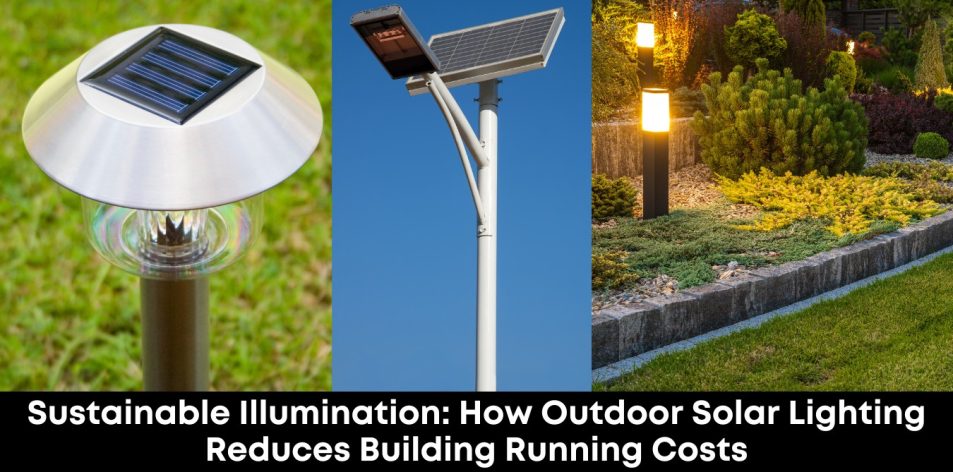
Enhancing Efficiency and Security Through Renewable Energy Solutions
Upon the completion of a building project, the focus shifts from construction costs to operational expenses. One of the most significant recurring costs for any property owner is electricity, particularly for outdoor security and aesthetic lighting that remains active throughout the night. Opting for outdoor solar lighting is a strategic move that aligns with modern sustainability goals while offering immediate financial relief. By harnessing the abundant energy of the sun, property owners can achieve significant cost savings, enhance security, and reduce the environmental footprint of their buildings.
I. Significant Cost Savings and Financial Benefits
The primary advantage of solar lighting is the drastic reduction in monthly utility bills. Unlike conventional lighting, which relies on the national grid, solar lights are self-sustaining.
- Zero Monthly Energy Costs: Solar lights convert sunlight into electricity during the day and store it in internal batteries. This means once the initial purchase and installation are complete, the cost of running those lights is essentially zero.
- Reduced Installation and Labour Costs: Traditional outdoor lighting requires extensive trenching, cabling, and professional electrical wiring to connect each fixture to the main board. Solar lights are wireless and standalone, significantly lowering the initial labour and material costs associated with electrical infrastructure.
- Low Maintenance Requirements: Modern LED solar lights are designed for durability. With no external wires to corrode or short circuit, maintenance is largely limited to occasionally cleaning the solar panels to ensure maximum sunlight absorption.
II. Practical Applications: Where to Use Solar Lights
Solar lighting technology has advanced to provide high-intensity illumination suitable for various areas of a residential or commercial property.
- Perimeter and Security Lighting: Solar floodlights equipped with motion sensors are ideal for boundary walls and gates. They provide bright, reliable light that deters intruders without adding a cent to your electricity bill.
- Driveways and Pathways: Solar bollard lights or ground-recessed markers provide clear guidance for vehicles and pedestrians, enhancing safety and curb appeal during the evening hours.
- Garden and Landscape Features: Use spotlights to highlight trees, water features, or architectural details. This allows you to beautify your property’s exterior without worrying about the cumulative cost of decorative lighting.
- Common Areas and Parking Lots: For apartment complexes or commercial buildings, solar streetlights can illuminate large parking areas and walkways, significantly reducing the service charge burden on tenants.
III. Environmental Stewardship and Reliability
Beyond the financial incentives, solar lighting reflects a commitment to responsible resource management.
- Independence from Power Outages: In areas prone to grid instability or frequent blackouts, solar lights remain active. This ensures that your property remains lit and secure even when the main power supply fails.
- Harnessing Natural Abundance: Utilizing renewable energy is a proactive way to care for the environment. It reduces reliance on fossil-fuel-generated power and contributes to a cleaner, more sustainable community.
- Automatic Operation: Most solar units feature built-in dusk-to-dawn sensors, meaning the lights turn on and off automatically. This eliminates the risk of lights being left on during the day due to human error.
IV. Considerations for Best Results
To maximize the efficiency of your solar lighting system, ensure that panels are installed in positions that receive direct, unobstructed sunlight for at least six to eight hours a day. Investing in high-quality units with lithium-ion batteries and weather-resistant casings will ensure a longer lifespan and better performance during cloudy seasons.
By integrating solar technology into your property’s exterior design, you are making a forward-thinking investment. It is a choice that prioritizes financial wisdom, enhances the security of your building, and demonstrates a respect for the natural resources provided to us, ensuring a well-lit and cost-effective environment for years to come.