
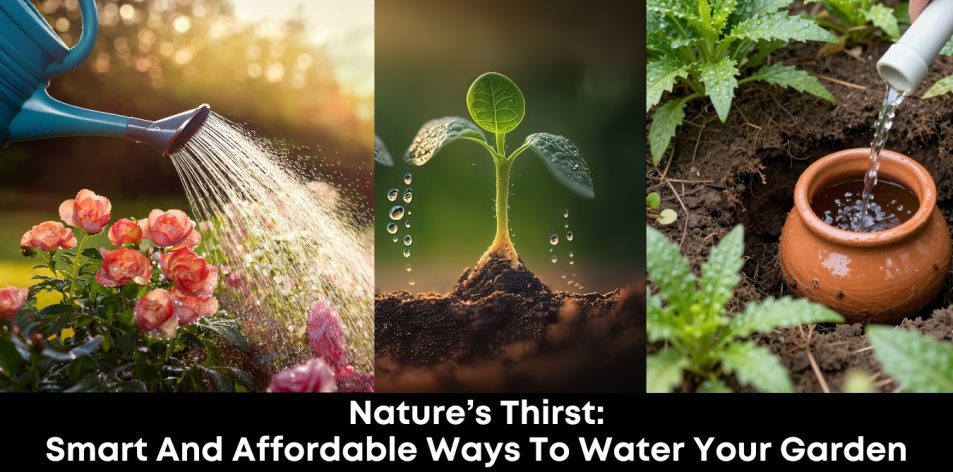
Maximising Every Drop for Healthy Plants and a Sustainable Home
Water is a precious resource, and as gardeners, we have a responsibility to use it wisely. Whether you are growing a vibrant flower bed, a patch of vegetables, or fruit trees, the goal is to ensure your plants get exactly what they need without a single drop going to waste. Many modern irrigation systems are expensive, but there are numerous traditional and DIY methods that allow plants to “drink” only when they require it, keeping your garden lush without breaking the bank. This article explores practical, cost-effective strategies for water conservation that honour both your pocket and the environment.
I. The Wisdom of Timing: When to Water
The time of day you choose to water has a massive impact on how much moisture actually reaches the roots versus how much is lost to the air.
- Early Morning is Best: The absolute best time to water is between 5:00 am and 9:00 am. The air is cool, and the wind is usually calm, allowing water to soak deep into the soil before the sun rises.
- Avoid the Midday Heat: Never water during the peak afternoon sun. Up to 50 per cent of the water can evaporate before it even touches the ground, which is a waste of both time and resources.
- Late Evening Caution: While evening watering is better than midday, it can leave leaves damp overnight, which may encourage fungal growth. If you must water in the evening, aim for the base of the plant to keep the foliage dry.
II. Low-Cost Self-Watering “Ollas” and DIY Drip
Allowing the soil to pull water only when it is dry is the most efficient way to keep plants hydrated. You can achieve this using simple items found around the house.
- The Traditional Clay Olla: An “Olla” (pronounced oy-ya) is an unglazed terracotta pot buried in the ground with only its neck sticking out. Fill it with water and cover the top. Because the clay is porous, water slowly seeps out into the soil only when the surrounding earth is dry. The roots will eventually grow around the pot, drinking exactly what they need.
- Upside-Down Bottle Irrigation: For smaller plants or pots, take a plastic water bottle, poke a few tiny holes in the cap, fill it with water, and bury it cap-first into the soil. This creates a slow-release “drip” system that delivers water directly to the root zone over several days.
- The Bucket Drip: Place a large bucket on a slight elevation (like a few bricks) and run a thin tube from the bottom to your plants. By using a small valve or even a simple knot in the tube to control the flow, you create a gravity-fed drip system that is far more efficient than a hose.
III. Mulching: The Soil’s Natural Shield
Think of mulch as a blanket for your soil. It is one of the most effective and cheapest ways to stop water from escaping.
- Organic Materials: Use what you have—grass clippings, straw, dry leaves, or wood chips. Spread a layer at least 2 to 3 inches thick around your plants.
- Moisture Retention: Mulch keeps the soil cool and blocks the sun’s rays, reducing evaporation by up to 70 per cent. This means you can go much longer between watering sessions.
- Weed Suppression: Mulch also smothers weeds, which are “water thieves” that compete with your veggies and fruits for every drop of moisture.
IV. Enhancing Your Soil’s “Sponge” Effect
Water conservation starts beneath the surface. Soil that is rich in organic matter holds water like a sponge, whereas poor soil allows it to run off or drain too quickly.
- Compost is Key: Regularly adding homemade compost to your beds improves the soil structure. Organic matter can hold up to ten times its weight in water, making your garden much more drought-resistant.
- Vertical Mulching: For fruit trees, you can dig small vertical holes around the “drip line” of the branches and fill them with coarse organic material. This channels rainwater directly down into the deep root system rather than letting it sit on the surface.
By shifting your focus from “spraying” to “soaking” and utilising simple, gravity-fed tools, you ensure your garden thrives with minimal waste. These methods are not just about saving money; they are about being mindful stewards of the earth’s provisions, ensuring a fruitful harvest through wisdom and care.