
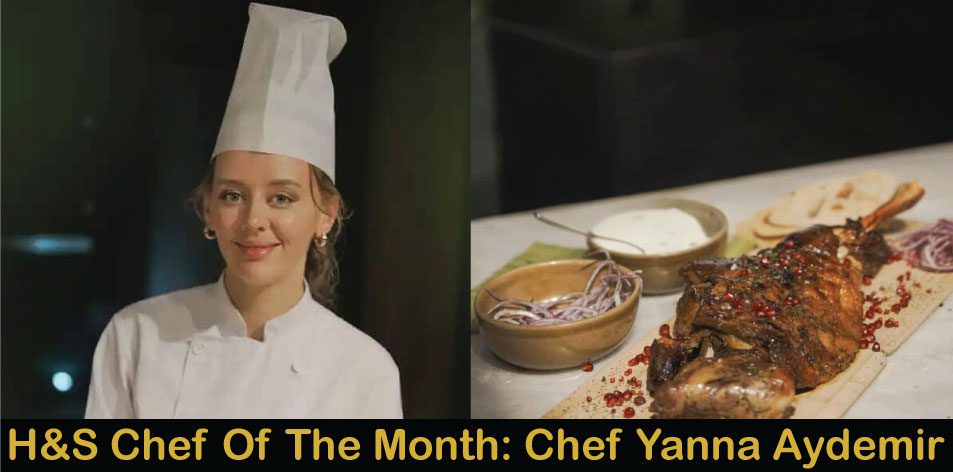
H&S Chef Of The Month
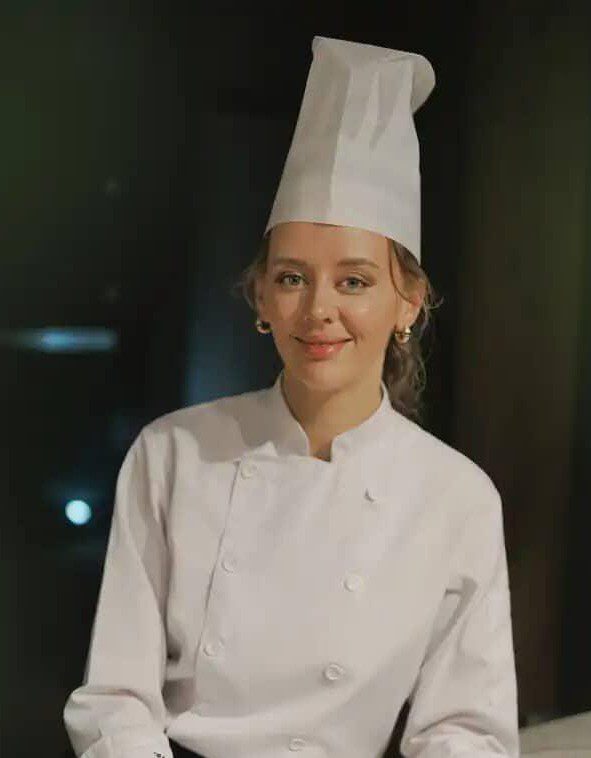
Chef Yanna Aydemir
Nationality: Turkmenistan
Interview With H&S Magazine
Who Is Yanna Aydemir?
I am Chef Yanna, and I have been working professionally in the field of gastronomy since the age of 15. My journey began in a restaurant, where I started as a waitress. Over time, I went through almost every stage of the industry — working in the dining area, behind the bar, and in the kitchen as a kitchen assistant — gradually growing into the role of a chef. This path gave me a deep practical understanding of gastronomy, shaped by hard work, discipline, and real experience.
After moving to Türkiye, I opened my own culinary studio, where for many years I conducted cooking workshops focused on international cuisine. My mission has always been to introduce people to the diversity of world cuisines and to share the stories behind ingredients and iconic dishes.
Today, my work goes beyond the kitchen. Through my Instagram platform, I share my personal journey as a Muslim woman — reflections on spirituality, feminine strength, and a conscious way of living. I bring together food, faith, thoughts, and aesthetics, creating a space of support and inspiration for women and sisters who seek balance between their inner world, family life, and self-realisation.
I perform my daily prayers (namaz) and deeply study Islam, striving to apply spiritual values not only in my personal life but also in my work. For me, gastronomy is not just a profession, but a form of intention, care, and service to people.
Type Of Cuisine?
My cuisine is international, inspired by cultures from all over the world. I believe that food is a universal language — it helps us understand people, traditions, and values beyond borders.
For me, cuisine is not only about taste, but also about meaning: the story of an ingredient, the intention placed into a dish, and the atmosphere at the table. Through gastronomy, I strive to connect people, cultures, and states of being.
Another part of my philosophy is my dream to one day visit Africa. I deeply wish to prepare a large shared table, feed people, and then dance together to music. For me, this is an image of true unity — when food and music connect people without unnecessary words.
I believe that when a dream is pure and carries good intention, Allah opens the way — and I see this project with the magazine as one of those steps along my path.
What Inspired You To Become A Chef?
From childhood, I was fascinated by fine dining and the very phenomenon of gastronomy — how food can evoke emotions and why it becomes such a meaningful experience for a person. Over time, I realised that fine dining is not about luxury or complexity, but about attention to detail, respect for ingredients, storytelling, and, most importantly, service.
I came to understand that even the simplest ingredients can be transformed into something special when prepared with meaning, respect, and intention. For me, cooking is a way of communicating with people without words.
What Is The Biggest Challenge You Have Faced In The Culinary Industry?
The biggest challenge in my career has been working with people and leading a team while maintaining high standards — not only in food, but also in service.
In hospitality, a guest experiences a dish through the hands and energy of the team. Sometimes, service shapes the overall impression even more profoundly than the product itself. It has always been important to me to cultivate a kitchen culture where people respect the process, pay attention to detail, and serve food with warmth and professionalism.
What’s Your Biggest Achievement In The Culinary Industry?
My greatest achievement lies in my personal and professional journey. I moved from Turkmenistan, learned the Turkish language, embraced Islam, and established myself as both a chef and a woman in a new country and culture.
Today, I integrate gastronomy with spirituality, meaning, and aesthetics, creating experiences that uplift people and, in particular, inspire women to live with intention, purpose, and inner strength.
When It comes To Cooking, What Is More Important To You, The Technique, The Ingredients Or The Creativity?
For me, ingredients always come first. A quality product speaks for itself — a perfectly ripe tomato will always be a perfectly ripe tomato, and poultry raised in good conditions will naturally have richer, deeper flavor. A chef’s role is to respect the ingredient and highlight its inherent qualities.
Technique and creativity are essential, but they exist to serve the product, not overshadow it.
Recipe Of The Week: Slow Roasted Lamb With Flatbread
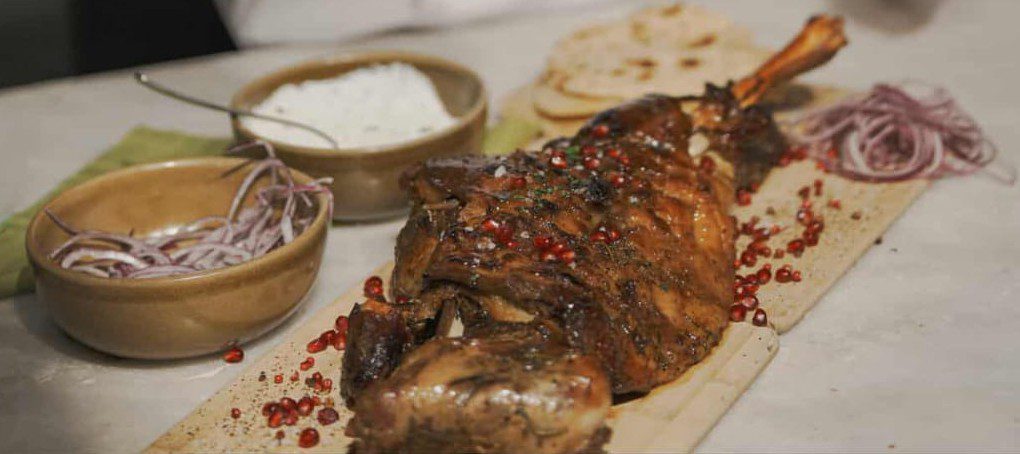
The Slow Roasted Lamb
Ingredients:
• 1 whole leg of lamb (approximately 2–3 kg)
• 4 cups plain natural yogurt
• 4 cups water
• 1 cup smooth mustard (Dijon or any available)
• 1 cup honey
• ½ cup salt
• 3 Tbsp fresh rosemary, chopped
• 1 Tbsp lemon zest
• ½ cup garlic, crushed (about 8–10 cloves)
• 1 tsp black pepper
The Glaze
Ingredients:
• 3–4 Tbsp lamb juices from roasting
• 1–1½ Tbsp honey
• 1–2 Tbsp pomegranate molasses or juice
• Pinch of black pepper
The Flatbread
Ingredients:
• 2 cups flour
• ¾–1 cup water
• ½ tsp salt
Preparation: The Slow Roasted Lamb
In a large bowl, whisk together yogurt and water until smooth. Add mustard, honey, salt, rosemary, lemon zest, garlic, and black pepper. Stir until fully combined. Submerge the leg of lamb completely in the marinade. Cover and refrigerate for 12–24 hours for maximum flavour and tenderness. Remove the lamb from the marinade and pat dry with paper towels. Wrap tightly in parchment paper, then seal with aluminium foil. Roast at 150°C (300°F) for approximately 5 hours.
Preparation: The Glaze
About 20–25 minutes before the lamb finishes roasting, it’s time to apply the glaze. Keep the lamb in the oven and carefully peel back the foil and parchment just enough to expose the top of the meat, without removing it completely, so it stays hot and retains moisture. Scoop 3–4 tablespoons of the flavorful juices that have collected at the bottom of the wrap into a small bowl, then mix in the honey, pomegranate molasses or juice, and black pepper. Using a basting brush, generously coat the exposed lamb with the glaze, ensuring it is evenly covered. Increase the oven temperature to 220–230°C (top heat or grill/broil setting) and return the lamb to the oven with the foil still partially open. Roast for 20–25 minutes until the glaze forms a shiny, caramelized crust, checking occasionally to prevent burning. Once done, remove the lamb from the oven and let it rest under a loose foil tent for 15 minutes before slicing, allowing the juices to redistribute and the meat to remain tender and flavorful.
Preparation: The Flatbread
To prepare the flatbread, combine the flour with salt in a mixing bowl. Gradually add water, stirring until a soft dough forms. Transfer the dough to a lightly floured surface and knead for 5–7 minutes until smooth and elastic. Cover the dough and let it rest for 15–20 minutes to relax the gluten, which makes rolling easier. Divide the dough into portions and roll each piece into thin, even rounds. Heat a dry, heavy-bottomed pan over medium-high heat and cook each flatbread for 1–2 minutes per side, or until lightly golden spots appear. Serve warm alongside the slow-roasted lamb, using it to scoop the meat, juices, and accompaniments.
Plating
Arrange slices of the slow-roasted lamb on a serving platter, drizzle with the caramelised glaze, surround with warm flatbread, and garnish with sliced fresh onions and a dollop of plain or herb-infused yogurt.