
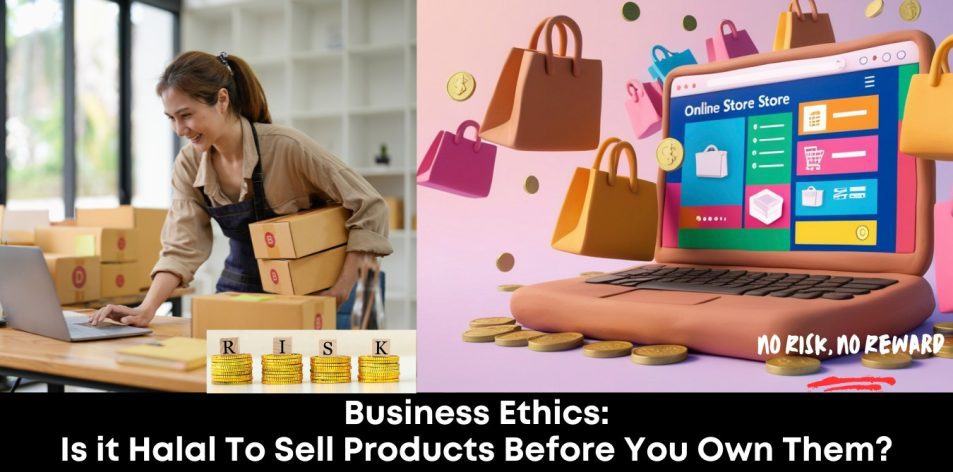
Understanding the Guidelines for Lawful and Ethical Trade
In the modern era of e-commerce and dropshipping, a common question arises for entrepreneurs: can you sell a product and take a profit if you don’t yet have it in your physical possession? While Islamic principles strongly encourage trade and entrepreneurship, they also provide clear boundaries to ensure fairness and prevent gharar (excessive uncertainty). Traditionally, selling what you do not own is restricted to avoid disputes, but there are specific, lawful frameworks that allow businesses to operate effectively and ethically. This article provides a guide on how to structure your sales according to these guidelines, ensuring your business remains grounded in integrity.
I. The Core Principle: Avoiding Uncertainty
The fundamental rule in Islamic commerce is derived from a well-known instruction: “Do not sell what you do not possess.” This is intended to protect the buyer from paying for something that might never be delivered or that doesn’t meet the promised description. However, the “halal way” offers several structured alternatives to keep your business flowing.
II. Lawful Models for Selling Without Prior Possession
1. The “Salam” Contract (Advance Payment)
Salam is a specific contract where the buyer pays the full price upfront for goods to be delivered at a later, specified date. This is common in agriculture and wholesale trade.
- Conditions: The product must be well-defined by quality and quantity (e.g., a specific brand or model), and the delivery date must be fixed. This allows the seller to use the capital to source or produce the goods.
2. The “Wakalah” Model (Agency)
Instead of selling the item as your own, you act as an agent (Wakil) for the supplier. You market the product on their behalf, and in return, you earn a commission or a pre-agreed fee.
- The Process: You are not “buying and reselling” in the traditional sense; you are facilitating a sale for the manufacturer. This is one of the most straightforward ways to keep dropshipping-style businesses halal.
3. The “Murabahah” Approach (Cost-Plus Profit)
In this model, the client expresses interest in an item you don’t have. You then purchase the item, take possession of it (even constructively, such as having it in your warehouse or under your legal risk), and then sell it to the client at a disclosed profit margin.
- The Process: You must ensure that you bear the risk of the product (the liability if it is lost or damaged) before the final sale to the customer is completed.
III. Essential Guidelines for Ethical Sales
- Transparency is Paramount: Be honest with your customers about delivery times and sourcing. Deception (Ghashsh) is strictly prohibited. If you are an agent, it is best to be clear that the product is coming from a third-party supplier.
- Bear the Risk: A key indicator of a halal sale is who bears the risk. If the item is damaged in transit before it reaches the customer, the seller (or their agent) must take responsibility. You cannot take a profit on a transaction where you bear no risk or responsibility.
- Avoid Restricted Items: Ensure the products you are selling are themselves permissible. Avoid items related to gambling, alcohol, or any products that cause social or physical harm.
- Fair Pricing: While there is no fixed limit on profit margins, it is highly encouraged to practice “Ihsan” (excellence and kindness) by pricing fairly and avoiding the exploitation of market shortages.
IV. Maintaining Business Integrity
Success in business is not just measured by the profit margin, but by the “Barakah” (blessing) within that profit. By ensuring your sales model aligns with ethical guidelines—whether through agency, advance sales, or taking proper possession—you build a business that is not only profitable but also sustainable and trusted by the community.
Seeking knowledge about the ethics of your trade is a powerful step toward long-term success. When your transactions are transparent and your methods are fair, you create a foundation for a business that serves others with excellence and brings peace of mind to yourself and your clients.