
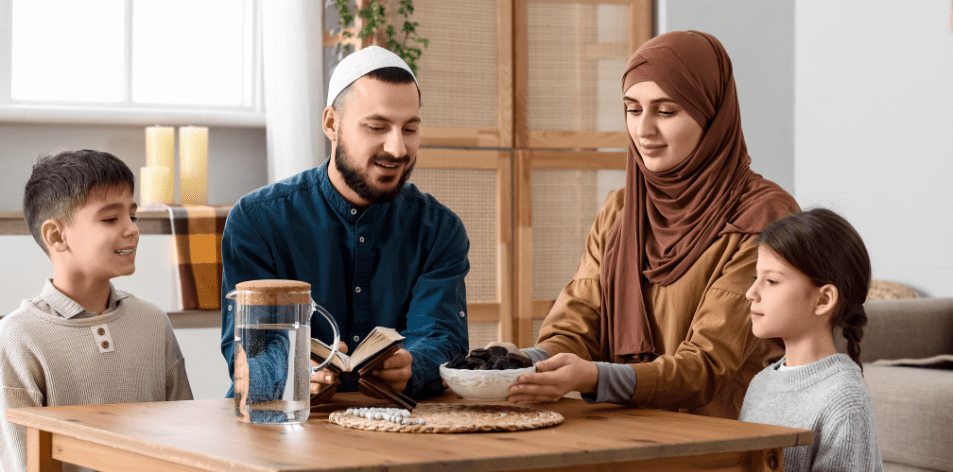
Raising Emotionally Secure Children During the Sacred Month
Children experience Ramadan not through rules alone, but through the environment, energy, and emotions around them. They absorb lessons from the way adults behave, the atmosphere at home, and the overall tone of family interactions.
🌙 How Ramadan Shapes Children
Children absorb far more than instructions — they absorb environment, emotion, and energy.
They take in:
* Emotional tone: Children feel the emotional climate of the home — calm or chaos, peace or pressure. A gentle atmosphere teaches safety, patience, and emotional regulation.
* Household atmosphere: Whether the home feels rushed, loving, stressed, or spiritually grounded shapes how children experience faith and family life.
* Parental patience: They learn how to manage frustration, anger, and tiredness by watching how parents handle stress and exhaustion.
* Family unity: Shared meals, prayers, and routines teach togetherness, belonging, and the value of connection.
* Spiritual energy: Children sense sincerity in worship — whether faith feels loving and peaceful or heavy and forced.
* Behaviour patterns: Daily habits become lifelong patterns — how people speak, resolve conflict, show kindness, and practise self-control.
🌱 Parenting Tips for Ramadan
1. Model Emotional Control
Children don’t just listen to what you say — they watch how you react. Demonstrating patience, calmness, and composure in daily situations teaches them how to manage their own emotions. Even small moments of self-restraint, like waiting quietly for iftar or handling disagreements gently, make a lasting impression.
2. Create Family Rituals
Rituals build connection and give children a sense of belonging. Consider:
* Shared iftar: Sitting together for the evening meal strengthens family bonds.
* Du‘a circles: Praying or making supplications as a family teaches gratitude and mindfulness.
* Storytime: Sharing stories of the prophets, past Ramadans, or moral lessons fosters reflection and curiosity.
* Reflection moments: Short discussions about kindness, patience, and good deeds help children internalise the values of Ramadan.
3. Teach Meaning, Not Pressure
Children learn best through understanding, not fear. Explain why fasting, charity, and prayer matter, rather than imposing strict rules. Help them see the purpose behind actions, encouraging thoughtful participation rather than robotic compliance.
4. Protect Emotional Safety
Ramadan should feel peaceful and nurturing. Avoid harsh reprimands or high-pressure routines that may create anxiety. A calm, supportive environment allows children to absorb the spiritual lessons of the month naturally.
5. Build Positive Associations
Help children associate Ramadan with love, warmth, and joy. Celebrate small achievements, highlight acts of kindness, and connect rituals with family togetherness. When children feel happy and secure, they develop a lifelong love for faith and family traditions.